












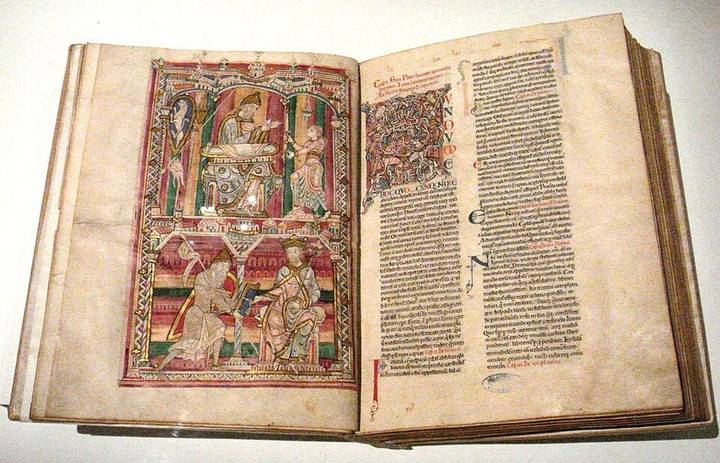
The Natural History of Pliny, Volume 2 (of 6)
Pliny the Elder's encyclopedia of everything the Romans knew, or thought they knew, about the world. Volume 2 of 6, in a full English translation. Pliny died in 79 AD watching Vesuvius erupt, so this is the last book he finished.
Public domain copy
Read The Natural History of Pliny, Volume 2 (of 6) online
The Natural History of Pliny, Volume 2 (of 6) Author: Pliny the Elder Translator: John Bostock and Henry T. Riley Digitized by Project Gutenberg, ebook #60230
Transcriber’s Notes:—
Italic text is denoted _thus_.
The spelling, hyphenation, punctuation and accentuation are as the original, except for apparent typographical errors which have been corrected.
Further notes can be found at the end of the book.
THE
NATURAL HISTORY
OF
PLINY.
TRANSLATED,
WITH COPIOUS NOTES AND ILLUSTRATIONS
BY THE LATE
JOHN BOSTOCK, M.D., F.R.S.,
AND
H. T. RILEY, Esq., B.A.,
LATE SCHOLAR OF CLARE HALL, CAMBRIDGE.
VOL. II.
LONDON:
HENRY G. BOHN, YORK STREET, COVENT GARDEN.
MDCCCLV.
J. BILLING,
PRINTER AND STEREOTYPER,
WOKING, SURREY.
CONTENTS.
OF THE SECOND VOLUME.
BOOK VI.
AN ACCOUNT OF COUNTRIES, NATIONS, SEAS, TOWNS, HAVENS, MOUNTAINS,
RIVERS, DISTANCES, AND PEOPLES WHO NOW EXIST, OR FORMERLY
EXISTED.
Chap. Page
1. The Euxine and the Maryandini 1
2. Paphlagonia 3
3. Cappadocia 6
4. The region of Themiscyra, and the nations therein 8
5. The region of Colica, the nations of the Achæi, and other
nations in the same parts 11
6. The Cimmerian Bosporus 13
7. Lake Mæotis and the adjoining nations 14
8. The situation of Cappadocia 16
9. The Lesser and the Greater Armenia 17
10. The rivers Cyrus and Araxes 18
11. Albania, Iberia, and the adjoining nations 20
12. The passes of the Caucasus 21
13. The islands of the Euxine 22
14. Nations in the vicinity of the Scythian Ocean 23
15. The Caspian and Hyrcanian Sea 24
16. Adiabene 27
17. Media and the Caspian Gates 28
18. Nations situate around the Hyrcanian Sea 30
19. The nations of Scythia and the countries on the Eastern
Ocean 33
20. The Seres 35
Read the story behind it
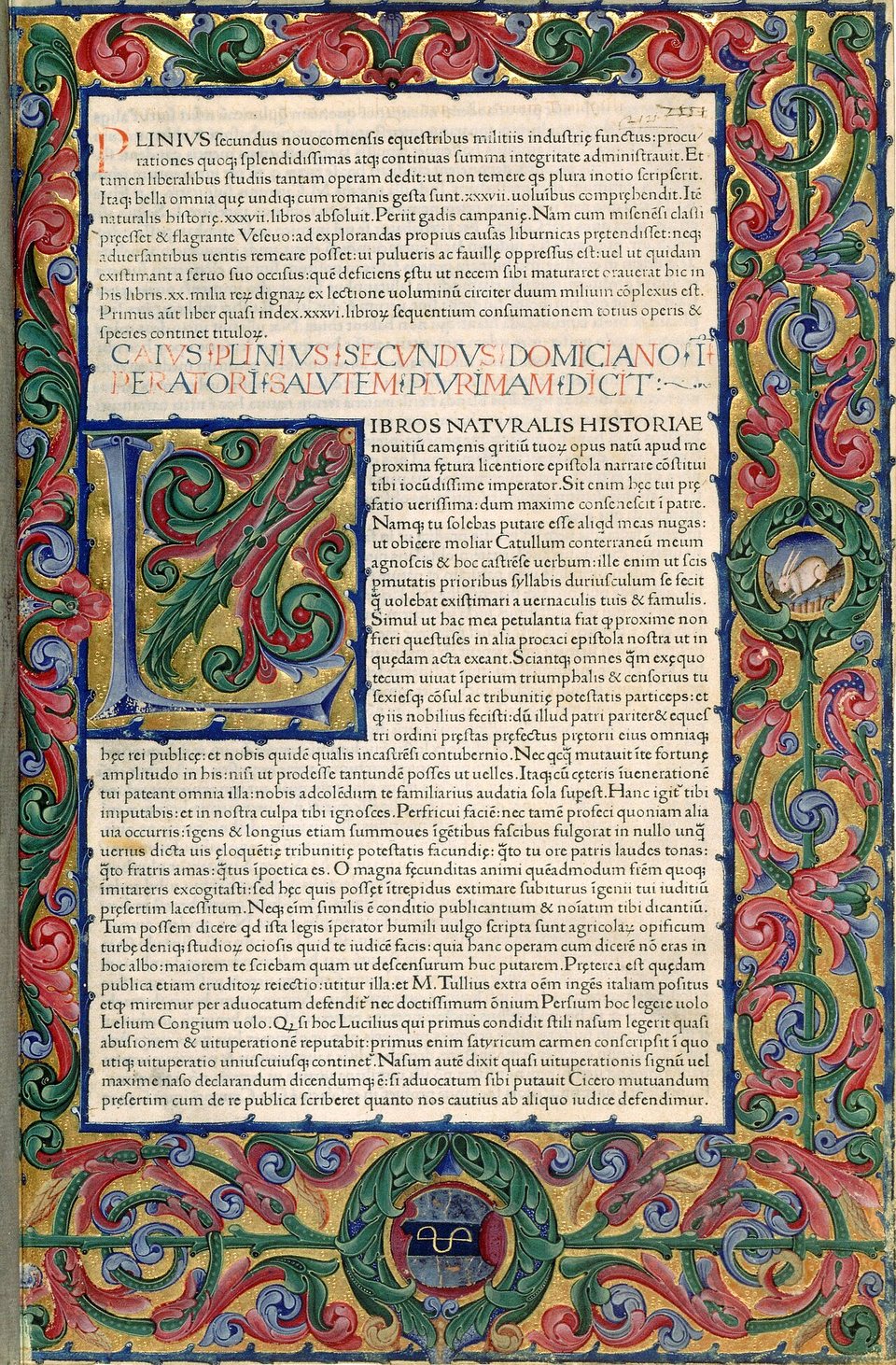
Where this comes from
Comes from Natural History, by Pliny the Elder, the copy of The Natural History of Pliny, Volume 2 (of 6) we host here. John Bostock and H. T. Riley's English translation of Pliny the Elder's Natural History, volume 2 of 6.
What this means
A primary record or a faithful public-domain copy of one. This page says what the file is and where it comes from; it does not say every claim in it is true.
Primary records exist: an original document, a published text, an official file or a dated report. We link to them. This level says the record exists and what it says, not that every claim in it is true.
Where and when was it found?
- Written
- Published about 77 to 79 CE, by Pliny the Elder (23 to 79 CE)
- Where it was found
- About 307 medieval manuscripts in European libraries; the oldest pieces are 5th-century fragments that were later scraped and reused
- When it was found
- Never lost; it was one of the first ancient texts to be printed, in Venice in 1469
- Oldest copy
- 5th-century palimpsests, the largest being the Codex Moneus (M) with parts of Books 11 to 15, in the library of St Paul's Abbey in the Lavanttal, Austria
- Original language
- Latin
Sources for these facts
About this copy
This is a public-domain copy. The line below says where the file comes from and why we may host it.
Why we can share it: Project Gutenberg record: 'Copyright Status: Public domain in the USA.' Translators John Bostock (1773-1846) and Henry T. Riley (1816-1878) both died before 1931; Project Gutenberg's record does not give the edition year.
Updated