












Persia: Ancient texts
Ancient Texts pages that draw on Persia, each with the sources shown. Start with Ahriman (Angra Mainyu), Bundahishn, Persepolis, Yima (Jamshid) and the Vara.
Files on this shelf (4)
- Bundahishn DocumentedAccording to this Zoroastrian book of creation, the first human couple grew out of the ground as a single rhubarb plant. The same book lays out…
- Persepolis DocumentedThe ceremonial capital of the Persian kings, looted by Alexander's army and then set on fire after a drinking party.
- Ahriman (Angra Mainyu) Myth or legendIn the Zoroastrian creation story, evil does not creep in, it attacks from outside. Ahriman pierces the sky, leaps into a perfect, motionless world…
- Yima (Jamshid) and the Vara Myth or legendWarned of killing winters, the first king of the Iranian tradition built an underground enclosure and filled it with the seeds of the finest people…
What is Zoroastrianism?
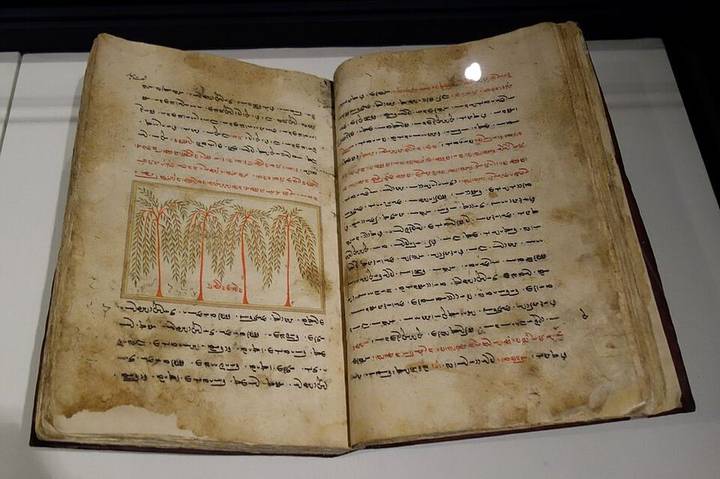
Ancient Persia's religion, Zoroastrianism, is one of the oldest faiths still practiced. It teaches a struggle between the wise creator Ahura Mazda and the destructive spirit Angra Mainyu, also called Ahriman, and that every person chooses a side through good thoughts, words and deeds. Its scripture is the Avesta. Later books in Middle Persian include the Bundahishn, "primal creation," which tells how the world was made and how it will be renewed, and stories of Yima, the first king, who built a shelter to save life from a deadly winter.
How people see it
Believers
- BeliefZoroastrian belief. Zoroastrians worship Ahura Mazda, keep fire as a symbol of purity in their temples, and believe good will finally defeat evil and the world will be made new.
Scholars
- MeasuredScholars. Scholars date the oldest hymns, the Gathas, by their language, which is close to the Rigveda's. Many think Zoroastrian ideas such as a final judgment influenced Judaism, Christianity and Islam; how much is debated.
- When
- Founded by the prophet Zarathustra (Zoroaster), whose dates are uncertain, with estimates from about 2000 to 500 BCE; the Bundahishn mostly dates to the 800s and 900s CE
- Languages
- Avestan for the Avesta; Middle Persian (Pahlavi) for the later books
- How it survives
- The Avesta was kept by memory and written down in a special alphabet in Sasanian times (224–651 CE); the oldest surviving manuscript is from 1323 CE
- Who holds it sacred
- Zoroastrians, about 110,000 to 140,000 people today, most in India (the Parsis), Iran and North America
Documented The texts are documented. Their account of creation and the end of time is belief, rated as myth or legend on its own pages. How we rate evidence
Start here
- Ahriman (Angra Mainyu) · The destructive spirit of Zoroastrianism, who burst through the sky from outside and poisoned a perfect…
- Bundahishn · The Zoroastrian book of creation: a twelve-thousand-year plan, an invasion from outside the sky, and humans…
- Yima (Jamshid) and the Vara · Warned of killing winters, the first king built an underground enclosure with its own lights and filled it…
Read it yourself: The Zend-Avesta, Part 1: The Vendidad, Darmesteter, 1880 in our Library.
Sources for this overview
- WikipediaA free online encyclopedia written and edited by volunteers. It is a good starting point and usually lists its own sources, but anyone can change it, so we treat it as a guide to better sources, not the final word.Wikipedia, "Zoroastrianism"Reference
- WikipediaWikipedia, "Avesta"Reference
- WikipediaWikipedia, "Bundahishn"Reference Archived copy, 2026-10-03
- WikipediaWikipedia, "Zoroaster"Reference Archived copy, 2026-09-29
Other shelves in Ancient Texts
Updated