












What are John Bostock and H. T. Riley known for?
John Bostock was a Liverpool-born physician and scientist. He studied medicine at Edinburgh, lectured in chemistry at Guy's Hospital in London, and in 1819 gave the first accurate description of hay fever. He was president of the Geological Society and a vice-president of the Royal Society. He had been working on an English translation of Pliny the Elder when he died in 1846.
Henry Thomas Riley, a Cambridge graduate and barrister, made his living translating Latin and Greek texts for Bohn's Classical Library and later inspected archives for the Historical Manuscripts Commission. He completed Bostock's work, and The Natural History of Pliny appeared in six volumes in 1855–57.
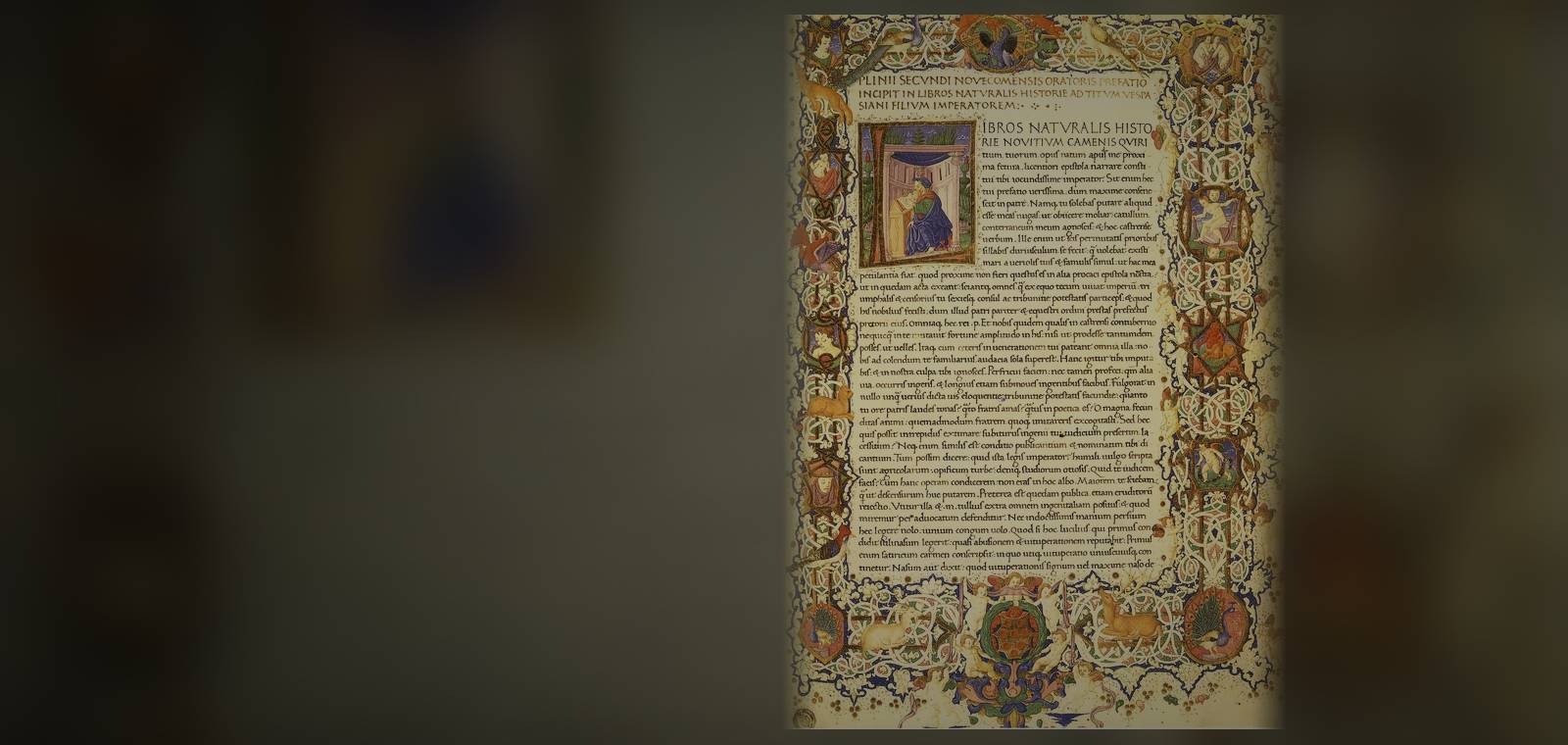
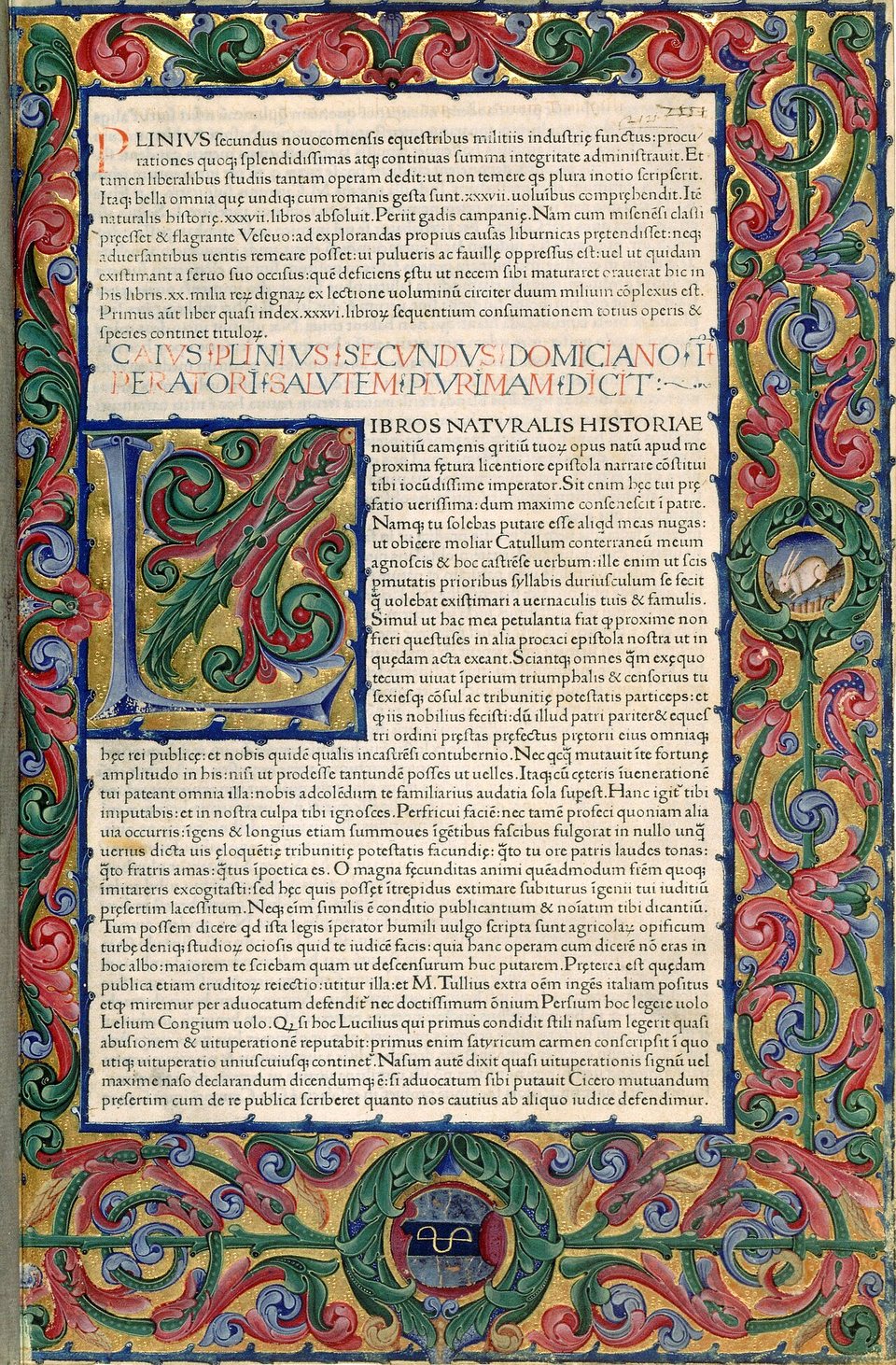
Pliny's encyclopedia, finished in 77 CE, collects reports on everything from astronomy to animals, often without checking them. Book 2 records omens such as a burning shield crossing the sky in 100 BCE.
Titles and honors
- Offices held
- President, Geological Society of London 1826
- Vice President, Royal Society 1832
- Called to the bar, Inner Temple 1847
- Medals and honors
- Fellow of the Royal Society
Mentioned on these pages
Linked people and places
Where this comes from
Comes from Perseus Digital Library, Pliny the Elder, 'The Natural History', tr. John Bostock and H…. Natural History, by Pliny the Elder: A 37-book Roman encyclopedia of everything from stars to animals to art, by Pliny the Elder, published around AD 77. Pliny died in AD 79 near Mount Vesuvius as it erupted.
What this means
A real person with records. Sources are listed below.
For John Bostock and H. T. Riley, the original record exists and is linked: Perseus Digital Library, Pliny the Elder, 'The Natural History', tr. John Bostock and H…. That tells you the record is real and what it says. It does not mean every claim in it is true.
Primary records exist: an original document, a published text, an official file or a dated report. We link to them. This level says the record exists and what it says, not that every claim in it is true.
Sources
- Natural History, by Pliny the ElderA 37-book Roman encyclopedia of everything from stars to animals to art, by Pliny the Elder, published around AD 77. Pliny died in AD 79 near Mount Vesuvius as it erupted. It mixes careful observation with tall tales. Bostock and Riley's English version came out in 1855.Perseus Digital Library, Pliny the Elder, 'The Natural History', tr. John Bostock and H. T. Riley Online copyPrimary text Archived copy, 2026-06-08
- WikipediaA free online encyclopedia written and edited by volunteers. It is a good starting point and usually lists its own sources, but anyone can change it, so we treat it as a guide to better sources, not the final word.Wikipedia, 'John Bostock (physician)'Reference Archived copy, 2026-08-26
- WikipediaWikipedia, 'Henry Thomas Riley'Reference Archived copy, 2026-09-16
No public-domain picture of this person yet. We do not show drawn or generated likenesses.