Every claim on this site comes from a credible source, and the source is always shown so you can check it yourself. How we check
Credible TheoriesTheories sourced with evidence Dive in blind

'There is a Santa Claus': the Christmas 'code' claim

When Apollo 8 came out from behind the Moon on Christmas Day 1968, Jim Lovell radioed 'Please be informed there is a Santa Claus.' Some UFO writers say it was a code word for aliens.

EvidenceMyth or legendBoth radio calls are on the record, but the idea that 'Santa Claus' was a code for UFOs is a story with no supporting document or testimony.
What this means

'There is a Santa Claus': the Christmas 'code' claim is known from stories, scripture or tradition. The texts are real and we quote them (for example Apollo 8: Christmas at the Moon, NASA), but nothing outside those texts shows that 'There is a Santa Claus': the Christmas 'code' claim was real as described.

The page covers something known from myths, scripture or tradition. The texts are real and we quote them, but no independent record shows the events or beings were real.

See all five labels

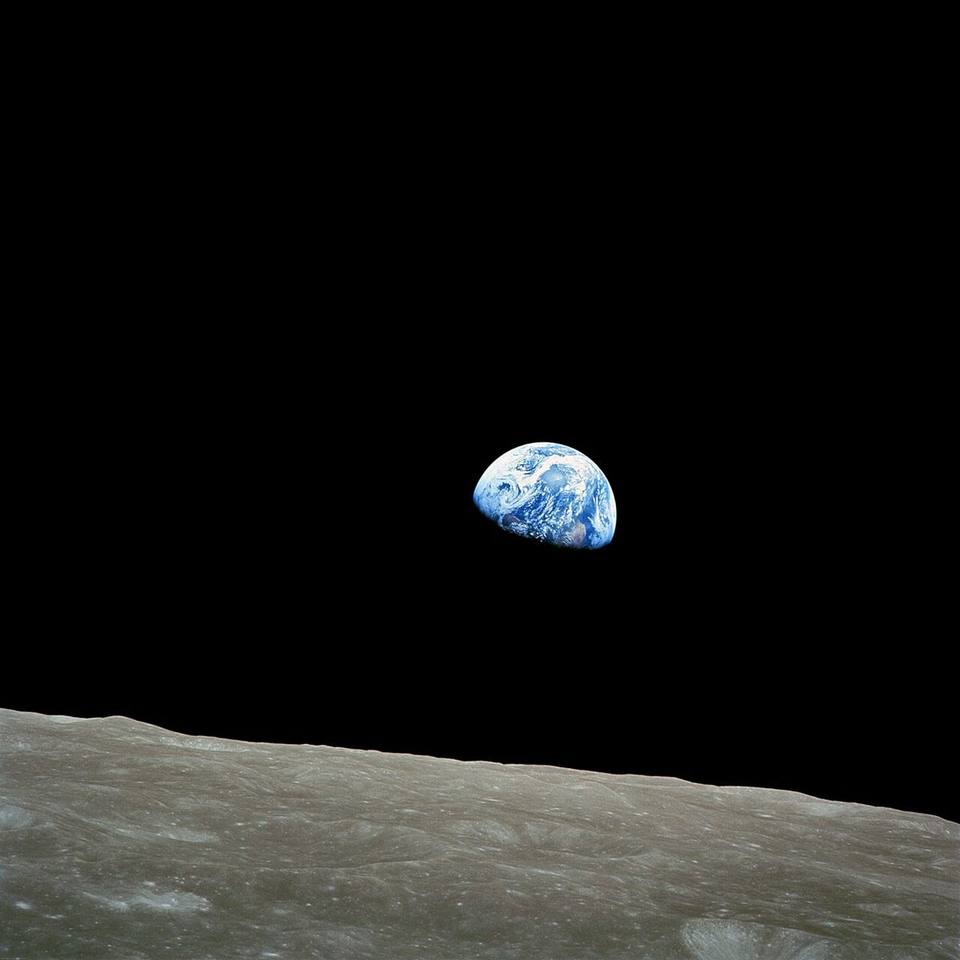
Earthrise, photographed by Bill Anders from Apollo 8 on December 24, 1968

NASA, Bill Anders. Public domain. Picture source

Strangest fact

A real NASA transcript contains an astronaut reporting an unknown object in polar orbit, and a different astronaut announcing that Santa Claus exists. Read out of context, years later, both sound like hidden messages.

Apollo 8 was the first crewed flight to the Moon. After ten orbits on Christmas Eve 1968, the crew had to fire their engine on the far side, out of contact, to head home. If it failed they would be stranded. NASA's history page describes mission control waiting for word, which came when Lovell radioed: Roger, please be informed there is a Santa Claus.

Three years earlier, on December 16, 1965, the Gemini 6A crew of Wally Schirra and Tom Stafford played a planned Christmas joke. Stafford reported an object, looks like a satellite going from north to south, up in a polar orbit, and said it looked like it might re-enter soon. Then the two played 'Jingle Bells' on a small harmonica and bells they had brought aboard. The Smithsonian's National Air and Space Museum keeps the harmonica, and calls these the first musical instruments played in space.

Some UFO books later claimed that 'Santa Claus' was a NASA code word for an alien spacecraft, and that Lovell was secretly reporting one. The Scottish science writer Duncan Lunan, writing in 2024, noted that the claim is still repeated but that the fact that both remarks were made at Christmas is rarely mentioned, and that, as far as he knew, no astronaut has used the phrase in space since.

Watch videos about 'There is a Santa Claus': the Christmas 'code' claim

Found by a YouTube search, not checked by us. The player loads from YouTube only when you press play.

Sources

  1. NASAThe official website of NASA, the US government's space agency, with mission histories, records and news releases.Apollo 8: Christmas at the Moon, NASAPrimary text
  2. National Air and Space Museum (Smithsonian)The Smithsonian's National Air and Space Museum in Washington, D.C. Its archives hold original flight records, recordings and objects.Playing Jingle Bells on Harmonica (Gemini VI-A sound recording, December 16, 1965), National Air and Space Museum ArchivesPrimary text
  3. Smithsonian MagazineThe magazine of the Smithsonian Institution, the US national museum group in Washington, D.C. Its articles are journalism for general readers.Lillian Ali, 'Sixty Years Ago, When Instruments Were Played in Space for the First Time, It Was Jingle Bells All the Way', Smithsonian Magazine, December 11, 2025Reference
  4. The Orkney NewsA small community news website in the Orkney Islands, Scotland. The article cited is by Duncan Lunan, a Scottish writer on space.Duncan Lunan, 'Santa in Space', The Orkney News, December 22, 2024Reference

Quotations come from public-domain translations. Links open the free online copy or the reference page.

Updated