












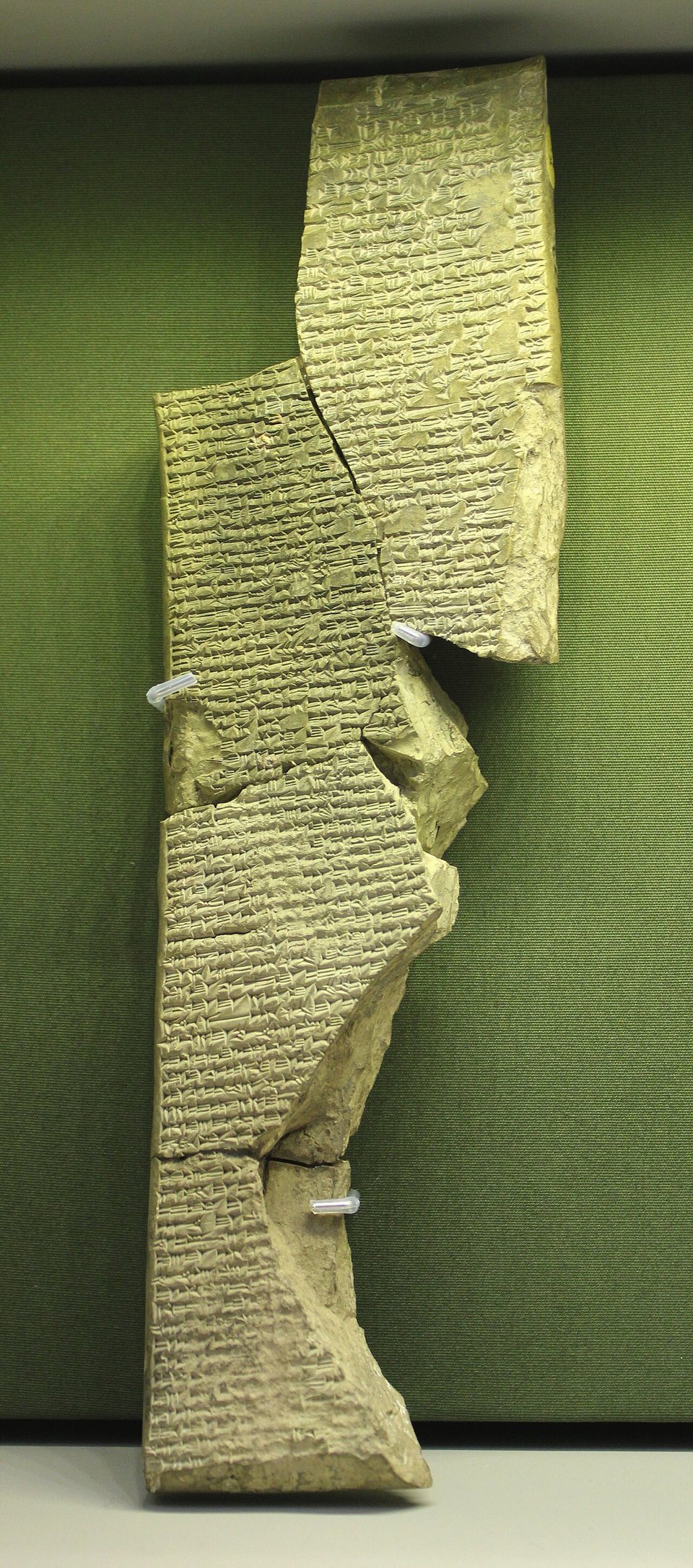
The Seven Tablets of Creation, Vol. II
The second volume of King's work on the Babylonian creation tablets. It is mostly supporting texts and notes, so read volume 1 first.
Public domain copy
Read The Seven Tablets of Creation, Vol. II online
CASE LIBRARY
1880
SUCCESSOR TO CLEVELAND LIBRARY ASSOCIATION 1848
Se Sreriecriede
8 = =
see
AFFILIATED WITH WESTERN RESERVE UNIVERSITY LIBRARIES
1924
HeoSre
2 ee
THE SEVEN TABLETS OF CREATION.
Hu3zac’s Semitic Tert aw Translation Series,
Wol. XIII.
Lujac’s Semitic Text and Translation Series.
VOL. I: THe LAUGHABLE STORIES COLLECTED BY BAR-HEBR&AUS.
VOL.
VOL.
VOL.
VQL.
VOL.
VOL.
VOL.
VOL.
Syriac Text and Translation, with Notes, Introduction, etc. By E. A. Wallis Budge. 21s. net.
JI: THe LeTTers AND INSCRIPTIONS OF HaMMURABI, KING OF BABYLON, ABOUT B.C. 2200; to which are added a series of letters of other kings of the First Dynasty of Babylon. Vol. I: Introduction and Babylonian Texts. By L. W. King. zr. net.
ItIl: THe LETTERS AND INscriprions OF HAMMURABI, KING OF BABYLON, ABOUT B.C. 2200; to which are added a series of letters of other kings of the First Dynasty of Babylon. Vol. JI: Babylonian Texts, continued. By L. W. King. 18s, net.
IV: THe History OF THE VIRGIN Mary, AND THE HISTORY OF THE LIKENESS OF CurisT. Vol. I : Syriac Texts. By E. A. Wallis Budge. 12s. 6d. net.
V: THE History oF THE VIRGIN MARY, AND THE HISTORY OF THE LIKENESS OF CHRIST. Vol. II: English Translations. By E. A. Wallis Budge. 10s. 6d. net.
VI: THE REPORTS OF THE MAGICIANS AND ASTROLOGERS OF NINEVEH AND BABYLON. Vol. I: Cuneiform Texts. By R. C. Thompson. 128. 6d. net.
Vil : THE REPORTS OF THE MAGICIANS AND ASTROLOGERS OF NINEVEH AND BABYLON. Vol. JI : English Translation and Transliteration. By R. C. Thompson. 12s. 6d. net.
VIII: THE LETTERS AnpD INSCRIPTIONS OF HAMMURABI, KING OF BABYLON, ABOUT B.C. 2200; to which are added a series of letters of other kings of the First Dynasty of Babylon. Vol. III : English Translations, with Translitera- tions, Commentary, Vocabularies, Introduction, etc. By L. W. King. 18s. net.
IX: Tue HISTORIES OF RABRAN HORMIZD THE PERSIAN AND RaBBAN Bar-‘IptA. Vol. I : Syriac Texts. By E. A. Wallis Budge. 12s. 6d. net.
VOL.
VOL.
VOL.
VOL.
VOL.
VOL.
VOL.
VOL.
Read the story behind it
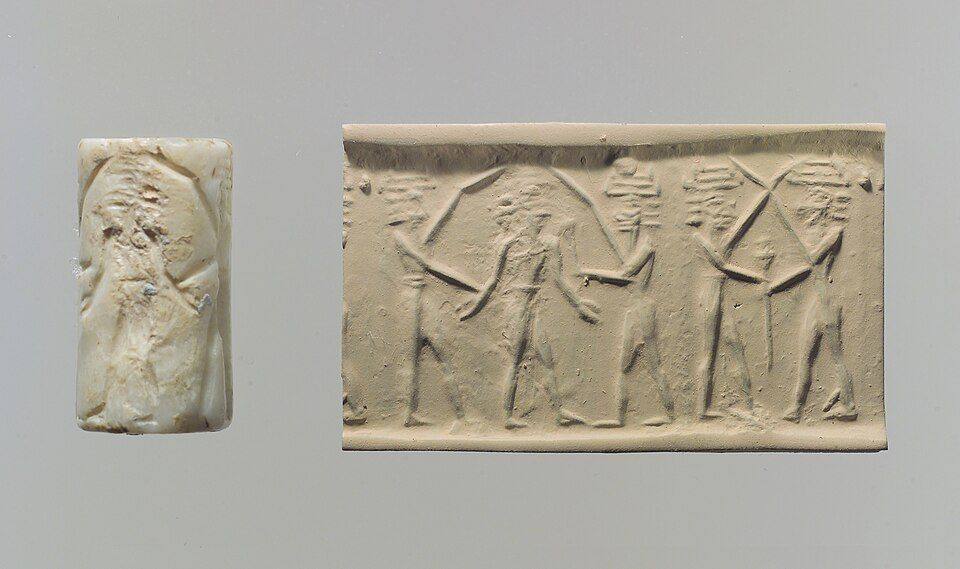 TextEnuma ElishDocumentedThe Babylonian creation poem ends by handing its hero fifty different names, each a title with its own meaning, including Nibiru. Before that come a war among the gods, a sea-monster split to make the sky, and humans made from a rebel god's blood. Why does a creation story finish with a list of names?
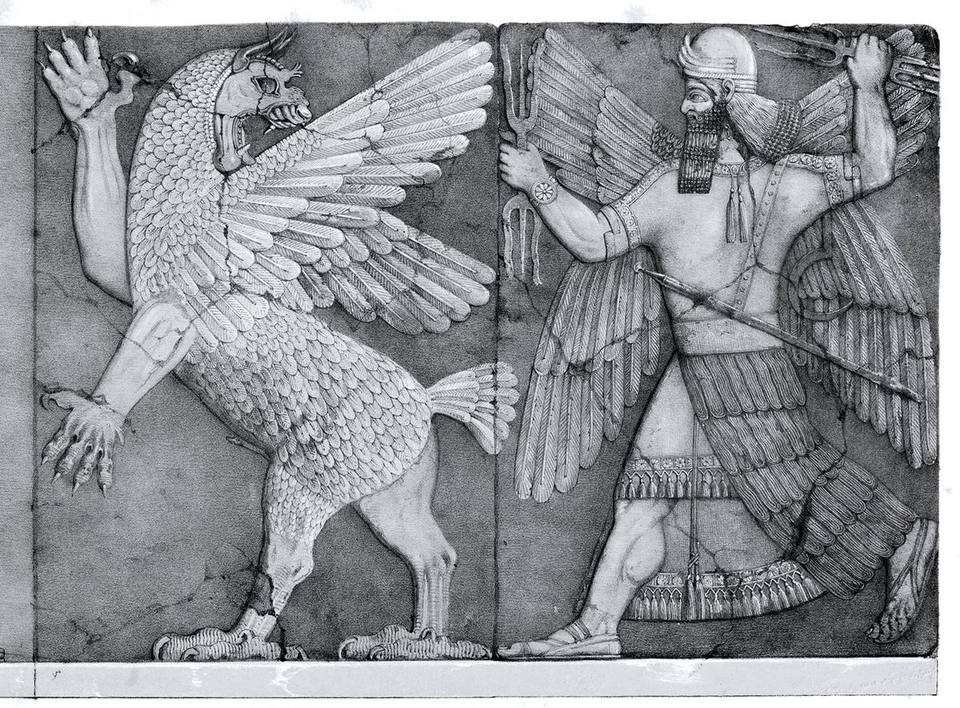 BeingTiamatMyth or legendIn the Babylonian creation epic, the Tigris and Euphrates flow out of the eyes of a dead goddess; Tiamat is the primeval salt sea and mother of the first gods. She prepares for war, gives birth to eleven kinds of monsters, and then her split body becomes the sky and the earth. Who won?
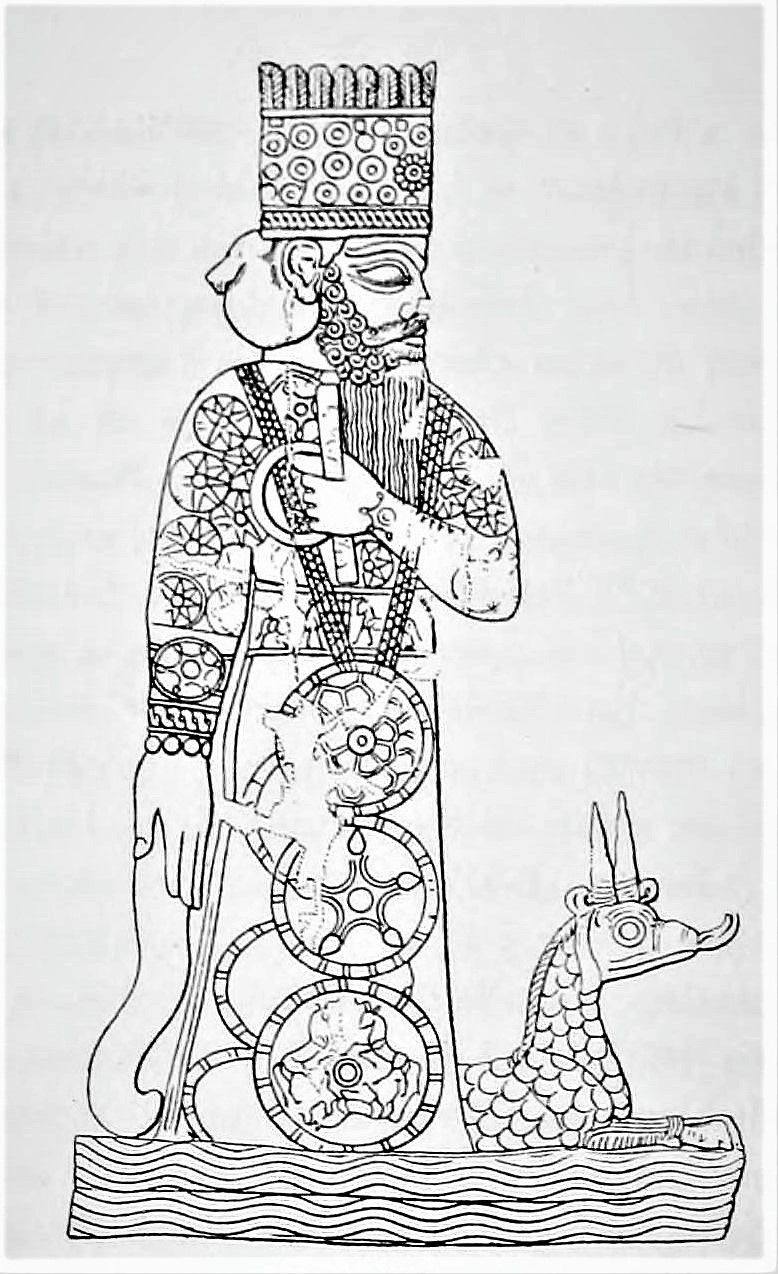 GodMardukMyth or legendWhen enemies captured Marduk's statue and carried it abroad, Babylonian writers explained the loss as the god choosing to go on a journey. He began as the minor god of a minor city; in the epic Enuma Elish he splits the sea-monster Tiamat in two and earns fifty names. How does a small-town god become king?
Where this comes from
Comes from The Enuma Elish (Babylonian Creation Epic), the copy of The Seven Tablets of Creation, Vol. II we host here, by Leonard William King. L. W. King's two-volume work on the Babylonian and Assyrian creation legends (Luzac, London, 1902), volume 2.
What this means
A primary record or a faithful public-domain copy of one. This page says what the file is and where it comes from; it does not say every claim in it is true.
Primary records exist: an original document, a published text, an official file or a dated report. We link to them. This level says the record exists and what it says, not that every claim in it is true.
Where and when was it found?
- Written
- Late 2nd millennium BCE; the rise of Marduk it celebrates is usually linked to Nebuchadnezzar I, though a late Kassite date is also proposed
- Where it was found
- The ruined Library of Ashurbanipal at Nineveh (near Mosul, Iraq); another copy was dug up at Assur. Many of the tablets are in the British Museum
- When it was found
- Austen Henry Layard recovered the first fragments at Nineveh in 1849; George Smith published the story in 1876; L. W. King, who edited the British Museum's creation tablets (published 1901), concluded that the poem filled seven tablets
- Oldest copy
- The earliest manuscript of the myth was excavated at Assur and dates to the 9th century BCE
- Original language
- Akkadian (Standard Babylonian), written in cuneiform
About this copy
This is a public-domain copy. The line below says where the file comes from and why we may host it.
Why we can share it: Published 1902, before 1931, so public domain in the US (reasoning). The Internet Archive record for this upload states no copyright status; a separate University of Toronto scan of the same work is marked NOT_IN_COPYRIGHT, US.
Updated