












What is Ashurbanipal known for?
Ashurbanipal ruled Assyria from 668 to 627 BCE, at the height of its power. Britannica calls him the last of the great Assyrian kings and credits him with assembling the first systematically organized library in the ancient Middle East.
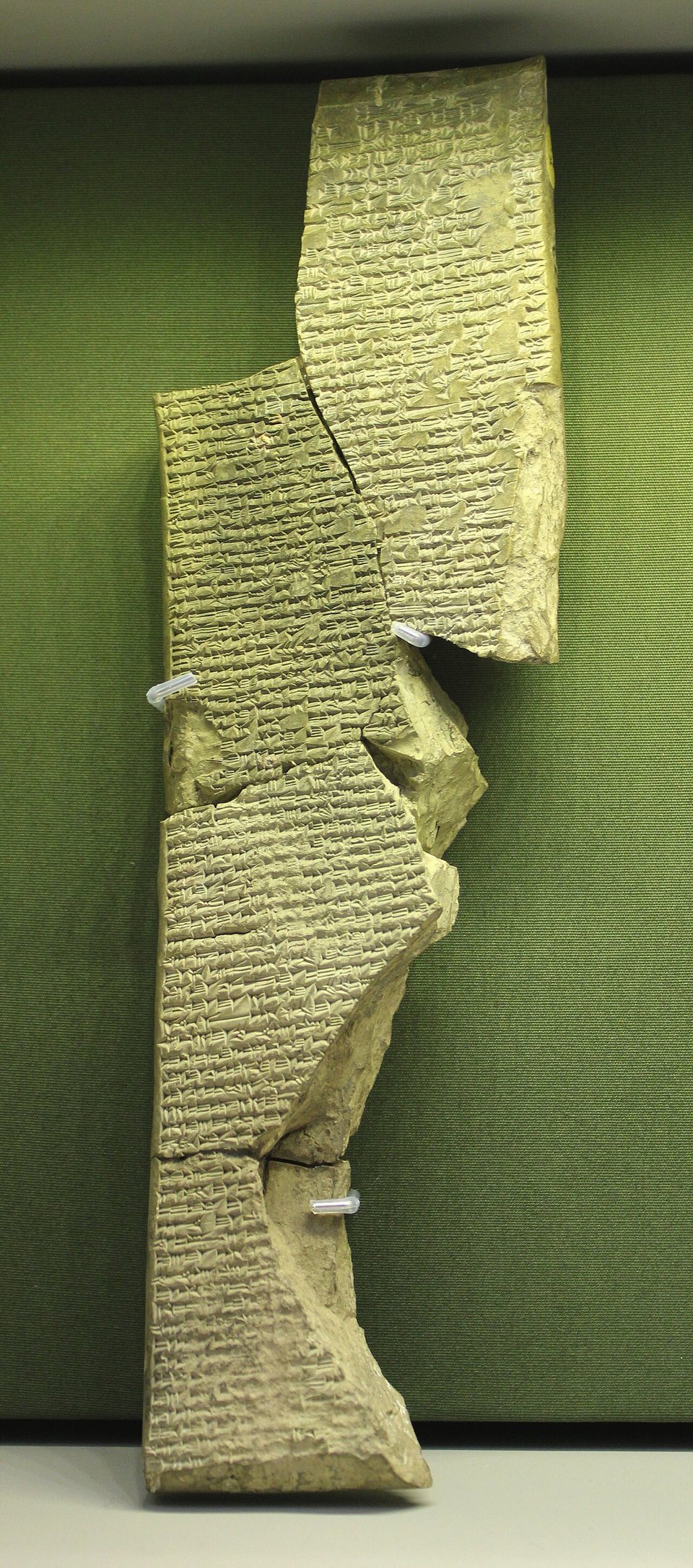
Tens of thousands of tablet fragments from his palaces at Nineveh were excavated in the 1850s and are now mostly in the British Museum. They include the standard Epic of Gilgamesh with its Flood story, copies of the Enuma Elish, omen series, and the story of Adapa. When George Smith read the Flood tablet in 1872, it came from this collection.
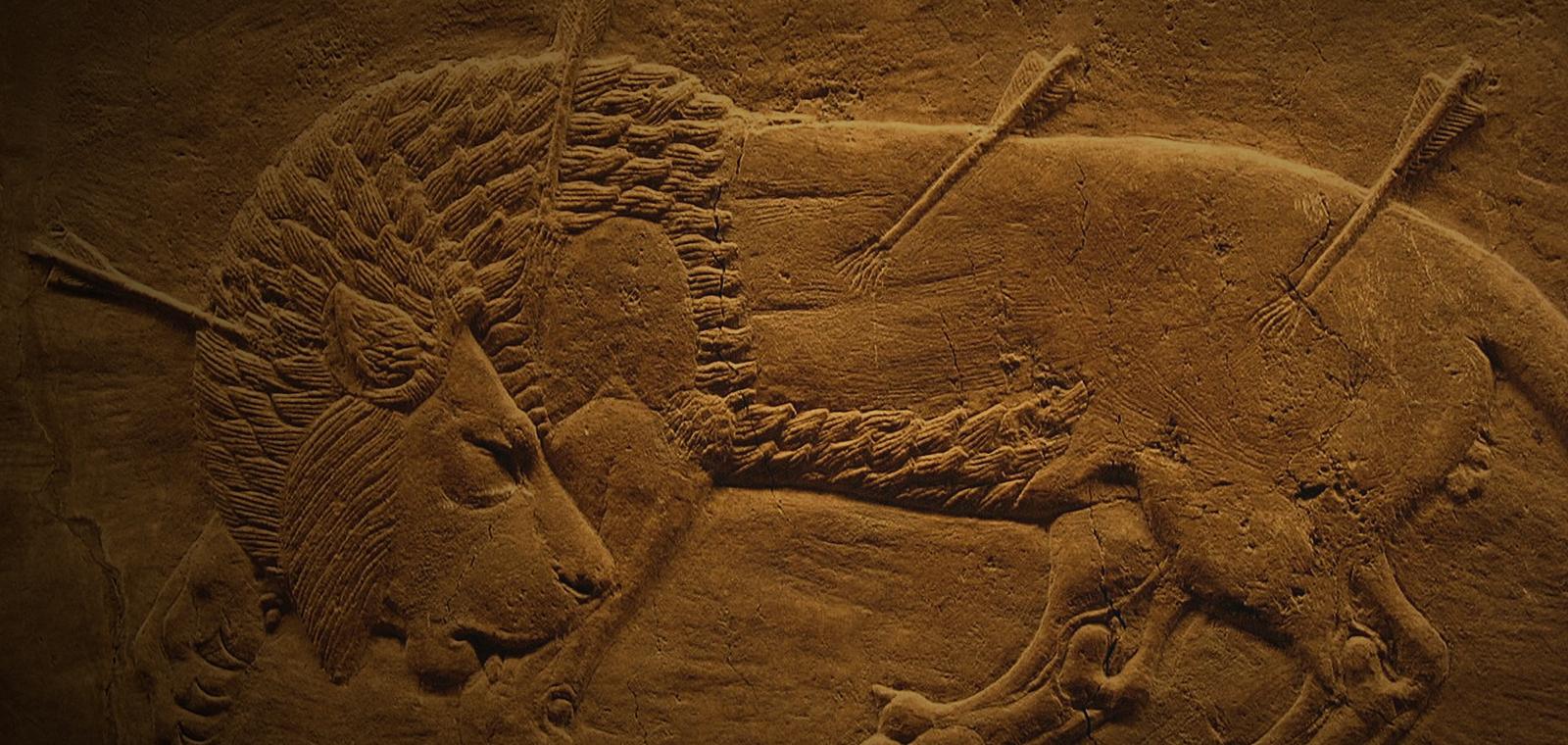
He is also famous for the lion-hunt reliefs from his North Palace.
Titles and honors
The same story, told elsewhere
Shared story · Floods and lost lands
Flood Stories Around the World
A god warns one good man, a boat is built, the world drowns and birds are sent out to find land. The same story turns up from Iraq to India to Greece, with cousins in China, Scandinavia and Guatemala.
Epic of Gilgamesh, Tablet XI (Utnapishtim's story) is one telling. The same story is told 9 more times, in 6 parts of the world. Follow it:
- Vedic IndiaNorthern India · c. 800-600 BCE · Ancient text
- Babylonian (Akkadian)Mesopotamia · 7th century BCE · Ancient textTied to this page
- Hebrew BibleJudah / Babylon · c. 600-400 BCE · Ancient text
- ChineseYellow River valley, China · 1st millennium BCE · Ancient text
- Zoroastrian (Persian)Iran / Central Asia · 1st millennium BCE · Ancient text
- Babylonian, retold in GreekBabylon · c. 280 BCE · Ancient text
- GreekGreece · 1st or 2nd century CE · Ancient text
- IslamArabia · 7th century CE · Medieval text
- NorseIceland · c. 1220 CE · Medieval text
- K'iche' MayaHighland Guatemala · c. 1554-1558 · Retold in English
The open question: One real flood remembered by many peoples, or many different floods that each people told in its own way? Join the debate
Shared story · Heroes and trials
The Dragon Slayer: Marduk, Indra, Thor and Saint George
A god or a hero faces a giant serpent that blocks the waters, eats the young or threatens the whole world, and cuts it down. The same fight is told in Babylon, India, Greece, Egypt, Iceland, Japan and medieval Europe.
Enuma Elish, Tablet IV (Marduk fights Tiamat) is one telling. The same story is told 7 more times, in 6 parts of the world. Follow it:
- Vedic IndiaNorthwest India · c. 1500-1200 BCE · Ancient text
- Babylonian (Akkadian)Babylon · c. 1200-1100 BCE · Ancient textTied to this page
- GreekBoeotia, Greece · c. 700 BCE · Ancient text
- EgyptianThebes, Egypt · c. 312 BCE · Ancient text
- Hebrew BibleJudah · 24 to 27 BCE · Ancient text
- Japanese (Shinto)Izumo, Japan · 712 CE · Medieval text
- NorseIceland · c. 1220 CE · Medieval text
- Medieval Christian (Europe)Written in northern Italy · c. 1260 CE · Medieval text
The open question: Did one ancient story of a hero and a serpent spread across the world, or do people everywhere turn their fears into dragons on their own? Join the debate
Shared story · Death and return
Journey to the Underworld: Ishtar, Orpheus, Izanagi and Savitri
Someone they love has died, so they walk into the land of the dead to bring them back. In Greece, Japan and among the Cherokee one small broken rule ruins everything, while in India a wife talks Death himself into letting go.
The Descent of Ishtar to the Underworld is one telling. The same story is told 7 more times, in 6 parts of the world. Follow it:
- Babylonian (Akkadian)Mesopotamia · c. 1000-600 BCE · Ancient textTied to this page
- GreekIonia · c. 725-675 BCE · Ancient text
- Hindu (Sanskrit epic)Northern India · c. 400 BCE · Ancient text
- RomanRome, Italy · 29-19 BCE · Ancient text
- Roman (Greek story)Rome, Italy · c. 8 CE · Ancient text
- Japanese (Shinto)Japan · 712 CE · Medieval text
- NorseIceland · c. 1220 CE · Medieval text
- Cherokee (North America)Eastern Cherokee, western North Carolina, USA · 1887-1890 · Recorded folklore
The open question: Did the story of the forbidden look back travel from people to people, or did people far apart each decide that the dead are lost through one small mistake? Join the debate
Shared story · Beginnings
People Made From Clay: Adam, Nuwa, Prometheus and the Potter Gods
A god kneels in the mud, shapes a body with his hands and breathes it into life. That scene is told in Iraq, Israel, Egypt, Greece, China, Arabia, Guatemala, Sudan and New Zealand.
Atrahasis Epic, the making of people is one telling. The same story is told 8 more times, in 6 parts of the world. Follow it:
- Babylonian (Akkadian)Mesopotamia · c. 1700 BCE · Ancient textTied to this page
- Ancient EgyptianEgypt · c. 1215 BCE · Ancient text
- Hebrew BibleJudah · c. 900-450 BCE · Ancient text
- GreekGreece · 1st or 2nd century CE · Ancient text
- ChineseChina · c. 195 CE · Retold in English
- IslamArabia · 7th century CE · Medieval text
- K'iche' MayaHighland Guatemala · c. 1554-1558 · Retold in English
- Maori (New Zealand)Aotearoa · 19th century · Retold in English
- Shilluk (South Sudan)White Nile, South Sudan · 1911 · Retold in English
The open question: Did one old story about a potter god travel from people to people, or does anyone who works with clay end up imagining that we were made from it? Join the debate
Mentioned on these pages
- FileAdapa
- FileEnuma Elish
- PersonGeorge Smith
- PersonNur-Aya
- PersonR. Campbell Thompson
- PersonSin-leqi-unninni
- PlaceNineveh
Linked people and places

Where this comes from
Comes from Encyclopaedia Britannica, 'Ashurbanipal'. An encyclopedia first published in Scotland in 1768 and now online. Its articles are written and checked by named experts and editors, which makes it a reliable source for basic facts.
What this means
A real person with records. Sources are listed below.
For Ashurbanipal, the original record exists and is linked: Encyclopaedia Britannica, 'Ashurbanipal'. That tells you the record is real and what it says. It does not mean every claim in it is true.
Primary records exist: an original document, a published text, an official file or a dated report. We link to them. This level says the record exists and what it says, not that every claim in it is true.
Sources
- Encyclopaedia BritannicaAn encyclopedia first published in Scotland in 1768 and now online. Its articles are written and checked by named experts and editors, which makes it a reliable source for basic facts.Encyclopaedia Britannica, 'Ashurbanipal'Reference Archived copy, 2026-09-07
- WikipediaA free online encyclopedia written and edited by volunteers. It is a good starting point and usually lists its own sources, but anyone can change it, so we treat it as a guide to better sources, not the final word.Wikipedia, 'Library of Ashurbanipal'Reference Archived copy, 2026-09-10
- WikipediaWikipedia, 'Ashurbanipal'Reference