












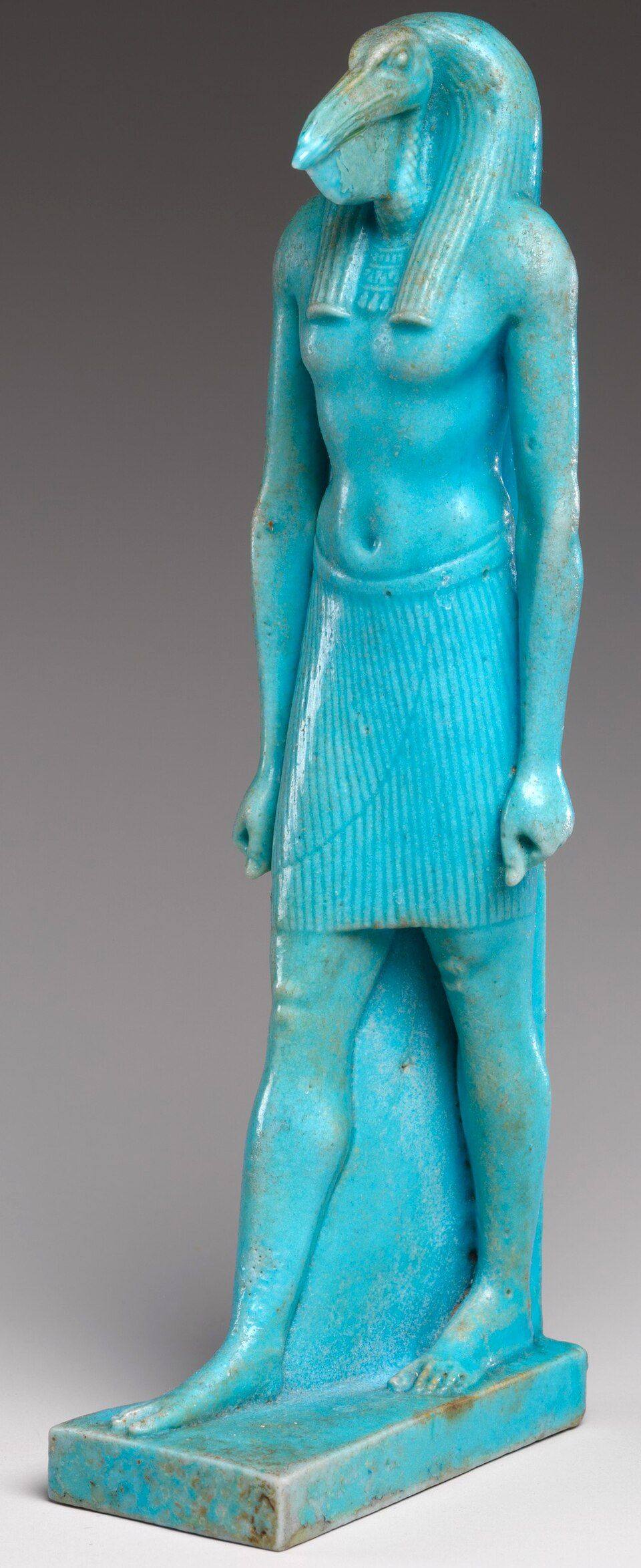
Egyptian Tales, Translated from the Papyri: Second Series, XVIIIth to XIXth Dynasty
Egyptian stories from the New Kingdom, among them the tale of a prince doomed to die by a crocodile, a snake or a dog. Retold in plain English by Petrie.
Public domain copy
Read Egyptian Tales, Translated from the Papyri: Second Series, XVIIIth to XIXth Dynasty online
Egyptian Tales, Translated from the Papyri: Second Series, XVIIIth to XIXth Dynasty Author: W. M. Flinders Petrie Translator: W. M. Flinders Petrie (editor) Digitized by Project Gutenberg, ebook #7413
Produced by Eric Eldred
EGYPTIAN TALES
TRANSLATED FROM THE PAPYRI
SECOND SERIES
XVIIIth TO XIXth DYNASTY
EDITED BY
W. M. FLINDERS PETRIE,
HON. D.C.L., LL.D.
EDWARDS PROFESSOR OF EGYPTOLOGY, UNIVERSITY COLLEGE, LONDON
ILLUSTRATED BY TRISTRAM ELLIS
SECOND EDITION
_First Published . . . September 1895 Second Edition . . . February 1913_
PREFACE
As the scope of the first series of these Tales seems to have been somewhat overlooked, a few words of introduction may not be out of place before this second volume.
It seems that any simple form of fiction is supposed to be a "fairy tale:" which implies that it has to do with an impossible world of imaginary beings. Now the Egyptian Tales are exactly the opposite of this, they relate the doings and the thoughts of men and women who are human--sometimes "very human," as Mr. Balfour said. Whatever there is of supernatural elements is a very part of the beliefs and motives of the people whose lives are here pictured. But most of what is here might happen in some corner of our own country to-day, where ancient beliefs may have a home. So far, then, from being fairy tales there is not a single being that could be termed a fairy in the whole of them.
Another notion that seems to be about is that the only possible object of reading any form of fiction is for pure amusement, to fill an idle hour and be forgotten and if these tales are not as amusing as some jester of to-day, then the idler says, Away with them as a failure! For such a person, who only looks to have the tedium of a vacuous mind relieved, these tales are not in the least intended. But the real and genuine charm of all fiction is that of enabling the reader to place himself in the mental position of, another, to see with the eyes, to feel with the thoughts, to reason with the mind, of a wholly different being. All the greatest work has this charm. It may be to place the reader in new mental positions, or in a different level of the society that he already knows, either higher or lower; or it may be to make alive to him a society of a different land or age. Whether he read "Treasure Island" or "Plain Tales from the Hills," "The Scarlet Letter," "Old Mortality," or "Hypatia," it is the transplanting of the reader into a new life, the doubling of his mental experience, that is the very power of fiction. The same interest attaches to these tales. In place of regarding Egyptians only as the builders of pyramids and the makers of mummies, we here see the men and women as they lived, their passions, their foibles, their beliefs, and their follies. The old refugee Sanehat craving to be buried with his ancestors in the blessed land, the enterprise and success of the Doomed Prince, the sweetness of Bata, the misfortunes of Ahura, these all live before us, and we can for a brief half hour share the feelings and see with the eyes of those who ruled the world when it was young. This is the real value of these tales, and the power which still belongs to the oldest literature in the world.
Erratum in First Edition, 1st Series. Page 31, line 6 from below, _for_ no It _read_ not I.
CONTENTS
THE TAKING OF JOPPA
REMARKS
THE DOOMED PRINCE
REMARKS
ANPU AND BATA
REMARKS
SETNA AND THE MAGIC BOOK
REMARKS
INDEX
XVIIITH DYNASTY
THE TAKING OF JOPPA
There was once in the time of King Men-kheper-ra a revolt of the servants of his majesty who were in Joppa; and his majesty said, "Let Tahutia go with his footmen and destroy this wicked Foe in Joppa." And he called one of his followers, and said moreover, "Hide thou my great cane, which works wonders, in the baggage of Tahutia that my power may go with him."
Now when Tahutia came near to Joppa, with all the footmen of Pharaoh, he sent unto the Foe in Joppa, and said, "Behold now his majesty, King Men-kheper-ra, has sent all this great army against thee; but what is that if my heart is as thy heart? Do thou come, and let us talk in the field, and see each other face to face." So Tahutia came with certain of his men; and the Foe in Joppa came likewise, but his charioteer that was with him was true of heart unto the king of Egypt. And they spoke with one another in his great tent, which Tahutia had placed far off from the soldiers. But Tahutia had made ready two hundred sacks, with cords and fetters, and had made a great sack of skins with bronze fetters, and many baskets: and they were in his tent, the sacks and the baskets, and he had placed them as the forage for the horses is put in baskets. For whilst the Foe in Joppa drank with Tahutia, the people who were with him drank with the footmen of Pharaoh, and made merry with them. And when their bout of drinking was past, Tahutia said to the Foe in Joppa, "If it please thee, while I remain with the women and children of thy own city, let one bring of my people with their horses, that they may give them provender, or let one of the Apuro run to fetch them." So they came, and hobbled their horses, and gave them provender, and one found the great cane of Men-kheper-ra (Tahutmes III.), and came to tell of it to Tahutia. And thereupon the Foe in Joppa said to Tahutia, "My heart is set on examining the great cane of Men-kheper-ra, which is named '. . . tautnefer.' By the _ka_ of the King Men-kheper-ra it will be in thy hands to-day; now do thou well and bring thou it to me." And Tahutia did thus, and he brought the cane of King Men-kheper-ra. And he laid hold on the Foe in Joppa by his garment, and he arose and stood up, and said, "Look on me, O Foe in Joppa; here is the great cane of King Men-kheper-ra, the terrible lion, the son of Sekhet, to whom Amen his father gives power and strength." And he raised his hand and struck the forehead of the Foe in Joppa, and he fell helpless before him. He put him in the sack of skins and he bound with gyves the hands of the Foe in Joppa, and put on his feet the fetters with four rings. And he made them bring the two hundred sacks which he had cleaned, and made to enter into them two hundred soldiers, and filled the hollows with cords and fetters of wood, he sealed them with a seal, and added to them their rope-nets and the poles to bear them. And he put every strong footman to bear them, in all six hundred men, and said to them, "When you come into the town you shall open your burdens, you shall seize on all the inhabitants of the town, and you shall quickly put fetters upon them."
Then one went out and said unto the charioteer of the Foe in Joppa, "Thy master is fallen; go, say to thy mistress, 'A pleasant message! For Sutekh has given Tahutia to us, with his wife and his children; behold the beginning of their tribute,' that she may comprehend the two hundred sacks, which are full of men and cords and fetters." So he went before them to please the heart of his mistress, saying, "We have laid hands on Tahutia." Then the gates of the city were opened before the footmen: they entered the city, they opened their burdens, they laid hands on them of the city, both small and great, they put on them the cords and fetters quickly; the power of Pharaoh seized upon that city. After he had rested Tahutia sent a message to Egypt to the King Men-kheper-ra his lord, saying, "Be pleased, for Amen thy good father has given to thee the Foe in Joppa, together with all his people, likewise also his city. Send, therefore, people to take them as captives that thou mayest fill the house of thy father Amen Ra, king of the gods, with men-servants and maid-servants, and that they may be overthrown beneath thy feet for ever and ever."
REMARKS
This tale of the taking of Joppa appears to be probably on an historical basis. Tahutia was a well-known officer of Tahutmes III.; and the splendid embossed dish of weighty gold which the king presented to him is one of the principal treasures of the Louvre museum. It is ornamented with groups of fish in the flat bottom, and a long inscription around the side.
Unfortunately the earlier part of this tale has been lost; but in order to render it intelligible I have restored an opening to it, without introducing any details but what are alluded to, or necessitated, by the existing story. The original text begins at the star.
It is evident that the basis of the tale is the stratagem of the Egyptian general, offering to make friends with the rebel of Joppa, while he sought to trap him. To a Western soldier such an unblushing offer of being treacherous to his master the king would be enough to make the good faith of his proposals to the enemy very doubtful. But in the East offers of wholesale desertion are not rare. In Greek history it was quite an open question whether Athens or Persia would retain a general's service; in Byzantine history a commander might be in favour with the Khalif one year and with the Autokrator the next; and in the present century the entire transfer of the Turkish fleet to Mohammed Ali in 1840 is a grand instance of such a case.
The scheme of taking a fortress by means of smuggling in soldiers hidden in packages has often recurred in history; but this taking of Joppa is the oldest tale of the kind yet known. Following this we have the wooden horse of Troy. Then comes in mediaeval times the Arab scheme for taking Edessa, in 1038 A.D., by a train of five hundred camels bearing presents for the Autokrator at Constantinople. The governor of Edessa declined to admit such travellers, and a bystander, hearing some talking in the baskets slung on the camels, soon gave the alarm, which led to the destruction of the whole party; the chief alone, less hands, ears, and nose, being left to take the tale back to Bagdad. And in fiction there are the stories of a lady avenging her husband by introducing men hidden in skins, and the best known version of all in the "Arabian Nights," of Ali Baba and the thieves.
It appears from the tale that the conference of Tahutia with the rebel took place between the town and the Egyptian army, but near the town. Then Tahutia proposes to go into the town as a pledge of his sincerity, while the men of the town were to supply his troops with fodder. But he appears to have remained talking with the rebel in the tent, until the lucky chance of the stick turned up. This cleared the way for a neater management of his plan, by enabling him to quietly make away with the chief, without exciting his suspicions beforehand.
The name of the cane of the king is partly illegible; but we know how many actual sticks and personal objects have their own names inscribed on them. Nothing had a real entity to the Egyptian mind without an individual name belonging to it.
Read the story behind it
The same story, told elsewhere
Shared story · Beginnings
People Made From Clay: Adam, Nuwa, Prometheus and the Potter Gods
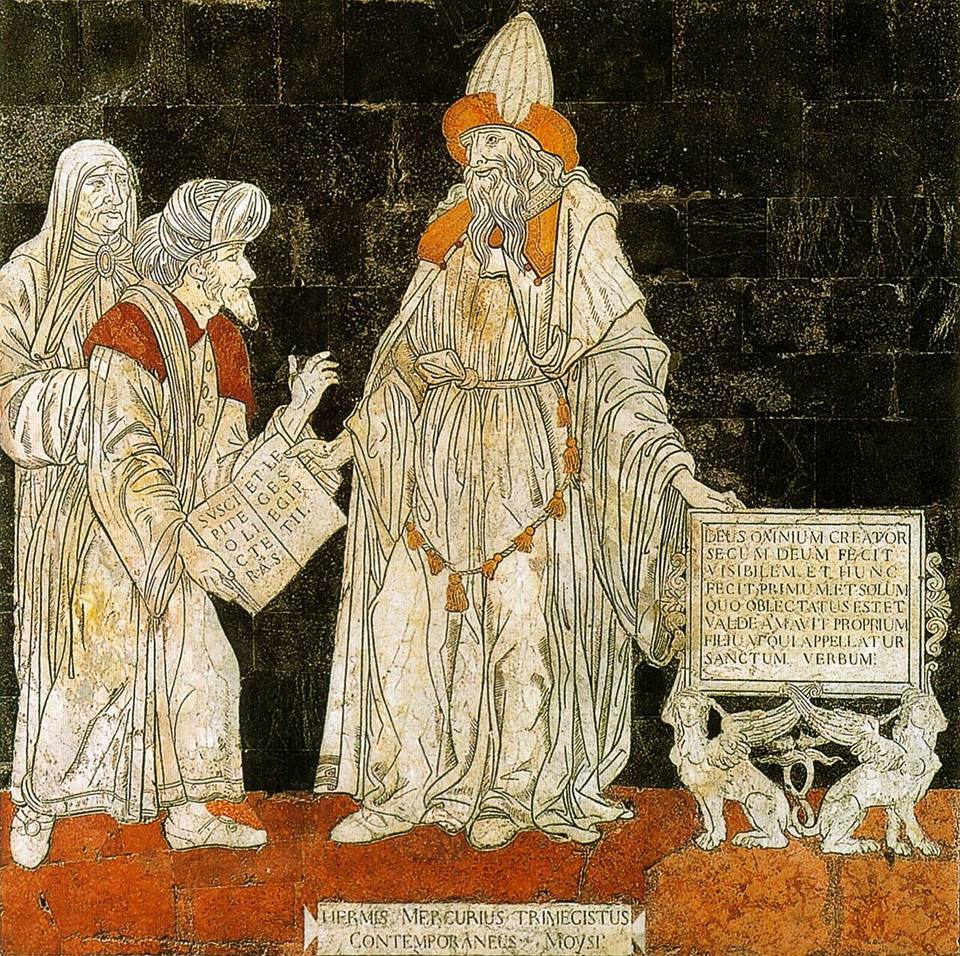
A god kneels in the mud, shapes a body with his hands and breathes it into life. That scene is told in Iraq, Israel, Egypt, Greece, China, Arabia, Guatemala, Sudan and New Zealand.
The Tale of the Two Brothers (Khnum makes a wife for Bata) is one telling. The same story is told 8 more times, in 6 parts of the world. Follow it:
- Babylonian (Akkadian)Mesopotamia · c. 1700 BCE · Ancient text
- Ancient EgyptianEgypt · c. 1215 BCE · Ancient textTied to this page
- Hebrew BibleJudah · c. 900-450 BCE · Ancient text
- GreekGreece · 1st or 2nd century CE · Ancient text
- ChineseChina · c. 195 CE · Retold in English
- IslamArabia · 7th century CE · Medieval text
- K'iche' MayaHighland Guatemala · c. 1554-1558 · Retold in English
- Maori (New Zealand)Aotearoa · 19th century · Retold in English
- Shilluk (South Sudan)White Nile, South Sudan · 1911 · Retold in English
The open question: Did one old story about a potter god travel from people to people, or does anyone who works with clay end up imagining that we were made from it? Join the debate
Where this comes from
Comes from Egyptian Tales, translated by Flinders Petrie, the copy of Egyptian Tales, Translated from the Papyri: Second Series, XVIIIth to XIXth Dynasty we host here, by W. M. Flinders Petrie. Flinders Petrie's edited English translations of ancient Egyptian tales from the papyri, second series (XVIIIth to XIXth dynasty).
What this means
A primary record or a faithful public-domain copy of one. This page says what the file is and where it comes from; it does not say every claim in it is true.
Primary records exist: an original document, a published text, an official file or a dated report. We link to them. This level says the record exists and what it says, not that every claim in it is true.
Where and when was it found?
- Written
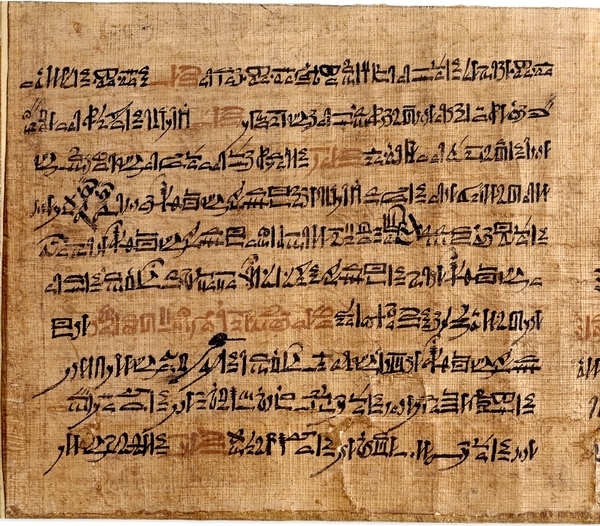
- New Kingdom, 18th to 19th Dynasty; the Tale of Two Brothers dates from the reign of Seti II (about 1200 to 1194 BCE)
- Where it was found
- Egypt. The Tale of Two Brothers survives only on Papyrus D'Orbiney, now in the British Museum, London; the Taking of Joppa is on Harris Papyrus 500, also in the British Museum; the Setna story is on a demotic papyrus in the Ghizeh (Giza) Museum, Egypt
- When it was found
- The British Museum bought Papyrus D'Orbiney from Madame d'Orbiney in 1857
- Oldest copy
- Papyrus D'Orbiney (British Museum EA 10183), written near the end of the 19th Dynasty by the scribe Ennana; Petrie notes it belonged to Seti II when he was crown prince
- Original language
- Late Egyptian, written in hieratic script (the Setna tale is in demotic)
About this copy
This is a public-domain copy. The line below says where the file comes from and why we may host it.
Why we can share it: Project Gutenberg record: 'Copyright Status: Public domain in the USA.' Petrie (1853-1942); text states 'First Published September 1895, Second Edition February 1913', both before 1931, so public domain in the US.
Updated