












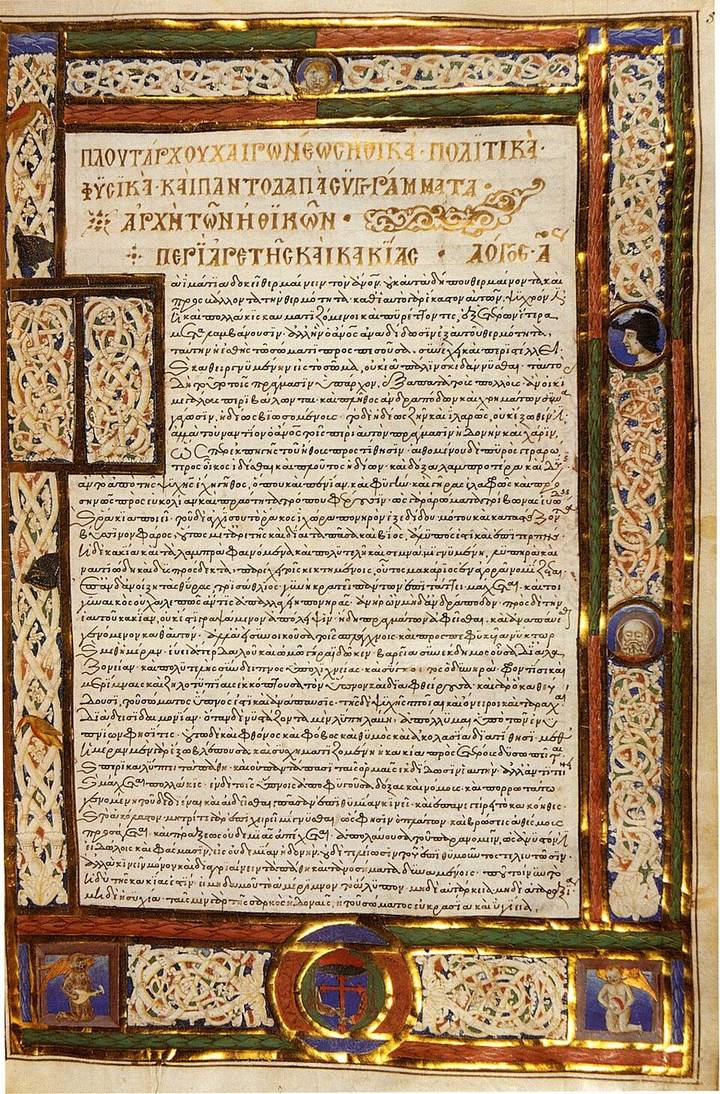
Plutarch's Morals, Vol. IV (includes 'Of Isis and Osiris')
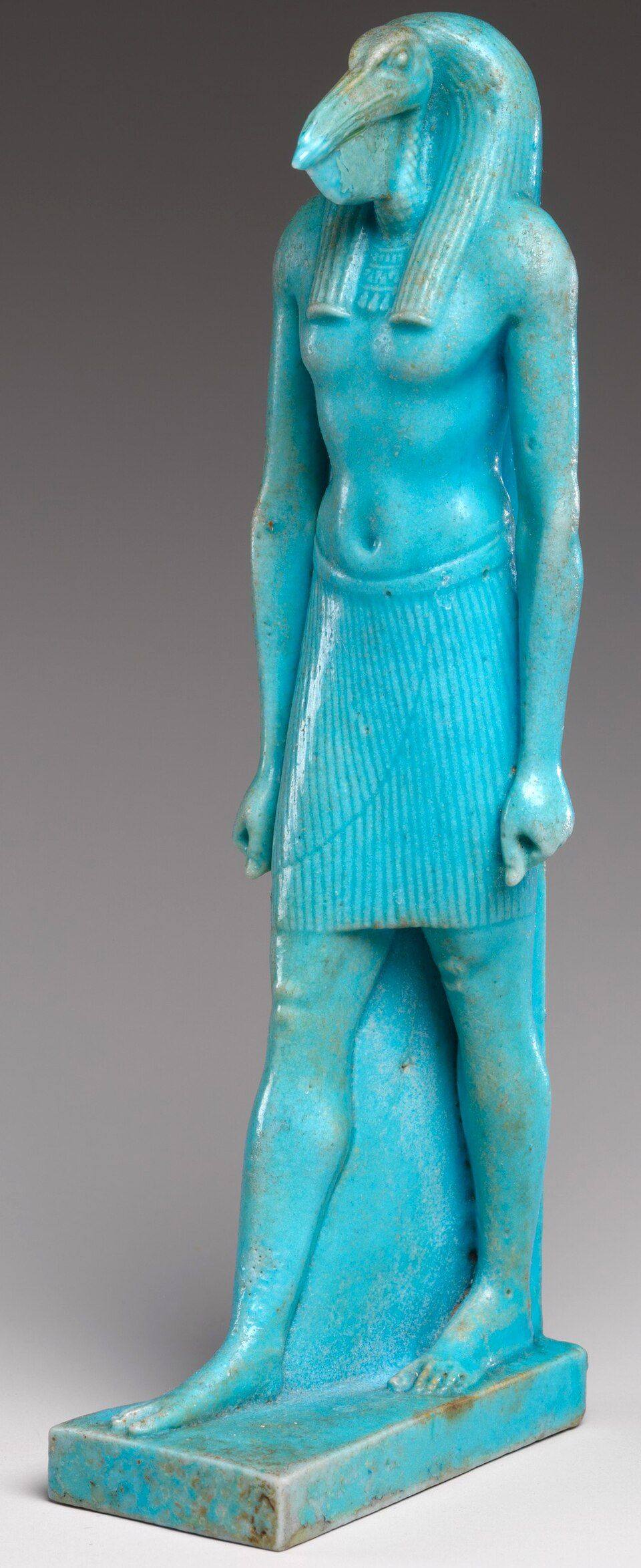
This volume holds Plutarch's essay on Isis and Osiris, the best Greek account of the Egyptian myth of a murdered god, scattered across the land and put back together by his wife.
Public domain copy
Read Plutarch's Morals, Vol. IV (includes 'Of Isis and Osiris') online
hiyersity of Connecticut . libraries
3 T1S3 002MbfiM2 1
U3
00
4^
WILBUR CROSS LIBRARY
The University of Connecticut
The Gift Of Elisha δε Elizabeth Atkins
In Memory Of Chester δε Ruth Greenough
PLUTARCH'S MORALS.
TRANSLATED FROM THE GREEK BY SEVERAL HANDS.
CORRECTED AND REVISED
BT
WILLIAM W. GOODWIN, Ph. D.,
PROFESSOR OF GREEK LITERATURE IN HARVARD UNIVERSITY.
AN INTRODUCTION BY RALPH WALDO EMERSON.
Vol. IV.
BOSTON: LITTLE, BROWN, AND COMPANY.
1878.
Entered according to Act of Congress, in the year 1870, bv
LITTLE, BROWN, ΑΛ'Ο COMPANY,
In the Office of the Librarian of Congress at AVashinaton
CAMBRIDGE: PRESS OF JOHN WILSON AND SON.
CONTENTS OF VOLUME FOURTH.
WITH THE TRANSLATORS' NAMES.
WHY THE ORACLES CEASE TO GIVE ANSWERS.
By Robert Midglet, M.D., and Coll. Med. Lond. Cand.
Two men, Demetrius of Tarsus, from England, and Cleombrotus the Lacedaemonian, from Egypt, meet at Delphi, 3. Their conversation about what Cleombrotus had seen and heard in Egypt, 4. He had visited the oracle of Jupiter Amnion, 4. A remarkable lamp there, which was never extinguished, though its supply of oil was lessened continually, 4-6. The conversation turns on oracles : why have most of the oracles, even in Greece, become silent 1 7. Formerly these oracles gave responses, 8. What responses were given, 8. Are responses now withheld, because of the great wickedness of the time 1 10. The gods are not inconstant or malev- olent, 11. One cause may be found in the diminished population of Greece, 12. When there were more men, there were more responses, 12. God himself has not abolished divination, 13. God is not concerned in all human affairs, 14. There are beings, called Daemons, intermediate between Gods and men, 14. These Daemons were originally human beings, 14. They are not immortal, though very long-lived, 15. A mathematical computation of the possible length of a Daemon's life, 15-17. A Daemon resembles an "isosceles triangle, 17. A Dae- mon compared to the moon, 17, 18. Daemons are employed by the gods as their agents and ministers in human affairs, particularly in matters of worship and religious ceremony, 18. Human sacrifices and cruel rites are required by malignant Daemons, 19. Combat between Apollo and the Dragon Python for the possession of the oracle at Delphi, 20. Daemons are appointed to have the care of oracles ; when the Daemons depart, the oracles must of course fail, 21. That Daemons may be mortal, proved by a story related by one of the company : " The great god Pan is dead," 23. Another story, about the death in Britain of a Daemon, and the terrible storm that followed, 24. Opinions of the Stoics con- cerning Daemons, 24. Epicureans reject the idea of Daemons, and with it the Divine Providence, 25. Story of a stranger encountered by Cleombrotus in his travels, and what he said about Daemons and oracles, 26-28. The wars of the Titans were battles of Daemons with Daemons, 27. Daemons, though not gods, like to be called gods and honored as such, 28. How many worlds are there 1 one hundred and eighty-three, ranged in the form of a triangle, 29. Homer says there are five worlds, 30. Plato makes but one world, 28, 31. Probably there are several worlds, 31. Reasons for this opinion, 32. There is one supreme God, but many inferior gods, 31, 33. A plurality of worlds further discussed, 34, 35. A plurality of worlds does not involve the existence of a plurality of Jupiters, 36. An infinite number of worlds is a chimera : but a certain definite number is quite probable ; and Jupiter may pass from one world to another, as occasion requires.
iv CONTENTS OF VOL. IV.
to regulate its affairs, 36-38. As there are five regular forms of solid bodies, there are probably five worlds, 38, 39. Objections to this opinion, 40. The opinion defended, 41,42. One, or unity; tΛvo, or duality, — are the supreme principles of all things, 42. One and two make three, an odd number ; three and two make five ; we reckon by fives, or by twice five ; all other numbers are pro- duced from these ; we have five senses, and five fingers ; the earth has five zones ; the heaven has five circles ; for these and similar reasons it is inferred that there are five worlds and no more, 42—47. The silence of the oracles is due to tlie fact that the Daemons who presided over tliem liave departed, 47. But how did the Daemons exert their power over the oracles 1 47. If the Daemons, being hu- man spirits disembodied, may foresee and foretell future events, why may not liuman spirits, embodied, possess a similar power? 48, 49. Our souls certainly are endued by nature with this power, 50. This power exists in certain states or dispositions of the body, assisted and enforced by certain exhalations from the earth, 51, 52. Such an exhalation issues from tlie earth at Delphi and other places, 53. But these exhalations are subject to changes, caused by earthquakes, &c., 53, 54. From such causes the oracle may fail, 54. A story about an oracle in Cilicia, 55. Objections to the views now expressed, 56, 57. If the prophetic faculty be a natural endowment, why do we offer sacrifice to the gods, in order to obtain a response 1 57. Because all good comes from the gods ; although our natural wit and reason may help in obtaining it, 58-60. Divination is from God; it is also from wit and reason ; it is promoted by enthusiastic exhalations from the earth, 59. When all these things concur, the oracle gives responses; when any are wanting, the oracle is silent, 60-64.
OF ISIS AND OSIRIS, OR OF THE ANCIENT RELIGION AND PHI- LOSOPHY OF EGYPT.
Bt William Baxter, Piiilalethes.
The knowledge of truth man's greatest blessing ; to be sought of the gods, 65. Isis the goddess of wisdom and knowledge, 66. What makes a true priest of Isis 1 67. Why do the priests of Isis shave tlieir lieads and wear linen garments 1 67. Why are those priests scrupulous about their food ? 68. Why is the bull Apis not watered from the Nile t 68. Wliy do tlie priests of the Sun abstain from wine, or drink it sparingly ? 69. Why do the priests abstain from fish and from onions ? 70. They do not sacrifice the swine, 71. They conceal their wisdom in enig- mas, 72. Hence the enigmas of Pythagoras, 72. Some of tlie Egyptian enigmas stated, 73. The tales related of the Egyptian gods not to be taken literally, 73. A story about the birth of Osiris, 74. Another about the birth of Isis and other deities, 75. The great actions of Osiris, 75. The manner of his death, 76. His wife Isis, her lamentations, 76-78. Her search for her husband, 77. Finds the body of Osiris, 78, 79. About Maneros, the foster-son of Isis, 79. The body of Osiris torn in pieces by Typhon, his murderer, and the members scattered about, 80. The members found and interred in many places, 80. War between Typhon and Horus, the son of Osiris, 80, 81. These stories not to be literally understood, 82. These gods were not kings and mighty men, 83. Semiramis, Sesostris, Cyrus, Ale.xander, were human beings, not deities, 85. Isis, Osiris, and Typhon, were not divine beings, nor human, but Daemons, an intermediate genus, 86. Such also were Saturn, the giants and Titans of the Greeks, 86. This notion is sanctioned by Homer, Hesiod, Plato, Xenocrates, and Empedocles, 86,
CONTENTS OF VOL. IV. V
87. Typhon was a malignant Daemon, 88. Isis and Osiris were good Daemons, afterwards changed into gods, 88. Isis is the same as Proserpine ; Serapis is Pluto,
88. Osiris is identical with Serapis and with Bacchus, 89. Osiris is also identical with the bull Apis, 90. The Egyptians offer disrespect to Typhon, 91. They maltreat the ass and animals and men having red hair, because his hair was red, 91. According to some, Osiris is the Nile, and Typhon the sea ; explanation, 92. The most learned hold Osiris to be the cause of generation, 94. Proofs that Osiris is the same as Bacchus, 95, 96. The Phallic rites, and how they originated, 96, 97. The Nile, and every thing humid, is the efflux of Osiris, and he is thus the cause of all tilings, 96, 97. Tlie country bordering on the Nile is the body of Isis, 98. The conspiracy of Typhon explained, 99. Tlie mourning of Isis, and her recovery of the body of Osiris explained, 100. Another explanation of Typhon, Osiris and Isis, the heavenly bodies, 101. Tlie eclipse of the moon is the death of Osiris, 104. Worship of the dog Anubis, 77, 104. Typhon stands for the principle or cause of evil, distress, and destruction, 105. The Magian or Persian doctrine of two original independent forces or powers ; one the source of light or good, the other of darkness and evil, 106. These maintain an incessant struggle, 107. The final issue will be happy, 108. The same ideas are found among the Chal- deans and the Greeks, 108. These ideas are found also among the Pythagoreans and in Plato, 109. Throughout nature we find the two discordant principles, which are represented by the names Osiris and Typhon, 109, 110. The hieroglyphics and religious rites which refer to these principles, 110-112. Isis is the feminine and productive property of Nature, 113. Horus, son of Isis, represents the world of mind, 114. He has a struggle with Typhon, 114, 115. The three constituents of the divine nature, 115. Illustrated by a triangle, 115. What Plato says of the production of love, 116, 117. Fables are doctrinal only in part, 117. The fable of Typhon further explained, 118. Supposed etymology of the words Isis, Osiris, Anubis, and others, 119-121. The sistrum, or timbrel, used at the feasts of Isis, 121. Isis and Osiris produce whatever is orderly and beneficial ; Typhon is the cause of disorder and mischief, 122. These deities are not peculiar to Egypt ; all mankind have them, 123. We are not to rest in the letter of the accounts given of these gods, 124. Sun, moon, earth, fire, wind, water, are not gods, but elements wielded by the gods, and by which the gods exhibit and manifest them- selves, 124. We are to rise above the symbol to the thing symbolized, 125. We should not confound the true idea of God with the appearances and clianges of external nature, 126, 127. The statues of the gods are not the gods, 128. The assumption of the forms of brute animals by the gods is not to be believed, 129. Yet the idolatrous worship of the Egyptians had no better foundation than this behef, 129, 130. Some reasons assigned for brute worship, 131, 132. God is to be worshiped in Nature, not Nature instead of God, 134. The sacred vestments of Isis and Osiris ; their nature and use, 135. Purpose for which incense and perfumes are burnt, 136-139.
CONCERNING SUCH WHOM GOD IS SLOW TO PUNISH.
Bt John Philips, Gent.
" Concerning those whom God is slow to punish." This subject is discussed between Plutarch and several of Ins relatives, Plutarch being the principal speaker. Epicurus had just left the company uttering invectives against the justice of the Deity in the government of the world, 140. It is admitted that the
Vi CONTENTS or VOL. IV.
Read the story behind it
The same story, told elsewhere
Shared story · Births
Born of a Virgin or a God: Miraculous Births Compared
Jesus is not the only hero said to be born of a maiden and a god. Rome, India, Greece and Persia tell it too, and Egypt and India tell the births of Horus and Krishna in their own ways.
Plutarch, On Isis and Osiris (the birth of Harpocrates, the child Horus) is one telling. The same story is told 8 more times, in 4 parts of the world. Follow it:
- Hebrew BibleJerusalem, Kingdom of Judah · c. 740-700 BCE · Ancient text
- HinduNorthern India · c. 400 BCE · Ancient text
- GreekArgos, Greece · c. 1st-2nd century CE · Ancient text
- ChristianWritten in Greek, probably in Syria or Galilee · c. 80-90 CE · Ancient text
- RomanAlba Longa and Rome, Italy · c. 100 CE · Ancient text
- BuddhistLumbini, Nepal · c. 100 CE · Ancient text
- EgyptianEgypt · c. 100 CE · Ancient textTied to this page
- HinduMathura and Gokula, northern India · first millennium CE · Medieval text
- ZoroastrianIran · 9th century CE · Medieval text
The open question: Why do so many traditions give their great figures a birth unlike anyone else's? A shared pattern, or each people's own way of saying "this one is special"? Join the debate
Shared story · Death and return
Gods Who Die and Return: Osiris, Adonis, Persephone, Baldr and Jesus
A god dies, the land mourns, and the god comes back, at least for a season. Egypt, Syria, Greece and Scandinavia all tell it. How close are these stories to Easter, and how close are they really to each other?
Plutarch, On Isis and Osiris is one telling. The same story is told 7 more times, in 5 parts of the world. Follow it:
- GreekGreece · c. 650-550 BCE · Ancient text
- Mesopotamian (seen in Jerusalem)Jerusalem temple, seen in a vision · c. 593-571 BCE · Ancient text
- HinduDvaraka, western India · c. 400 BCE · Ancient text
- ChristianWritten in Greek from Ephesus to Corinth · c. 53-55 CE · Ancient text
- EgyptianEgypt · c. 100 CE · Ancient textTied to this page
- RomanRome · c. 100 CE · Ancient text
- Phoenician / SyrianByblos, Lebanon · c. 150 CE · Ancient text
- NorseIceland · c. 1220 CE · Medieval text
The open question: Is the death-and-return story one pattern across the ancient world, or are the stories too different to group together? Scholars still argue, so where do you land? Join the debate
Shared story · Births
Born at Midwinter: December 25 and the Winter Solstice
The shortest day of the year, when the light starts to come back, was marked as a birthday in Rome, Egypt and Syria, and Christians in Rome chose it for Christmas. The sources side by side.
Plutarch, On Isis and Osiris (the birth of Harpocrates) is one telling. The same story is told 5 more times, in 4 parts of the world. Follow it:
- RomanRome · c. 77 CE · Ancient text
- ChristianBethlehem · c. 85-95 CE · Ancient text
- EgyptianEgypt · c. 100 CE · Ancient textTied to this page
- ChristianRome · 336 CE · Ancient text
- RomanRome · 354 CE · Ancient text
- Syrian and EgyptianSyria and Egypt · 1922 · Modern book
The open question: Was the birth date chosen for the solstice, worked out from other dates, or both? The early sources point more than one way, so which do you think? Join the debate
Where this comes from
Comes from On Isis and Osiris, by Plutarch, the copy of Plutarch's Morals, Vol. IV (includes 'Of Isis and Osiris') we host here. Plutarch's Morals translated from the Greek by several hands, corrected and revised by William W. Goodwin, volume IV (Boston: Little, Brown, 1878), containing 'Of Isis and Osiris'.
What this means
A primary record or a faithful public-domain copy of one. This page says what the file is and where it comes from; it does not say every claim in it is true.
Primary records exist: an original document, a published text, an official file or a dated report. We link to them. This level says the record exists and what it says, not that every claim in it is true.
Where and when was it found?
- Written
- By Plutarch (born before 50 CE, died after 120 CE); On Isis and Osiris is one of the essays of his Moralia
- Where it was found
- Greek manuscripts of the Moralia; the oldest of the group that carries the ancient list of his works is in Paris
- When it was found
- Never lost; copied through the Byzantine period
- Oldest copy
- The oldest Moralia manuscript carrying the ancient list of Plutarch's works is Parisinus gr. 1678, a 10th-century copy in Paris; the only manuscript with all 78 surviving treatises dates to shortly after 1302
- Original language
- Ancient Greek
About this copy
This is a public-domain copy. The line below says where the file comes from and why we may host it.
Why we can share it: Internet Archive metadata: possible-copyright-status NOT_IN_COPYRIGHT, copyright-region US. Published 1878.
Updated