












What is Gun known for?
Gun is the father of Yu the Great in Chinese flood mythology. During the reign of the sage king Yao, a flood covered the land, and Gun was chosen to control it. He tried for nine years, mainly by building dams and dykes to hold the water back, and failed.
The Shan Hai Jing (Classic of Mountains and Seas) gives a more mythic version. Gun steals xirang, a self-growing soil, from the Supreme God without permission and uses it to block the waters. In punishment the fire god Zhurong kills him at Feather Mountain (Yushan). Yu is then born from Gun's body, and in some versions Gun himself turns into an animal, such as a yellow bear or a dragon. Other texts say Shun banished or imprisoned him.
Gun is a mythological figure. The contrast between his blocking strategy and Yu's later success by channeling the water became a lasting lesson in Chinese political thought.
The same story, told elsewhere
Shared story · Floods and lost lands
Flood Stories Around the World
A god warns one good man, a boat is built, the world drowns and birds are sent out to find land. The same story turns up from Iraq to India to Greece, with cousins in China, Scandinavia and Guatemala.
Book of Documents (Shu Jing), Canon of Yao is one telling. The same story is told 9 more times, in 6 parts of the world. Follow it:
- Vedic IndiaNorthern India · c. 800-600 BCE · Ancient text
- Babylonian (Akkadian)Mesopotamia · 7th century BCE · Ancient text
- Hebrew BibleJudah / Babylon · c. 600-400 BCE · Ancient text
- ChineseYellow River valley, China · 1st millennium BCE · Ancient textTied to this page
- Zoroastrian (Persian)Iran / Central Asia · 1st millennium BCE · Ancient text
- Babylonian, retold in GreekBabylon · c. 280 BCE · Ancient text
- GreekGreece · 1st or 2nd century CE · Ancient text
- IslamArabia · 7th century CE · Medieval text
- NorseIceland · c. 1220 CE · Medieval text
- K'iche' MayaHighland Guatemala · c. 1554-1558 · Retold in English
The open question: One real flood remembered by many peoples, or many different floods that each people told in its own way? Join the debate
Mentioned on these pages
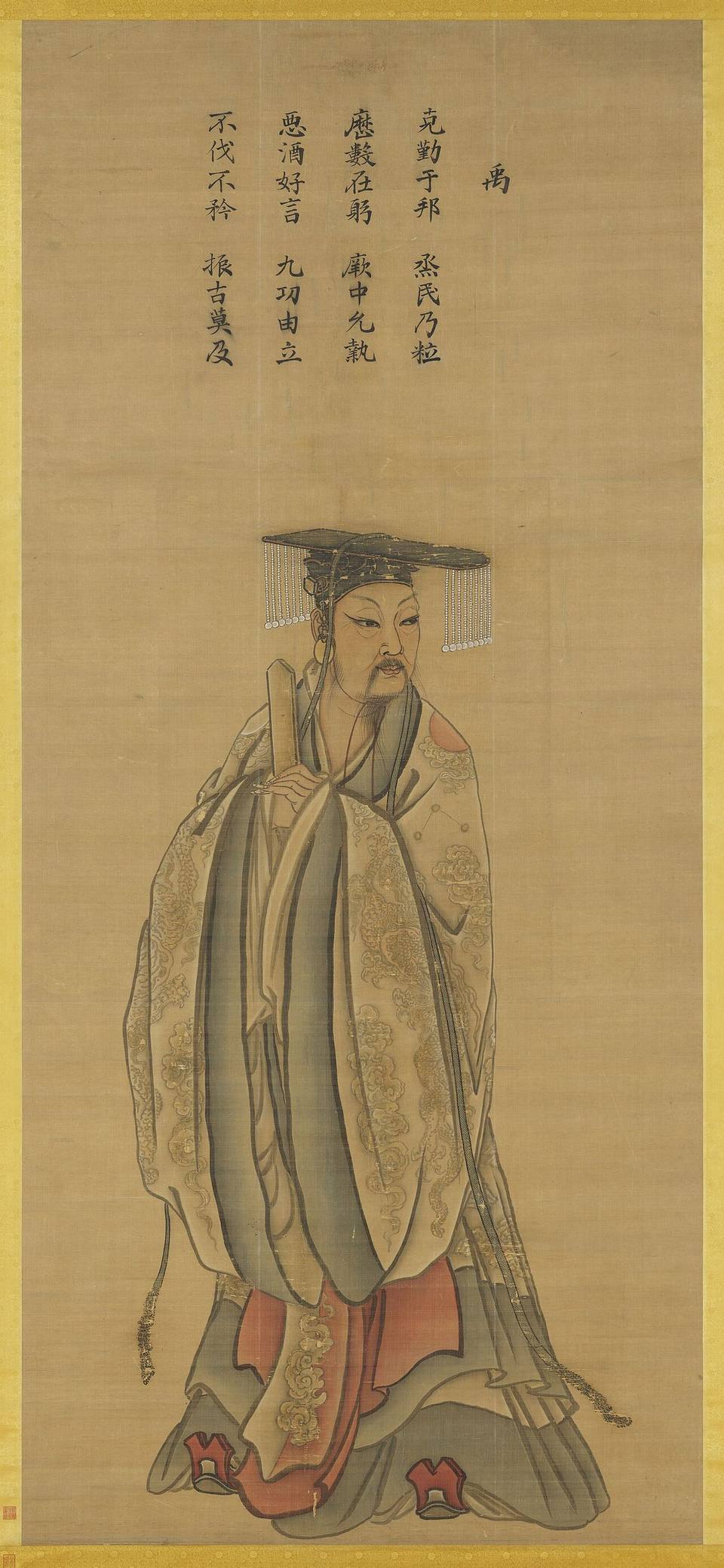
- FileYu the Great
Linked people and places
Where this comes from
Comes from Wikipedia, 'Gun (Chinese mythology)'. A free online encyclopedia written and edited by volunteers. It is a good starting point and usually lists its own sources, but anyone can change it, so we treat it as a guide to better sources, not the final word.
What this means
A story or tradition. It is documented as a story; nothing independent shows it happened.
Gun is known from stories, scripture or tradition. The texts are real and we quote them (for example Wikipedia, 'Gun (Chinese mythology)'), but nothing outside those texts shows that Gun was real as described.
The page covers something known from myths, scripture or tradition. The texts are real and we quote them, but no independent record shows the events or beings were real.
Sources
- WikipediaA free online encyclopedia written and edited by volunteers. It is a good starting point and usually lists its own sources, but anyone can change it, so we treat it as a guide to better sources, not the final word.Wikipedia, 'Gun (Chinese mythology)'Reference Archived copy, 2026-08-29
- Encyclopaedia BritannicaAn encyclopedia first published in Scotland in 1768 and now online. Its articles are written and checked by named experts and editors, which makes it a reliable source for basic facts.Encyclopaedia Britannica, 'Shun'Reference Archived copy, 2026-04-10
No public-domain picture of this person yet. We do not show drawn or generated likenesses.