The record
There have been, and will be again, many destructions of mankind arising out of many causes… once upon a time Phaethon, the son of Helios… burnt up all that was upon the earth, and was himself destroyed by a thunderbolt. Now this has the form of a myth, but really signifies a declination of the bodies moving in the heavens around the earth, and a great conflagration of things upon the earth, which recurs after long intervals.
Plato, Timaeus 22b–d · Greece and Rome
Translation: Benjamin Jowett, The Dialogues of Plato (1871) · Public domain
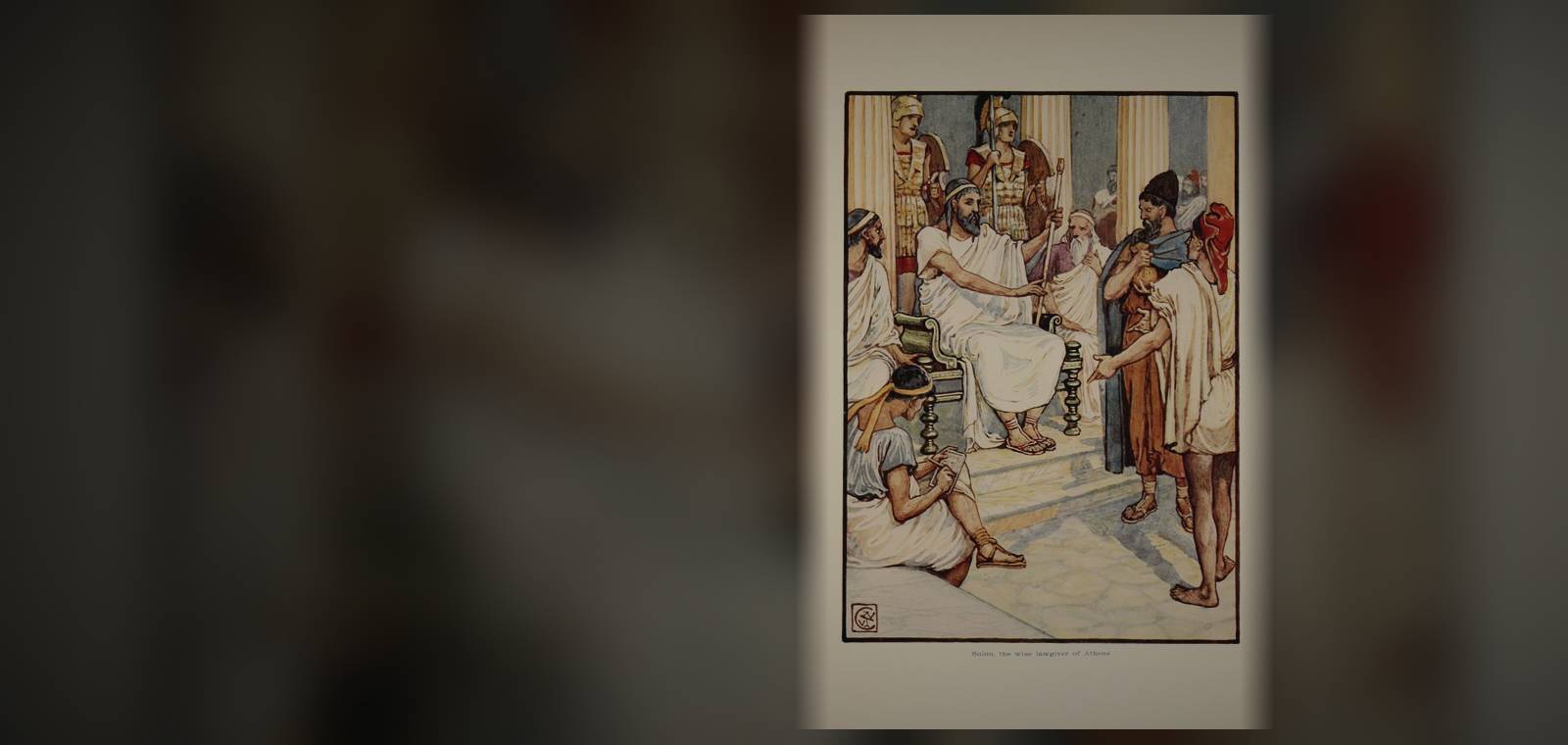
Solon was a real Athenian statesman and poet of the early sixth century BCE, famous for reforming the laws of Athens and then traveling abroad for ten years. Herodotus and later writers say he visited Egypt. In Plato's Timaeus, this journey becomes the source of the Atlantis story, told to Solon by the priests of the goddess Neith at Sais in the Nile Delta.
When Solon tries to impress them with the oldest Greek traditions, an aged priest answers: O Solon, Solon, you Hellenes are never anything but children, and there is not an old man among you.
He explains that mankind has been destroyed many times, by fire and by water. The Greek myth of Phaethon, who crashed the sun's chariot and burned the earth, really signifies a declination of the bodies moving in the heavens around the earth, and a great conflagration.
Egypt, the priest says, was spared because the Nile protects it, so its temples keep records going back eight thousand years. Elsewhere each disaster leaves only the unlettered survivors, and people must start over "like children", knowing nothing of what came before. Plutarch, in his Life of Solon, even names Solon's teachers: Psenophis of Heliopolis and Sonchis of Sais.
This passage is a favorite of catastrophists and lost-civilization writers because it states their thesis in an ancient voice: myths are distorted memories of real sky-caused disasters, and civilization has been reset more than once. Classicists note that Plato may have framed the whole story himself, and that no Egyptian record of the conversation or of Atlantis has ever been found.