The record
In the late 1800s the Smithsonian Institution's Bureau of Ethnology dug into ancient earth mounds across the eastern United States. Its report, written by Cyrus Thomas and published in 1894, runs to more than 700 pages. In one mound on Long Island in Roane County, Tennessee, the diggers found a single burial. The report says: The length from the base of the skull to the bones of the toes was found to be 7 feet 3 inches. It is probable, therefore, that this individual when living was fully 7 1/2 feet high.
In the Great Smith mound in West Virginia it records a skeleton measuring 7 1/2 feet in length and 19 inches across the shoulders,
wearing copper bracelets.
Those lines, and many newspaper stories of the same era, are the root of a modern claim that the Smithsonian found a lost race of giants and then hid or destroyed the bones. The claim spread online from the 2000s, helped by a doctored photograph of a giant skeleton beside a digger. National Geographic said in 2007: The National Geographic Society has not discovered ancient giant humans.
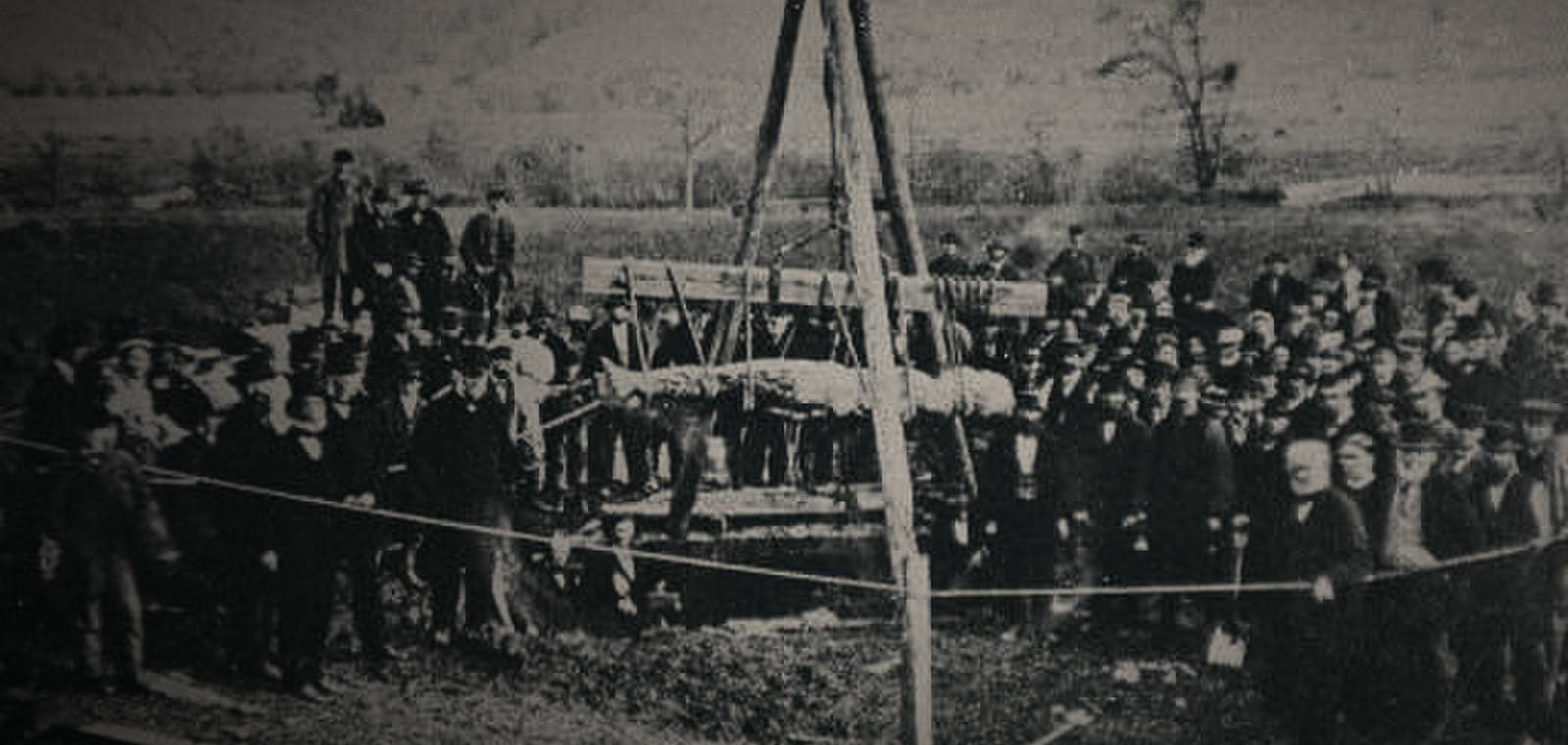
Giants also drew crowds in the 1800s for another reason. In October 1869 workers digging a well on a farm in Cardiff, New York, uncovered a ten-foot stone man. The "Cardiff Giant" had been carved from gypsum on the orders of a cigar maker named George Hull and buried on the farm. Crowds paid 50 cents each to see it before a Yale paleontologist called it of very recent origin, and a most decided humbug.
The 1894 report itself concluded that the mound builders were Native American peoples who belonged to several different tribes or nations,
not a vanished race.