The record
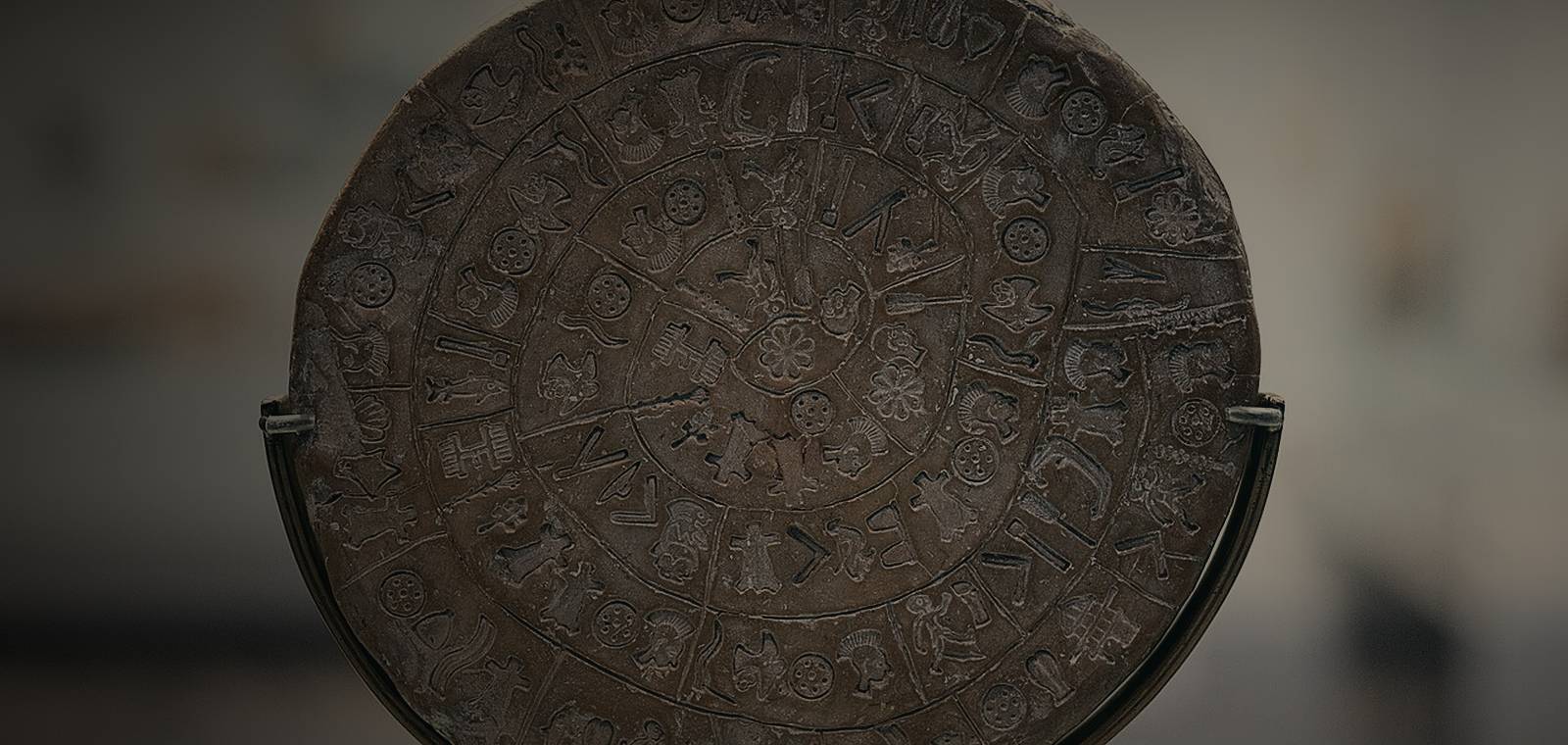
In July 1908 the Italian archaeologist Luigi Pernier was digging at the palace of Phaistos on Crete. Under later Greek buildings at the north-east end of the hill he found a room holding objects from the end of the Middle Minoan Period, and among them a clay disk covered on both sides with signs.
Arthur Evans, who had Pernier's photographs, described it in Scripta Minoa the next year. The disk is 17 centimeters across, and on each face the writing coils from the center outward. It has some 241 signs and 61 sign-groups
, and every sign has been separately impressed on the clay while in a soft state by a stamp or punch. It is in fact a printed inscription.
The signs are grouped between curving lines and separated by upright strokes. Pernier told Evans that the whole disk might possibly be a matrix, or stamp, itself.
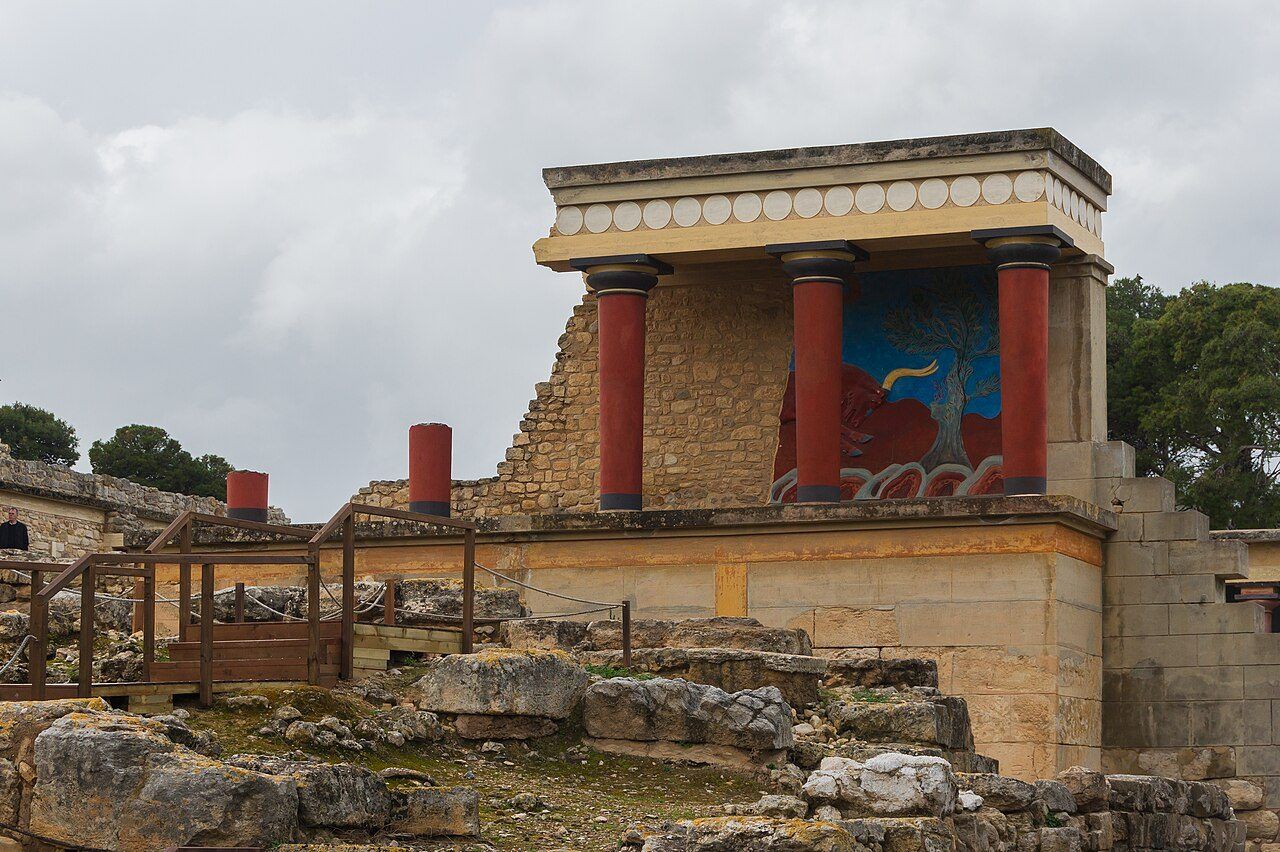
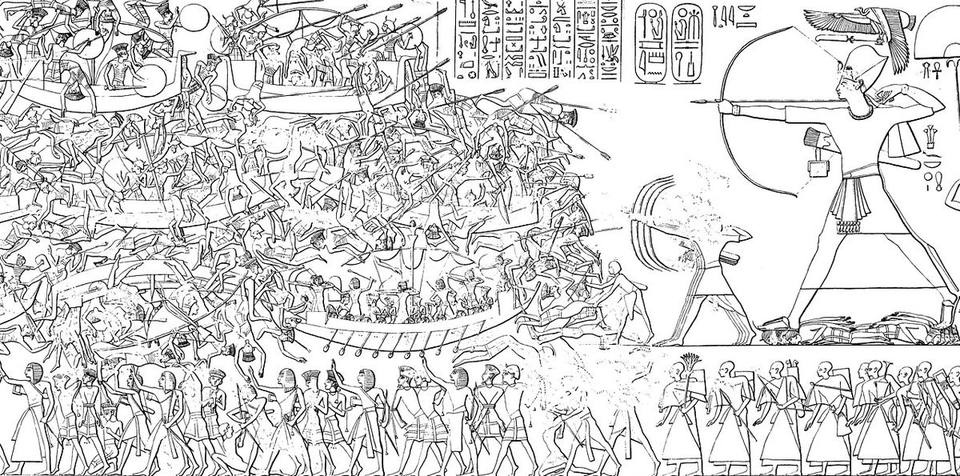
Evans also thought the people drawn on it did not look Minoan. He compared a man's crested cap to the headgear of the sea raiders shown in Egyptian records and the woman's dress to nothing known from Crete. In 1921 he went further, reading the disk as a hymn of victory, a "Te Deum", after a sea raid. In 2025 the palace of Phaistos itself joined the UNESCO World Heritage List with Knossos and four other Minoan sites.