












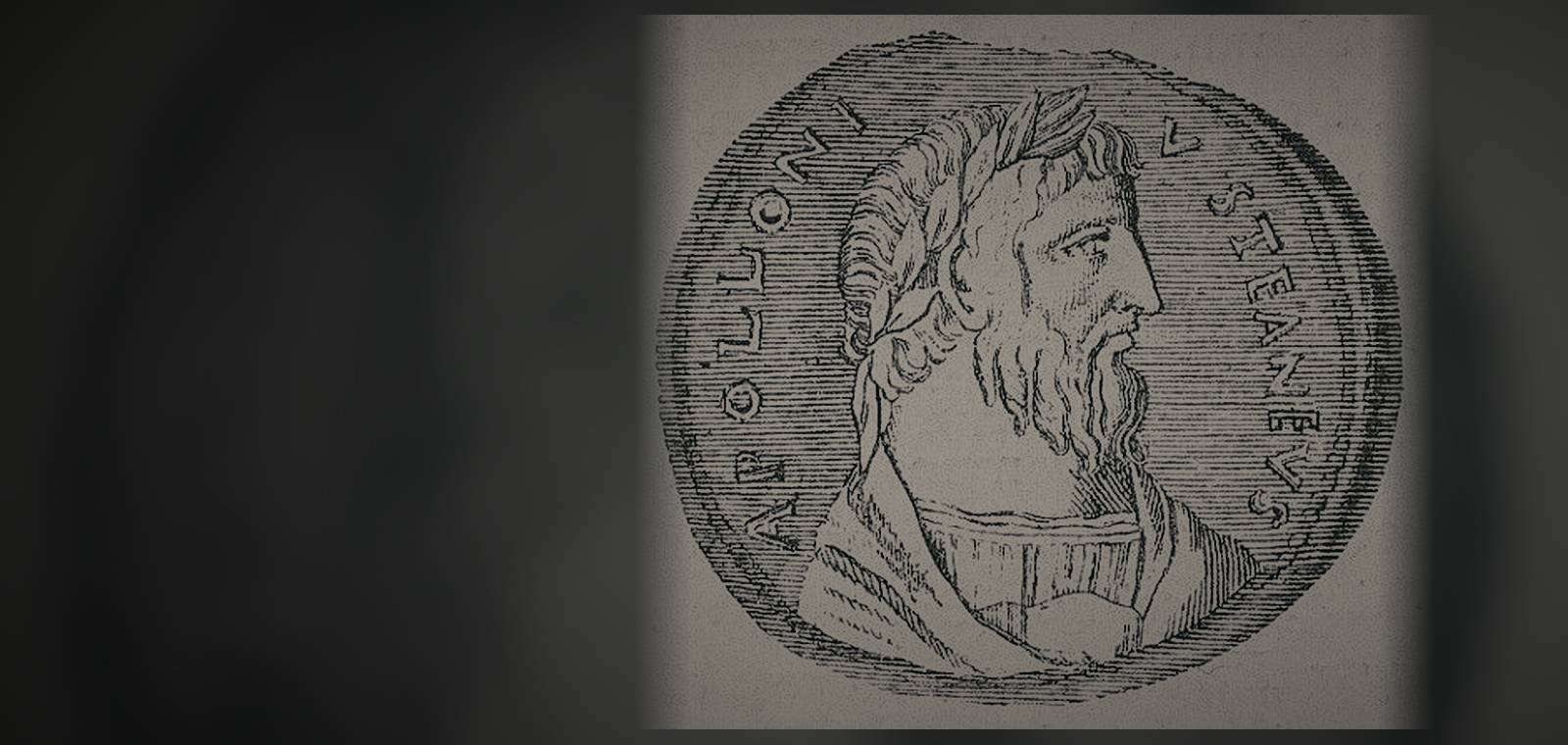
What is Apollonius of Tyana known for?
Apollonius of Tyana was a Neo-Pythagorean philosopher from Cappadocia who lived in the first century CE. Most of what is told about him comes from the Life of Apollonius written by Philostratus about a century later, which describes his travels to India and Egypt, his ascetic life, and miracles such as healing and foretelling events. Pagan writers later held him up as a rival to Jesus, and Christian writers argued against him.
In the Arabic world he became Balinas, a master of talismans and secret knowledge. The Kitab Sirr al-Khaliqa, the Book of the Secret of Creation, compiled in the late 8th or early 9th century and attributed to him, contains the oldest known version of the Emerald Tablet. In its frame story Balinas enters a vault beneath a statue of Hermes and finds an old man holding a tablet of emerald. Historians regard the attribution as legendary.
Mentioned on these pages
- FileEmerald Tablet
Linked people and places
Where this comes from
Comes from Encyclopaedia Britannica, 'Apollonius of Tyana'. An encyclopedia first published in Scotland in 1768 and now online. Its articles are written and checked by named experts and editors, which makes it a reliable source for basic facts.
What this means
A real person with records. Sources are listed below.
For Apollonius of Tyana, the original record exists and is linked: Encyclopaedia Britannica, 'Apollonius of Tyana'. That tells you the record is real and what it says. It does not mean every claim in it is true.
Primary records exist: an original document, a published text, an official file or a dated report. We link to them. This level says the record exists and what it says, not that every claim in it is true.
Sources
- Encyclopaedia BritannicaAn encyclopedia first published in Scotland in 1768 and now online. Its articles are written and checked by named experts and editors, which makes it a reliable source for basic facts.Encyclopaedia Britannica, 'Apollonius of Tyana'Reference Archived copy, 2026-08-12
- WikipediaA free online encyclopedia written and edited by volunteers. It is a good starting point and usually lists its own sources, but anyone can change it, so we treat it as a guide to better sources, not the final word.Wikipedia, 'Emerald Tablet'Reference Archived copy, 2026-09-22