Credible Theories Sign in

The record

From the text
And Cush begat Nimrod: he began to be a mighty one in the earth. He was a mighty hunter before the LORD… And the beginning of his kingdom was Babel.
Documented · Ancient text, c. 900–500 BCE
Genesis 10:8–10 · Hebrew Bible
Translation: King James Version (1611; standard 1769 text), with Apocrypha · Public domain

Genesis gives Nimrod only a few verses, but they are packed. Son of Cush, he began to be a mighty one in the earth. He was a mighty hunter before the LORD. His kingdom began with Babel, and Erech, and Accad, and Calneh, in the land of Shinar, and from there he built Nineveh and other cities. In other words, he is the Bible's first empire-builder, placed in Mesopotamia. Micah 5:6 even calls Assyria the land of Nimrod.

The Hebrew for "mighty one" is gibbor, the same word used in Genesis 6:4 for the "mighty men" born to the sons of God. Later readers noticed. The Greek Bible calls Nimrod a giant, and Jewish tradition made him the villain behind the Tower of Babel. Josephus says Nimrod urged people to build a tower too high for any flood to reach.

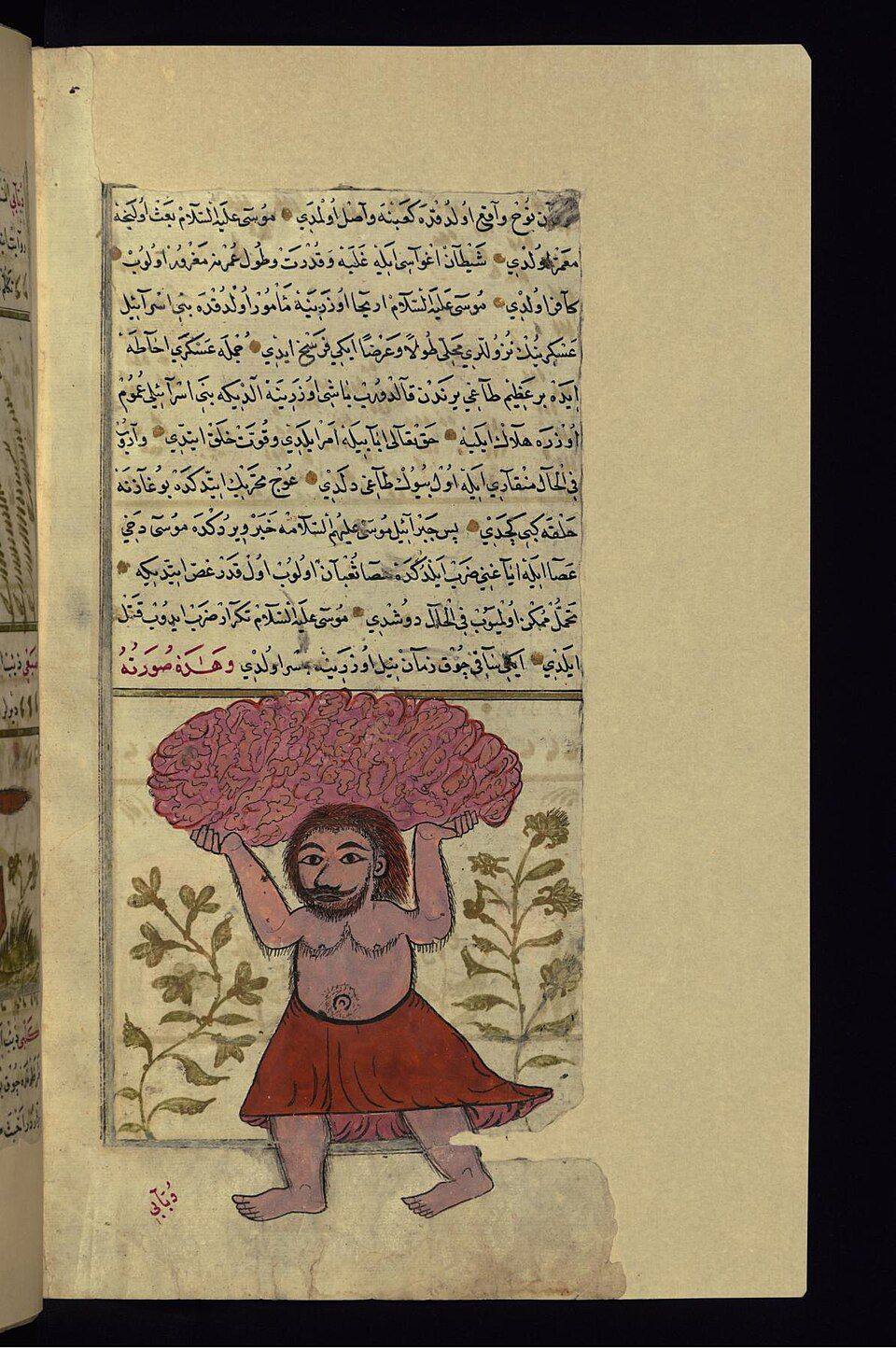
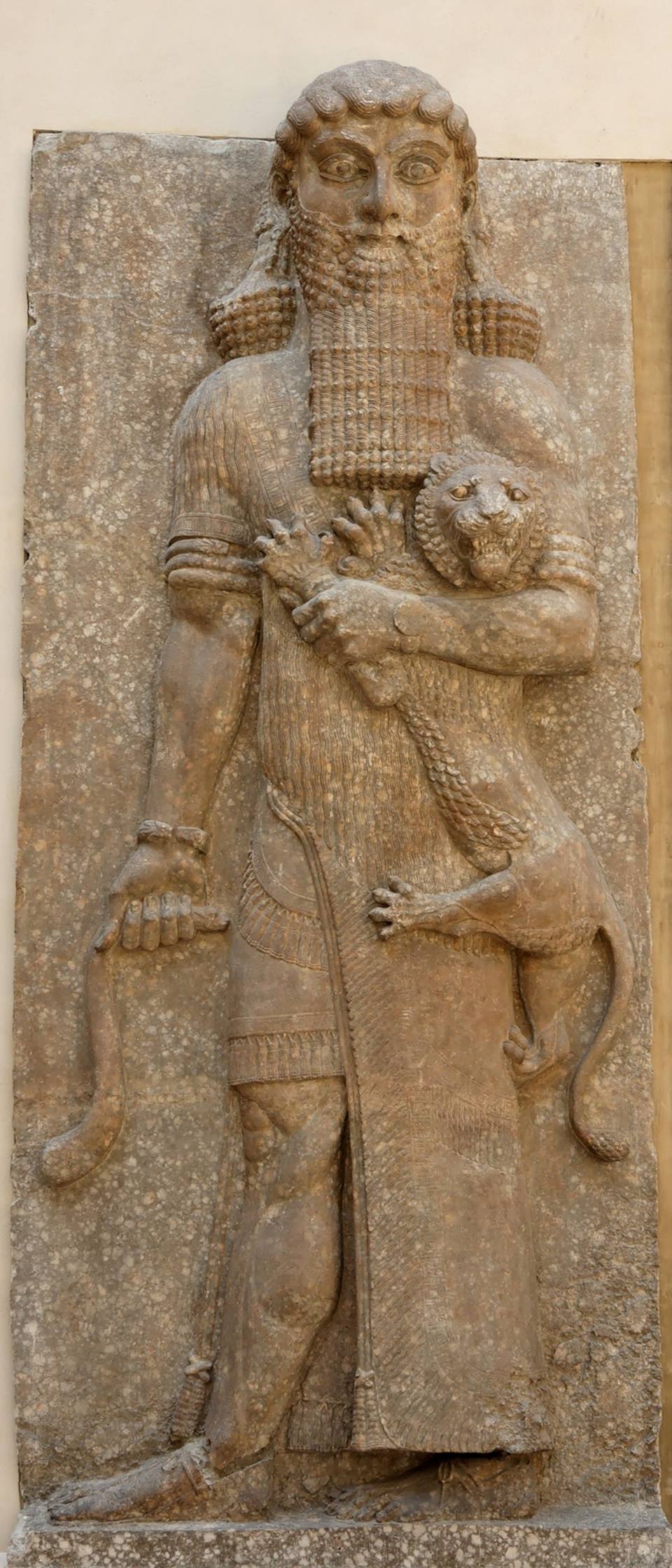
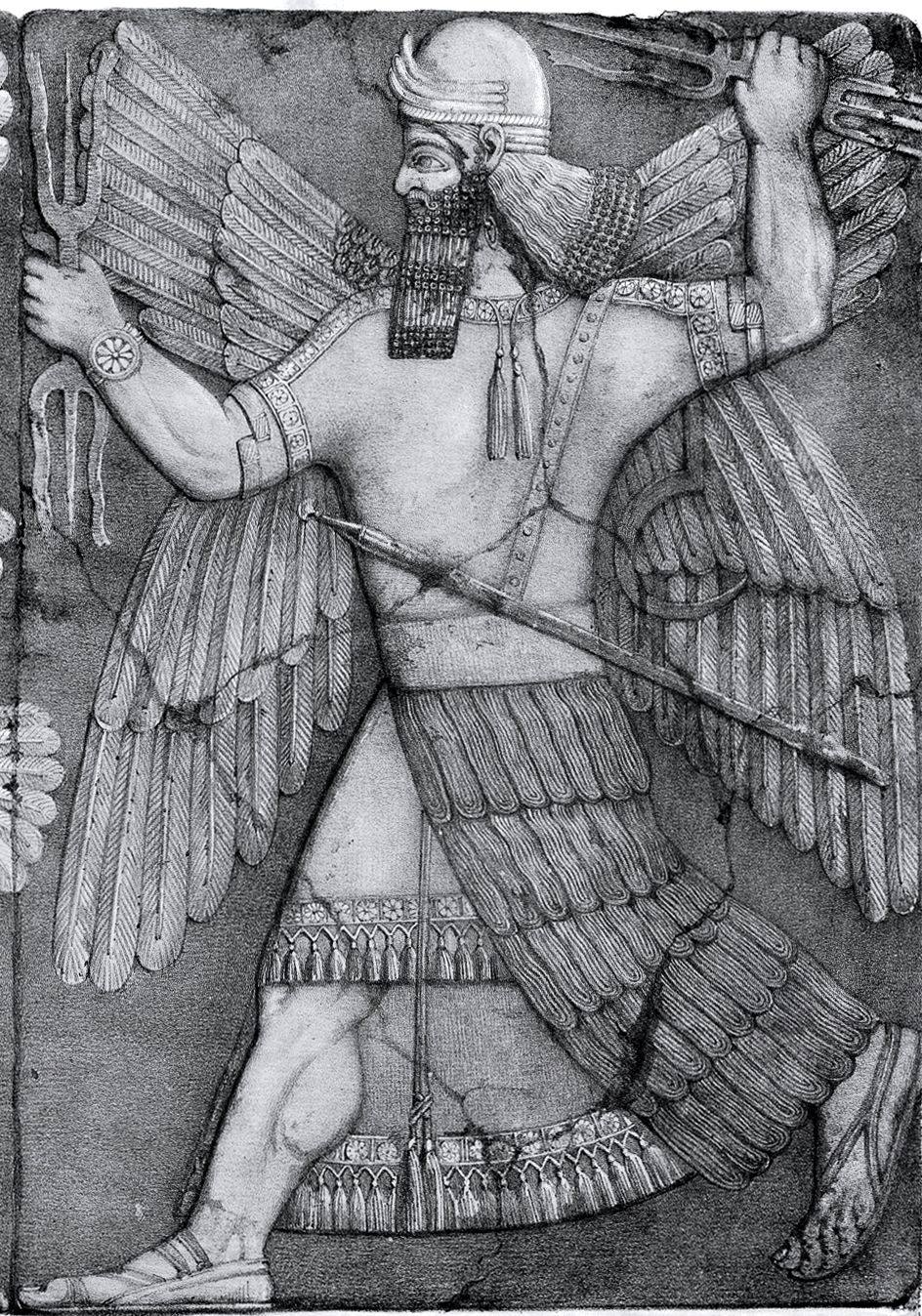
Legends grew around him. Jewish and Islamic stories say he threw the young Abraham into a furnace and Abraham walked out unharmed. The Book of Jasher gives him Adam's garments, which made animals kneel. Islamic tradition says he died when a gnat flew into his head. Historians have tried to match him with real rulers or gods: Sargon of Akkad, the Assyrian king Tukulti-Ninurta I, the god Ninurta, or Gilgamesh. None fits perfectly. The Assyrian ruin called Nimrud was named after him by later local tradition.
The same story, told elsewhere

Shared story · Floods and lost lands

Towers to Heaven

Babel is the famous one, but Babylonians, Greeks, the Quran, Mexico, China and the Zambezi all tell of people trying to build or climb their way up to the gods, and failing.

Genesis 11 (Babel) is one telling. The same story is told 7 more times, in 5 parts of the world. Follow it:

  1. GreekIonia / Greece · c. 8th to 7th century BCE · Ancient text
  2. Hebrew BibleBabylon · c. 600-400 BCE · Ancient textTied to this page
  3. ChineseChina · 1st millennium BCE · Ancient text
  4. Jewish (Second Temple)Judea · c. 160-150 BCE · Ancient text
  5. Babylonian / Greek (Abydenus, after Berossus)Babylon · c. 2nd century CE · Ancient text
  6. IslamArabia · 7th century CE · Medieval text
  7. Aztec / Nahua (Cholula)Cholula, central Mexico · c. 1566 · Recorded folklore
  8. Lozi (A-Louyi), Upper ZambeziUpper Zambezi · 1901 · Recorded folklore

The open question: Is the tower story about one real building, about pride, or about why people speak different languages? Join the debate

Questions people ask about Nimrod

Who was Nimrod in the Bible?

Genesis 10:9 says his skill as a hunter became a proverb that people quoted. He is also named in 1 Chronicles 1:10. In modern American slang 'nimrod' means a fool, a shift often credited to Bugs Bunny cartoons, where Bugs mockingly calls the hunter Elmer Fudd 'poor little Nimrod'.

Was Nimrod a giant?

The Septuagint calls him a 'giant hunter', and some early readers took that literally. Augustine, working from the Greek, argued that 'before the Lord' really meant 'against the Lord', turning Nimrod into a rebel. The Hebrew text never gives his size. Modern scholars usually treat the giant label as an interpretation added by later readers.

What happened to the ruins of Nimrud?

The Assyrian capital, ancient Kalhu, was dug up by Austen Henry Layard in the 1840s, who sent its winged bull statues and carved panels to the British Museum. Iraqi archaeologists found rich royal tombs there in 1988 and 1989. In 2015 the Islamic State group bulldozed and blew up much of the site, which UNESCO called a war crime.

The open question

Still strange: Jewish and Islamic stories say he threw the young Abraham into a furnace, and Abraham walked out unharmed.

Book of Jasher: Is It the Lost Book the Bible Mentions? →
  1. Step 1 of 4 · This fileNimrod
  2. Step 2 of 4 · The passageNimrod, the mighty one, Genesis 10:8–10
  3. Step 3 of 4 · The longer textThe King James Bible (1611)
  4. Step 4 of 4 · Next fileBook of Jasher: Is It the Lost Book the Bible Mentions?
About these videos

Found by a YouTube search for this topic, not checked by us. The player loads from YouTube only when you press play.

Where it turns up

Where this comes from

EvidenceMyth or legend

Comes from Genesis 10:8–12, King James Version. The Book of Genesis: The first book of the Bible, telling of Creation, Adam and Eve, Noah's Flood and the families of Abraham, Isaac and Jacob. Scholars think it was written and edited over several centuries and finished by roughly 500 to 400 BC. The oldest surviving copies are pieces of the Dead Sea Scrolls.

What this means

A story or tradition. It is documented as a story; nothing independent shows it happened.

Nimrod is known from stories, scripture or tradition. The texts are real and we quote them (for example Genesis 10:8–12, King James Version), but nothing outside those texts shows that Nimrod was real as described.

The page covers something known from myths, scripture or tradition. The texts are real and we quote them, but no independent record shows the events or beings were real.

See all five labels

Sources

  1. The Book of GenesisThe first book of the Bible, telling of Creation, Adam and Eve, Noah's Flood and the families of Abraham, Isaac and Jacob. Scholars think it was written and edited over several centuries and finished by roughly 500 to 400 BC. The oldest surviving copies are pieces of the Dead Sea Scrolls.Genesis 10:8–12, King James Version Online copyPrimary text Archived copy, 2026-10-03
  2. The Book of MicahA short book of the Bible by Micah, a prophet in the kingdom of Judah in the late 700s BC, when Assyria threatened it. It is one of the twelve short prophet books at the end of the Hebrew Bible.Micah 5:6, King James Version Online copyPrimary text
  3. The Jewish Encyclopedia (1901 to 1906)A 12-volume encyclopedia of Jewish history, religion and writings by leading scholars, published in New York from 1901 to 1906. It is still respected, but it is over 100 years old, so it misses later finds such as the Dead Sea Scrolls.Jewish Encyclopedia (1906), "Nimrod"Reference Archived copy, 2026-05-16
  4. WikipediaA free online encyclopedia written and edited by volunteers. It is a good starting point and usually lists its own sources, but anyone can change it, so we treat it as a guide to better sources, not the final word.Wikipedia, "Nimrod"Reference Archived copy, 2026-10-03

Quotations come from public-domain translations. A book in our Library links to its Library page; other links open the free online copy or the reference page.

Updated

Credible or not?

Tap one to see how other readers voted.

Discussion