













What is Maimonides known for?
Moses Maimonides, known in Hebrew by the acronym Rambam, was born in Córdoba in 1135. His family left Spain after the Almohad conquest and eventually settled in Egypt, where he served as a physician at court and as a leader of the Jewish community until his death in 1204.
Britannica calls him the foremost intellectual figure of medieval Judaism. His Mishneh Torah is a systematic code of Jewish law, and his Guide for the Perplexed, written in Arabic, tries to reconcile the Bible with Aristotelian philosophy. He also wrote on logic and medicine.
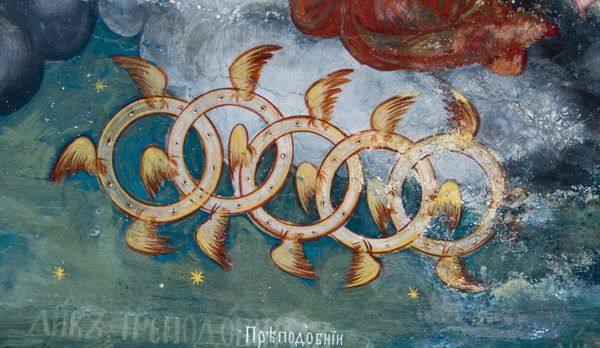
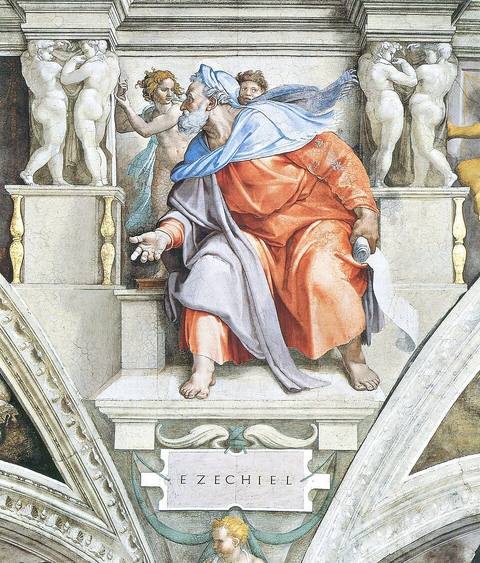
In the first book of the Mishneh Torah (Foundations of the Torah, chapter 2) he lists ten ranks of angels, with the Hayyot ha-Kodesh at the top and the Ofanim second. He explained biblical angels philosophically, as intelligences or forces rather than winged bodies, and he treated the visions of Ezekiel's chariot as deep matters to be taught only privately.
Titles and honors
- Offices held
- Nagid (leader) of the Jewish community in Egypt c. 1171; 1195
- Court physician to Qadi al-Fadil, then Saladin
Mentioned on these pages
- FileOphanim (the wheels)
- PersonEnosh
Linked people and places
Where this comes from
Comes from Encyclopaedia Britannica, 'Moses Maimonides'. An encyclopedia first published in Scotland in 1768 and now online. Its articles are written and checked by named experts and editors, which makes it a reliable source for basic facts.
What this means
A real person with records. Sources are listed below.
For Maimonides, the original record exists and is linked: Encyclopaedia Britannica, 'Moses Maimonides'. That tells you the record is real and what it says. It does not mean every claim in it is true.
Primary records exist: an original document, a published text, an official file or a dated report. We link to them. This level says the record exists and what it says, not that every claim in it is true.
Sources
- Encyclopaedia BritannicaAn encyclopedia first published in Scotland in 1768 and now online. Its articles are written and checked by named experts and editors, which makes it a reliable source for basic facts.Encyclopaedia Britannica, 'Moses Maimonides'Reference Archived copy, 2026-08-31
- Stanford Encyclopedia of PhilosophyA free online encyclopedia of philosophy from Stanford University. Each article is written by an expert, checked by other experts and kept up to date, which makes it one of the most trusted sources in its field.Stanford Encyclopedia of Philosophy, 'Maimonides'Reference
- WikipediaA free online encyclopedia written and edited by volunteers. It is a good starting point and usually lists its own sources, but anyone can change it, so we treat it as a guide to better sources, not the final word.Wikipedia, 'Maimonides'Reference