












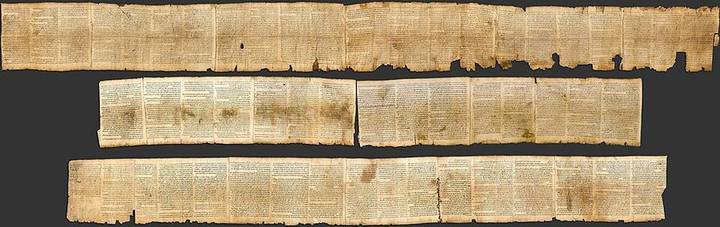
The King James Bible (1611)
The English Bible that gave the world the line about giants in the earth, in the words most of this site quotes. Read Genesis 6 and Numbers 13 for yourself, then follow the strange story of who the Nephilim were.
Public domain copy
Read The King James Bible (1611) online
The King James Version of the Bible Digitized by Project Gutenberg, ebook #10
The Old Testament of the King James Version of the Bible The First Book of Moses: Called Genesis The Second Book of Moses: Called Exodus The Third Book of Moses: Called Leviticus The Fourth Book of Moses: Called Numbers The Fifth Book of Moses: Called Deuteronomy The Book of Joshua The Book of Judges The Book of Ruth The First Book of Samuel The Second Book of Samuel The First Book of the Kings The Second Book of the Kings The First Book of the Chronicles The Second Book of the Chronicles Ezra The Book of Nehemiah The Book of Esther The Book of Job The Book of Psalms The Proverbs Ecclesiastes The Song of Solomon The Book of the Prophet Isaiah The Book of the Prophet Jeremiah The Lamentations of Jeremiah The Book of the Prophet Ezekiel The Book of Daniel Hosea Joel Amos Obadiah Jonah Micah Nahum Habakkuk Zephaniah Haggai Zechariah Malachi
The New Testament of the King James Bible The Gospel According to Saint Matthew The Gospel According to Saint Mark The Gospel According to Saint Luke The Gospel According to Saint John The Acts of the Apostles The Epistle of Paul the Apostle to the Romans The First Epistle of Paul the Apostle to the Corinthians The Second Epistle of Paul the Apostle to the Corinthians The Epistle of Paul the Apostle to the Galatians The Epistle of Paul the Apostle to the Ephesians The Epistle of Paul the Apostle to the Philippians The Epistle of Paul the Apostle to the Colossians The First Epistle of Paul the Apostle to the Thessalonians The Second Epistle of Paul the Apostle to the Thessalonians The First Epistle of Paul the Apostle to Timothy The Second Epistle of Paul the Apostle to Timothy The Epistle of Paul the Apostle to Titus The Epistle of Paul the Apostle to Philemon The Epistle of Paul the Apostle to the Hebrews The General Epistle of James The First Epistle General of Peter The Second General Epistle of Peter The First Epistle General of John The Second Epistle General of John The Third Epistle General of John The General Epistle of Jude The Revelation of Saint John the Divine
The Old Testament of the King James Version of the Bible
The First Book of Moses: Called Genesis
1:1 In the beginning God created the heaven and the earth.
1:2 And the earth was without form, and void; and darkness was upon the face of the deep. And the Spirit of God moved upon the face of the waters.
1:3 And God said, Let there be light: and there was light.
1:4 And God saw the light, that it was good: and God divided the light from the darkness.
1:5 And God called the light Day, and the darkness he called Night. And the evening and the morning were the first day.
1:6 And God said, Let there be a firmament in the midst of the waters, and let it divide the waters from the waters.
1:7 And God made the firmament, and divided the waters which were under the firmament from the waters which were above the firmament: and it was so.
1:8 And God called the firmament Heaven. And the evening and the morning were the second day.
1:9 And God said, Let the waters under the heaven be gathered together unto one place, and let the dry land appear: and it was so.
1:10 And God called the dry land Earth; and the gathering together of the waters called he Seas: and God saw that it was good.
1:11 And God said, Let the earth bring forth grass, the herb yielding seed, and the fruit tree yielding fruit after his kind, whose seed is in itself, upon the earth: and it was so.
1:12 And the earth brought forth grass, and herb yielding seed after his kind, and the tree yielding fruit, whose seed was in itself, after his kind: and God saw that it was good.
1:13 And the evening and the morning were the third day.
1:14 And God said, Let there be lights in the firmament of the heaven to divide the day from the night; and let them be for signs, and for seasons, and for days, and years: 1:15 And let them be for lights in the firmament of the heaven to give light upon the earth: and it was so.
1:16 And God made two great lights; the greater light to rule the day, and the lesser light to rule the night: he made the stars also.
1:17 And God set them in the firmament of the heaven to give light upon the earth, 1:18 And to rule over the day and over the night, and to divide the light from the darkness: and God saw that it was good.
1:19 And the evening and the morning were the fourth day.
1:20 And God said, Let the waters bring forth abundantly the moving creature that hath life, and fowl that may fly above the earth in the open firmament of heaven.
1:21 And God created great whales, and every living creature that moveth, which the waters brought forth abundantly, after their kind, and every winged fowl after his kind: and God saw that it was good.
1:22 And God blessed them, saying, Be fruitful, and multiply, and fill the waters in the seas, and let fowl multiply in the earth.
1:23 And the evening and the morning were the fifth day.
1:24 And God said, Let the earth bring forth the living creature after his kind, cattle, and creeping thing, and beast of the earth after his kind: and it was so.
1:25 And God made the beast of the earth after his kind, and cattle after their kind, and every thing that creepeth upon the earth after his kind: and God saw that it was good.
1:26 And God said, Let us make man in our image, after our likeness: and let them have dominion over the fish of the sea, and over the fowl of the air, and over the cattle, and over all the earth, and over every creeping thing that creepeth upon the earth.
1:27 So God created man in his own image, in the image of God created he him; male and female created he them.
1:28 And God blessed them, and God said unto them, Be fruitful, and multiply, and replenish the earth, and subdue it: and have dominion over the fish of the sea, and over the fowl of the air, and over every living thing that moveth upon the earth.
1:29 And God said, Behold, I have given you every herb bearing seed, which is upon the face of all the earth, and every tree, in the which is the fruit of a tree yielding seed; to you it shall be for meat.
1:30 And to every beast of the earth, and to every fowl of the air, and to every thing that creepeth upon the earth, wherein there is life, I have given every green herb for meat: and it was so.
1:31 And God saw every thing that he had made, and, behold, it was very good. And the evening and the morning were the sixth day.
2:1 Thus the heavens and the earth were finished, and all the host of them.
2:2 And on the seventh day God ended his work which he had made; and he rested on the seventh day from all his work which he had made.
2:3 And God blessed the seventh day, and sanctified it: because that in it he had rested from all his work which God created and made.
2:4 These are the generations of the heavens and of the earth when they were created, in the day that the LORD God made the earth and the heavens, 2:5 And every plant of the field before it was in the earth, and every herb of the field before it grew: for the LORD God had not caused it to rain upon the earth, and there was not a man to till the ground.
2:6 But there went up a mist from the earth, and watered the whole face of the ground.
2:7 And the LORD God formed man of the dust of the ground, and breathed into his nostrils the breath of life; and man became a living soul.
Read the story behind it
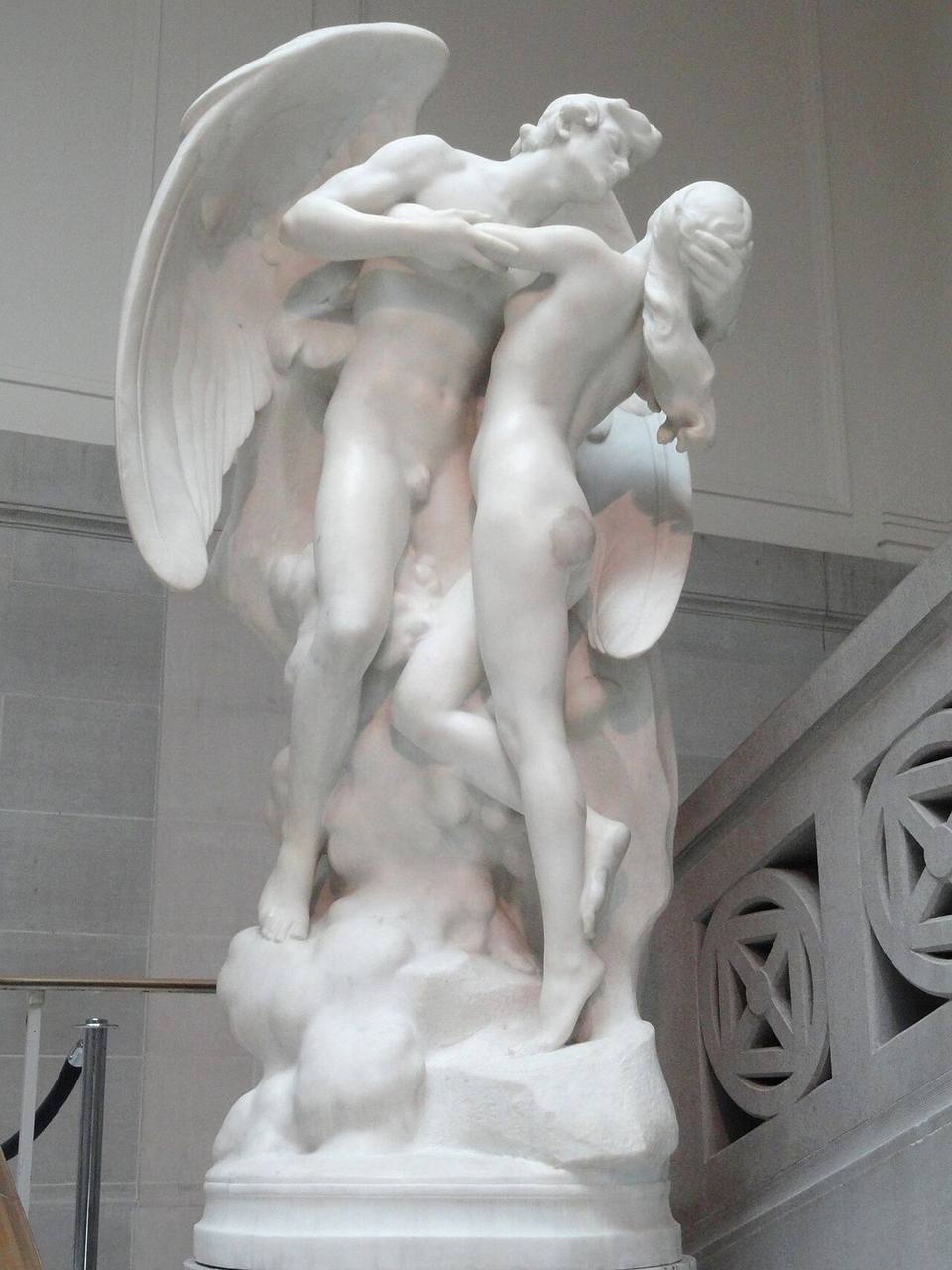 BeingNephilimMyth or legendGenesis says giants walked the earth "also after that," meaning after the Flood that was meant to wipe everything out. The Nephilim get just two verses in the whole Hebrew Bible, and neither explains them. Who were they, and how did they outlast the Flood? Scholars and the text itself disagree.
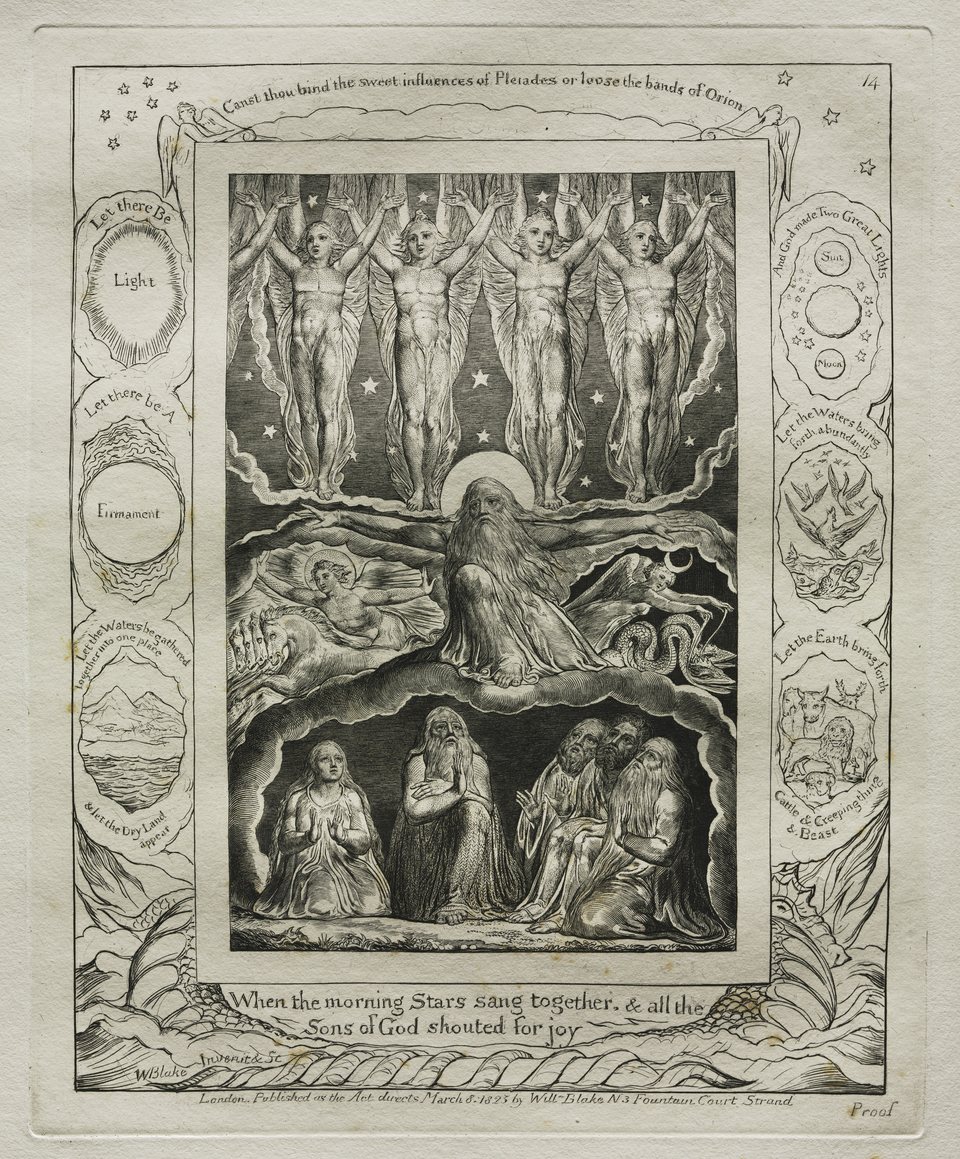 BeingThe divine council (sons of God)Myth or legendIn Psalm 82, God stands in a heavenly assembly and sentences its members: "ye shall die like men." In Job, the sons of God come to present themselves, and an accuser walks in among them. The Hebrew Bible keeps glimpsing a divine court. Is it poetry about angels, or something older and stranger?
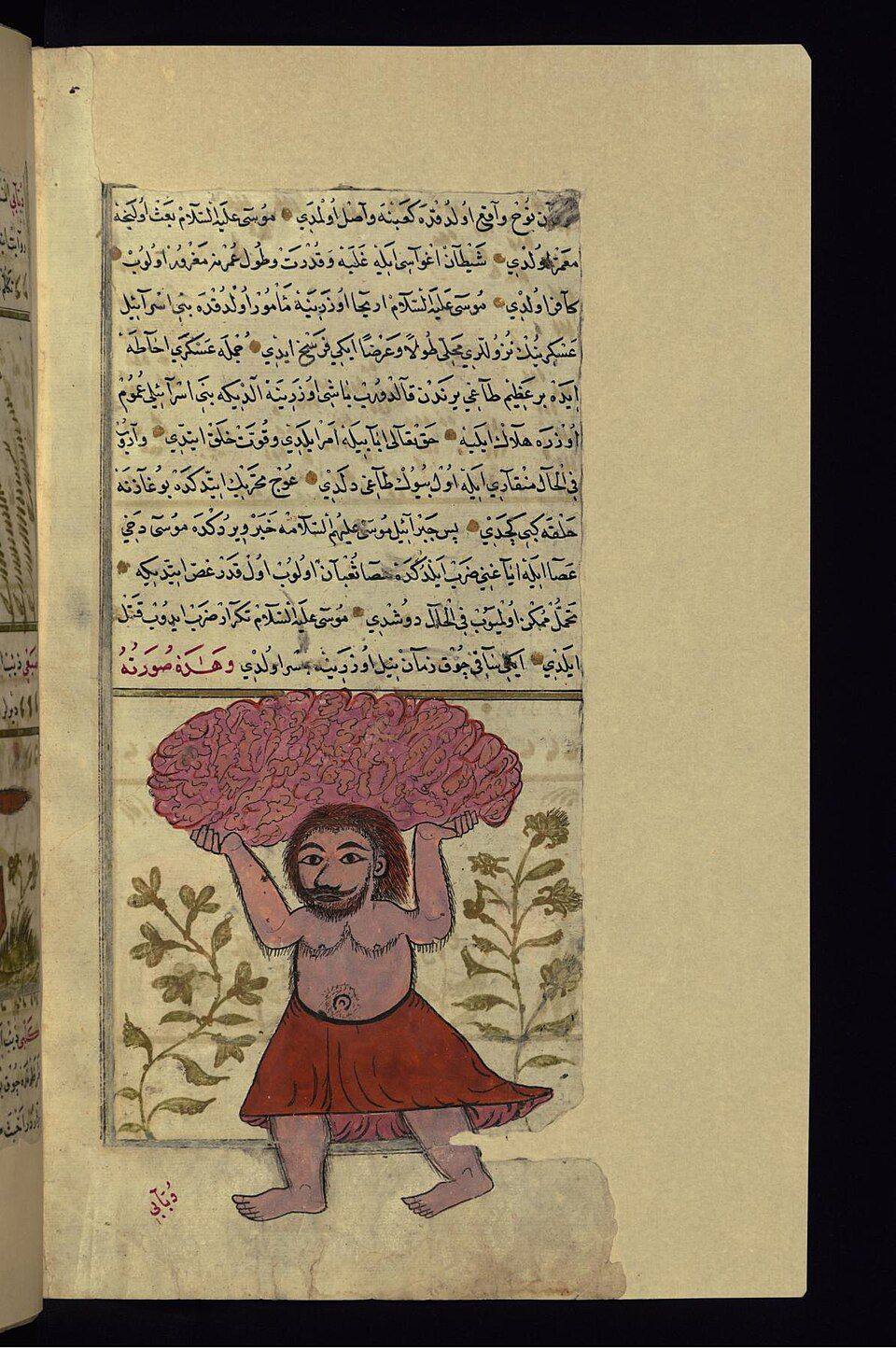 PersonOg of BashanMyth or legendDeuteronomy gives a giant king a bed of iron, nine cubits long, and then points readers to where it sits in Rabbah, almost like a museum label. Og was said to be the last of his kind. Some scholars think the bed was really a basalt tomb. Was Og a giant, or a monument that grew a legend?
The same story, told elsewhere
Shared story · Floods and lost lands
Flood Stories Around the World
A god warns one good man, a boat is built, the world drowns and birds are sent out to find land. The same story turns up from Iraq to India to Greece, with cousins in China, Scandinavia and Guatemala.
Genesis 6 to 9 (Noah) is one telling. The same story is told 9 more times, in 6 parts of the world. Follow it:
- Vedic IndiaNorthern India · c. 800-600 BCE · Ancient text
- Babylonian (Akkadian)Mesopotamia · 7th century BCE · Ancient text
- Hebrew BibleJudah / Babylon · c. 600-400 BCE · Ancient textTied to this page
- ChineseYellow River valley, China · 1st millennium BCE · Ancient text
- Zoroastrian (Persian)Iran / Central Asia · 1st millennium BCE · Ancient text
- Babylonian, retold in GreekBabylon · c. 280 BCE · Ancient text
- GreekGreece · 1st or 2nd century CE · Ancient text
- IslamArabia · 7th century CE · Medieval text
- NorseIceland · c. 1220 CE · Medieval text
- K'iche' MayaHighland Guatemala · c. 1554-1558 · Retold in English
The open question: One real flood remembered by many peoples, or many different floods that each people told in its own way? Join the debate
Shared story · Beginnings
Creation from the Primeval Waters and the Cosmic Egg
Before anything existed there was dark water. Or an egg. Babylon, Genesis, the Rig Veda, Egypt, Finland and the Quran all start the world in almost the same place.
Genesis 1 is one telling. The same story is told 9 more times, in 5 parts of the world. Follow it:
- BabylonianBabylon, Mesopotamia · c. 1700-1100 BCE · Ancient text
- Vedic IndiaNorthwest India · c. 1200-1000 BCE · Ancient text
- GreekBoeotia, Greece · c. 700 BCE · Ancient text
- Hebrew BibleJudah / Babylon · c. 600-400 BCE · Ancient textTied to this page
- EgyptianThebes, Egypt · c. 310 BCE · Ancient text
- Babylonian, retold in GreekBabylon · c. 280 BCE · Ancient text
- Hindu law codeIndia · c. 200 BCE · Ancient text
- IslamArabia · 7th century CE · Medieval text
- NorseIceland · c. 1000 CE · Medieval text
- FinnishFinland and Karelia · 1820 · Recorded folklore
The open question: Why would people who never met all start the world in dark water? A shared idea, or the most natural guess anyone would make? Join the debate
Shared story · Beginnings
Giants and the Races Before Us
Genesis has the Nephilim, Greece has the Giants, the North has the frost giants, Arabia has the tall people of 'Ad and the Maya have Zipacna, who piled up mountains. Why does almost everyone remember giants?
Numbers 13 (the spies' report) and Genesis 6 are two tellings. The same story is told 6 more times, in 4 parts of the world. Follow it:
- Hebrew BibleCanaan · c. 700-400 BCE · Ancient textTied to this page
- GreekBoeotia, Greece · c. 700 BCE · Ancient text
- Hebrew BibleJudah · c. 600-400 BCE · Ancient textTied to this page
- Jewish apocalyptic (Second Temple)Judea · c. 300-200 BCE · Ancient text
- GreekGreece · 1st or 2nd century CE · Ancient text
- IslamSouthern Arabia · 7th century CE · Medieval text
- NorseIceland · c. 1220 CE · Medieval text
- K'iche' MayaHighland Guatemala · c. 1554-1558 · Retold in English
The open question: Real bones dug up and explained, a memory of older peoples, or something else that made giants a story almost everywhere? Join the debate
Shared story · Floods and lost lands
Towers to Heaven
Babel is the famous one, but Babylonians, Greeks, the Quran, Mexico, China and the Zambezi all tell of people trying to build or climb their way up to the gods, and failing.
Genesis 11 (Babel) is one telling. The same story is told 7 more times, in 5 parts of the world. Follow it:
- GreekIonia / Greece · c. 8th to 7th century BCE · Ancient text
- Hebrew BibleBabylon · c. 600-400 BCE · Ancient textTied to this page
- ChineseChina · 1st millennium BCE · Ancient text
- Jewish (Second Temple)Judea · c. 160-150 BCE · Ancient text
- Babylonian / Greek (Abydenus, after Berossus)Babylon · c. 2nd century CE · Ancient text
- IslamArabia · 7th century CE · Medieval text
- Aztec / Nahua (Cholula)Cholula, central Mexico · c. 1566 · Recorded folklore
- Lozi (A-Louyi), Upper ZambeziUpper Zambezi · 1901 · Recorded folklore
The open question: Is the tower story about one real building, about pride, or about why people speak different languages? Join the debate
Shared story · Beginnings
The Lost Golden Age and the Ages of the World
Gold, silver, bronze, iron: Greece, Persia and the Book of Daniel all count the ages of the world in metals, India counts four yugas, and the Norse and Maya see whole worlds destroyed and remade.
Daniel 2 (Nebuchadnezzar's statue) is one telling. The same story is told 9 more times, in 6 parts of the world. Follow it:
- GreekBoeotia, Greece · c. 700 BCE · Ancient text
- Greek (Plato)Athens · c. 360 BCE · Ancient text
- Greek, about EgyptAthens, telling an Egyptian story · c. 360 BCE · Ancient text
- Hindu law codeIndia · c. 200 BCE · Ancient text
- Hebrew BibleJudea · c. 165 BCE · Ancient textTied to this page
- RomanRome · c. 8 CE · Ancient text
- Zoroastrian (Persian)Iran · 9th to 13th centuries CE · Medieval text
- Zoroastrian (Persian)Iran · 9th century CE · Medieval text
- NorseIceland · c. 1000 CE · Medieval text
- K'iche' MayaHighland Guatemala · c. 1554-1558 · Retold in English
The open question: Why do so many traditions believe the past was better and the world is running down? Memory, or human nature? Join the debate
Shared story · Births
Born of a Virgin or a God: Miraculous Births Compared
Jesus is not the only hero said to be born of a maiden and a god. Rome, India, Greece and Persia tell it too, and Egypt and India tell the births of Horus and Krishna in their own ways.
Isaiah 7:14 (the Immanuel sign) and Gospel of Matthew 1:18 (and Luke 1:34-35) are two tellings. The same story is told 7 more times, in 4 parts of the world. Follow it:
- Hebrew BibleJerusalem, Kingdom of Judah · c. 740-700 BCE · Ancient textTied to this page
- HinduNorthern India · c. 400 BCE · Ancient text
- GreekArgos, Greece · c. 1st-2nd century CE · Ancient text
- ChristianWritten in Greek, probably in Syria or Galilee · c. 80-90 CE · Ancient textTied to this page
- RomanAlba Longa and Rome, Italy · c. 100 CE · Ancient text
- BuddhistLumbini, Nepal · c. 100 CE · Ancient text
- EgyptianEgypt · c. 100 CE · Ancient text
- HinduMathura and Gokula, northern India · first millennium CE · Medieval text
- ZoroastrianIran · 9th century CE · Medieval text
The open question: Why do so many traditions give their great figures a birth unlike anyone else's? A shared pattern, or each people's own way of saying "this one is special"? Join the debate
Shared story · Death and return
Gods Who Die and Return: Osiris, Adonis, Persephone, Baldr and Jesus
A god dies, the land mourns, and the god comes back, at least for a season. Egypt, Syria, Greece and Scandinavia all tell it. How close are these stories to Easter, and how close are they really to each other?
Ezekiel 8:14 (women weeping for Tammuz) and Paul, First Letter to the Corinthians 15:3-6 are two tellings. The same story is told 6 more times, in 5 parts of the world. Follow it:
- GreekGreece · c. 650-550 BCE · Ancient text
- Mesopotamian (seen in Jerusalem)Jerusalem temple, seen in a vision · c. 593-571 BCE · Ancient textTied to this page
- HinduDvaraka, western India · c. 400 BCE · Ancient text
- ChristianWritten in Greek from Ephesus to Corinth · c. 53-55 CE · Ancient textTied to this page
- EgyptianEgypt · c. 100 CE · Ancient text
- RomanRome · c. 100 CE · Ancient text
- Phoenician / SyrianByblos, Lebanon · c. 150 CE · Ancient text
- NorseIceland · c. 1220 CE · Medieval text
The open question: Is the death-and-return story one pattern across the ancient world, or are the stories too different to group together? Scholars still argue, so where do you land? Join the debate
Shared story · Death and return
Taken Up to Heaven: Ascension Stories Compared
Enoch, Elijah, Romulus, Heracles, Krishna and Jesus all leave the earth by going up: in a whirlwind, a cloud, a storm or a blaze of light. The stories quoted side by side.
Genesis 5:24 (Enoch) and 2 Kings 2:11 (Elijah) and Acts of the Apostles 1:9 are tellings. The same story is told 4 more times, in 3 parts of the world. Follow it:
- Hebrew BibleJudah · c. 600-400 BCE · Ancient textTied to this page
- Hebrew BibleNear the Jordan River, Israel · c. 600-550 BCE · Ancient textTied to this page
- HinduDvaraka, western India · c. 400 BCE · Ancient text
- GreekMount Oeta, central Greece · c. 1st-2nd century CE · Ancient text
- ChristianMount of Olives, Jerusalem · c. 80-90 CE · Ancient textTied to this page
- RomanRome, near the Goat's Marsh · c. 100 CE · Ancient text
- IslamicMecca to Jerusalem · c. 620 CE · Medieval text
The open question: Why do so many stories end with a great figure leaving the earth alive instead of dying like everyone else? Join the debate
Shared story · Births
Born at Midwinter: December 25 and the Winter Solstice
The shortest day of the year, when the light starts to come back, was marked as a birthday in Rome, Egypt and Syria, and Christians in Rome chose it for Christmas. The sources side by side.
Gospel of Luke 2:8 (the shepherds) is one telling. The same story is told 5 more times, in 4 parts of the world. Follow it:
- RomanRome · c. 77 CE · Ancient text
- ChristianBethlehem · c. 85-95 CE · Ancient textTied to this page
- EgyptianEgypt · c. 100 CE · Ancient text
- ChristianRome · 336 CE · Ancient text
- RomanRome · 354 CE · Ancient text
- Syrian and EgyptianSyria and Egypt · 1922 · Modern book
The open question: Was the birth date chosen for the solstice, worked out from other dates, or both? The early sources point more than one way, so which do you think? Join the debate
Shared story · Signs and numbers
The Sacred Twelve: Tribes, Disciples, Gods and Signs
Twelve tribes of Israel, twelve disciples, twelve gods of Greece and of Asgard, twelve Adityas in India, twelve signs ringing the Mithras carvings. The number twelve turns up again and again.
Genesis 49:28 (the twelve tribes) and Gospel of Matthew 10:1 (the twelve disciples) are two tellings. The same story is told 6 more times, in 6 parts of the world. Follow it:
- Hebrew BibleCanaan and Egypt · c. 600-400 BCE · Ancient textTied to this page
- Greek (about Egypt)Egypt, as reported by Egyptian priests · c. 430 BCE · Ancient text
- HinduNorthern India · c. 400 BCE · Ancient text
- GreekTiryns, Greece · c. 1st-2nd century CE · Ancient text
- ChristianGalilee · c. 80-90 CE · Ancient textTied to this page
- RomanMithras temples across the Roman Empire · c. 100-400 CE · Ancient text
- NorseIceland · c. 1220 CE · Medieval text
- Egyptian (a modern comparison)Written in London about Egyptian texts · 1907 · Modern book
The open question: Is twelve special because of the sky and the calendar, or because each tradition chose it for its own reasons? Join the debate
Shared story · Births
Saved From the Water: Sargon, Moses and Karna
A mother seals her baby in a basket, tars the lid and lets the river take him. A stranger pulls him out, and the child grows up to rule. The same story is told of a king in Iraq, a prophet in Egypt and a warrior in India.
Exodus 2 (the birth of Moses) is one telling. The same story is told 8 more times, in 6 parts of the world. Follow it:
- ChineseYellow River valley, China · c. 1000-700 BCE · Ancient text
- Akkadian (Mesopotamia)Mesopotamia · c. 8th-7th century BCE · Ancient text
- Hebrew BibleJudah / Babylon · c. 600-400 BCE · Ancient textTied to this page
- Persian (told by a Greek)Media and Persia · c. 430 BCE · Ancient text
- Hindu (Mahabharata)Northern India · c. 400 BCE · Ancient text
- RomanRome, Italy · c. 27-25 BCE · Ancient text
- GreekGreece · 1st or 2nd century CE · Ancient text
- WelshWales · c. 1550 CE · Early modern text
- Maori (New Zealand)New Zealand · 1840 · Recorded folklore
The open question: Did one old Near Eastern story travel from people to people, or does every great leader's story end up with the same rescue from the river? Join the debate
Shared story · Death and return
How Death Came: Eden, Adapa and the Chameleon
Again and again, people almost lived forever. A man refuses the food of life, a snake steals the plant of youth, a slow chameleon arrives too late, and a woman throws a stone that sinks. Each time, the chance was lost.
Genesis 3 (the tree of life) is one telling. The same story is told 8 more times, in 6 parts of the world. Follow it:
- Babylonian (Akkadian)Mesopotamia · c. 1400-1350 BCE · Ancient text
- Babylonian (Akkadian)Mesopotamia · c. 1200-1000 BCE · Ancient text
- Hebrew BibleJudah / Babylon · c. 900-500 BCE · Ancient textTied to this page
- GreekBoeotia, Greece · c. 700 BCE · Ancient text
- Japanese (Shinto)Japan · 712 CE · Medieval text
- Khoikhoi (South Africa / Namibia)Southern Africa · 1800 · Recorded folklore
- Maori (New Zealand)New Zealand · 1840 · Recorded folklore
- Zulu (South Africa)Natal · 1868-1870 · Recorded folklore
- Blackfoot (Plains)Northern Great Plains · 1892 · Recorded folklore
The open question: Do these stories share one ancient source, or does every people eventually ask why we die and arrive at the same kind of answer? Join the debate
Shared story · Heroes and trials
The Dragon Slayer: Marduk, Indra, Thor and Saint George
A god or a hero faces a giant serpent that blocks the waters, eats the young or threatens the whole world, and cuts it down. The same fight is told in Babylon, India, Greece, Egypt, Iceland, Japan and medieval Europe.
Isaiah 27 (Leviathan), with Psalm 74 is one telling. The same story is told 7 more times, in 6 parts of the world. Follow it:
- Vedic IndiaNorthwest India · c. 1500-1200 BCE · Ancient text
- Babylonian (Akkadian)Babylon · c. 1200-1100 BCE · Ancient text
- GreekBoeotia, Greece · c. 700 BCE · Ancient text
- EgyptianThebes, Egypt · c. 312 BCE · Ancient text
- Hebrew BibleJudah · 24 to 27 BCE · Ancient textTied to this page
- Japanese (Shinto)Izumo, Japan · 712 CE · Medieval text
- NorseIceland · c. 1220 CE · Medieval text
- Medieval Christian (Europe)Written in northern Italy · c. 1260 CE · Medieval text
The open question: Did one ancient story of a hero and a serpent spread across the world, or do people everywhere turn their fears into dragons on their own? Join the debate
Shared story · Heroes and trials
A Child Offered Up: Abraham, Jephthah, Agamemnon and Harishchandra
A father is told, or promises, that he must give up his own child. Sometimes an animal is found in time and sometimes no one stops the knife, and the story is told in the Bible, the Quran, Greece, India and Viking-age Sweden.
2 Kings 3 (King Mesha of Moab) and Judges 11 (Jephthah's vow) and Genesis 22 (the binding of Isaac) are tellings. The same story is told 6 more times, in 4 parts of the world. Follow it:
- Hebrew Bible (about Moab)Kir-hareseth, Moab · c. 850 BCE · Ancient textTied to this page
- Vedic IndiaNorthern India · c. 800-600 BCE · Ancient text
- Hebrew BibleGilead, east of the Jordan · c. 7th-6th century BCE · Ancient textTied to this page
- Hebrew BibleJudah / Israel · 1st millennium BCE · Ancient textTied to this page
- GreekAthens, Greece · 458 BCE · Ancient text
- Phoenician (in Greek)Byblos, Lebanon · c. 100 CE · Ancient text
- IslamArabia · 7th century CE · Medieval text
- Norse (Swedish legend)Uppsala, Sweden · c. 1225 CE · Medieval text
- French (Greek legend)France · 1699 · Recorded folklore
The open question: Do these stories remember a time when people really gave up their children, or were they told to teach that it must never happen? Join the debate
Shared story · Death and return
The King Who Will Return: Arthur, Barbarossa and Kalki
He did not die. He sleeps inside a mountain, under a castle or on a far island, and when his people need him most he will wake. Britain, Germany, Denmark, Persia, India, Israel and Mexico all tell of a hero who is only waiting.
2 Kings 2 and Malachi 4 (Elijah taken up, and promised again) is one telling. The same story is told 7 more times, in 4 parts of the world. Follow it:
- Hebrew BibleIsrael and Judah · c. 600-550 BCE · Ancient textTied to this page
- Hindu (Puranic)India · c. 300-500 CE · Ancient text
- Zoroastrian (Persian)Iran · c. 9th century CE · Medieval text
- DanishKronborg castle, Helsingør · c. 1100 · Medieval text
- English (Anglo-Norman chronicle)Malmesbury Abbey, England · c. 1125 CE · Medieval text
- GermanKyffhäuser hills, Thuringia, Germany · 13th century · Retold in English
- English (Arthurian romance)England · c. 1470 · Medieval text
- Aztec (Nahua), as told by Spanish chroniclersCentral Mexico and the Gulf coast · c. 1550-1580 · Retold in English
The open question: Is the sleeping king a hope people invent whenever they lose a leader they loved, or one very old idea that has travelled from land to land? Join the debate
Shared story · Beginnings
People Made From Clay: Adam, Nuwa, Prometheus and the Potter Gods
A god kneels in the mud, shapes a body with his hands and breathes it into life. That scene is told in Iraq, Israel, Egypt, Greece, China, Arabia, Guatemala, Sudan and New Zealand.
Genesis 2 (the forming of Adam) is one telling. The same story is told 8 more times, in 6 parts of the world. Follow it:
- Babylonian (Akkadian)Mesopotamia · c. 1700 BCE · Ancient text
- Ancient EgyptianEgypt · c. 1215 BCE · Ancient text
- Hebrew BibleJudah · c. 900-450 BCE · Ancient textTied to this page
- GreekGreece · 1st or 2nd century CE · Ancient text
- ChineseChina · c. 195 CE · Retold in English
- IslamArabia · 7th century CE · Medieval text
- K'iche' MayaHighland Guatemala · c. 1554-1558 · Retold in English
- Maori (New Zealand)Aotearoa · 19th century · Retold in English
- Shilluk (South Sudan)White Nile, South Sudan · 1911 · Retold in English
The open question: Did one old story about a potter god travel from people to people, or does anyone who works with clay end up imagining that we were made from it? Join the debate
Shared story · Signs and numbers
The Sun Stands Still: Joshua, Hezekiah, Athena and Maui
A general shouts at the sun to stop, and it stops. A goddess holds back the dawn, a hero lassoes the sun, and a wife's curse keeps it from rising at all.
Joshua 10 (the battle at Gibeon) and 2 Kings 20 (Hezekiah's sign on the dial of Ahaz) are two tellings. The same story is told 7 more times, in 7 parts of the world. Follow it:
- GreekIthaca · c. 750-650 BCE · Ancient text
- Hebrew BibleCanaan · c. 650-550 BCE · Ancient textTied to this page
- Hebrew BibleJerusalem · c. 600-550 BCE · Ancient textTied to this page
- Egyptian, reported in GreekEgypt · c. 430 BCE · Ancient text
- GreekThebes, Greece · 1st or 2nd century CE · Ancient text
- ChineseChina · c. 80 CE · Ancient text
- Hindu (Puranic)India · c. 250-500 CE · Ancient text
- Ojibwe (North America)Great Lakes region, North America · 1820 · Recorded folklore
- Maori (New Zealand)Aotearoa · 1840 · Recorded folklore
The open question: When ancient writers say the sun stood still, are they remembering something people really saw in the sky, or using the boldest picture they could find for a god's power over time? Join the debate
Where this comes from
Comes from Project Gutenberg, the copy of The King James Bible (1611) we host here. The King James Version of the Bible, Old and New Testaments, as released by Project Gutenberg.
What this means
A primary record or a faithful public-domain copy of one. This page says what the file is and where it comes from; it does not say every claim in it is true.
Primary records exist: an original document, a published text, an official file or a dated report. We link to them. This level says the record exists and what it says, not that every claim in it is true.
Where and when was it found?
- Written
- The Old Testament books were written over many centuries in the first millennium BCE (Daniel about 164 BCE); the New Testament texts mostly in the mid to late 1st century CE
- Where it was found
- Old Testament: the Dead Sea Scrolls from the Qumran caves near the Dead Sea; the Great Isaiah Scroll is at the Shrine of the Book, Israel Museum, Jerusalem. New Testament: Greek papyri and codices such as Codex Sinaiticus, found at St Catherine's Monastery, Sinai, now mostly in the British Library, London
- When it was found
- Bedouin shepherds found the first Dead Sea Scrolls, including the Great Isaiah Scroll, in Qumran Cave 1 in 1946 to 1947; Constantin von Tischendorf found Codex Sinaiticus in 1844
- Oldest copy
- The Great Isaiah Scroll (about 125 BCE), the oldest complete copy of Isaiah, at the Israel Museum; the earliest New Testament manuscripts date from the late 2nd to early 3rd century CE
- Original language
- Hebrew, with some Aramaic (Old Testament); Greek (New Testament)
About this copy
This is a public-domain copy. The line below says where the file comes from and why we may host it.
Why we can share it: Project Gutenberg record: "Public domain in the USA." (KJV first published 1611)
Updated