












What is Tiwanaku known for?
Tiwanaku, written Tiahuanaco in older books, is a ruined city in western Bolivia, about twelve miles from the southern shore of Lake Titicaca. Clements Markham, writing in 1864, gave its height as 12,930 feet above the sea. The archaeologist Alexei Vranich dates its main period to about 500 to 950 CE, centuries before the Inca.
When Pedro Cieza de Leon visited in the 1540s, he saw a large earthen hill raised on stone foundations, two great stone figures with carved clothing and headdresses, and doorways with their jambs and lintels cut from a single stone. He wrote that the local people could not say who had built the place.
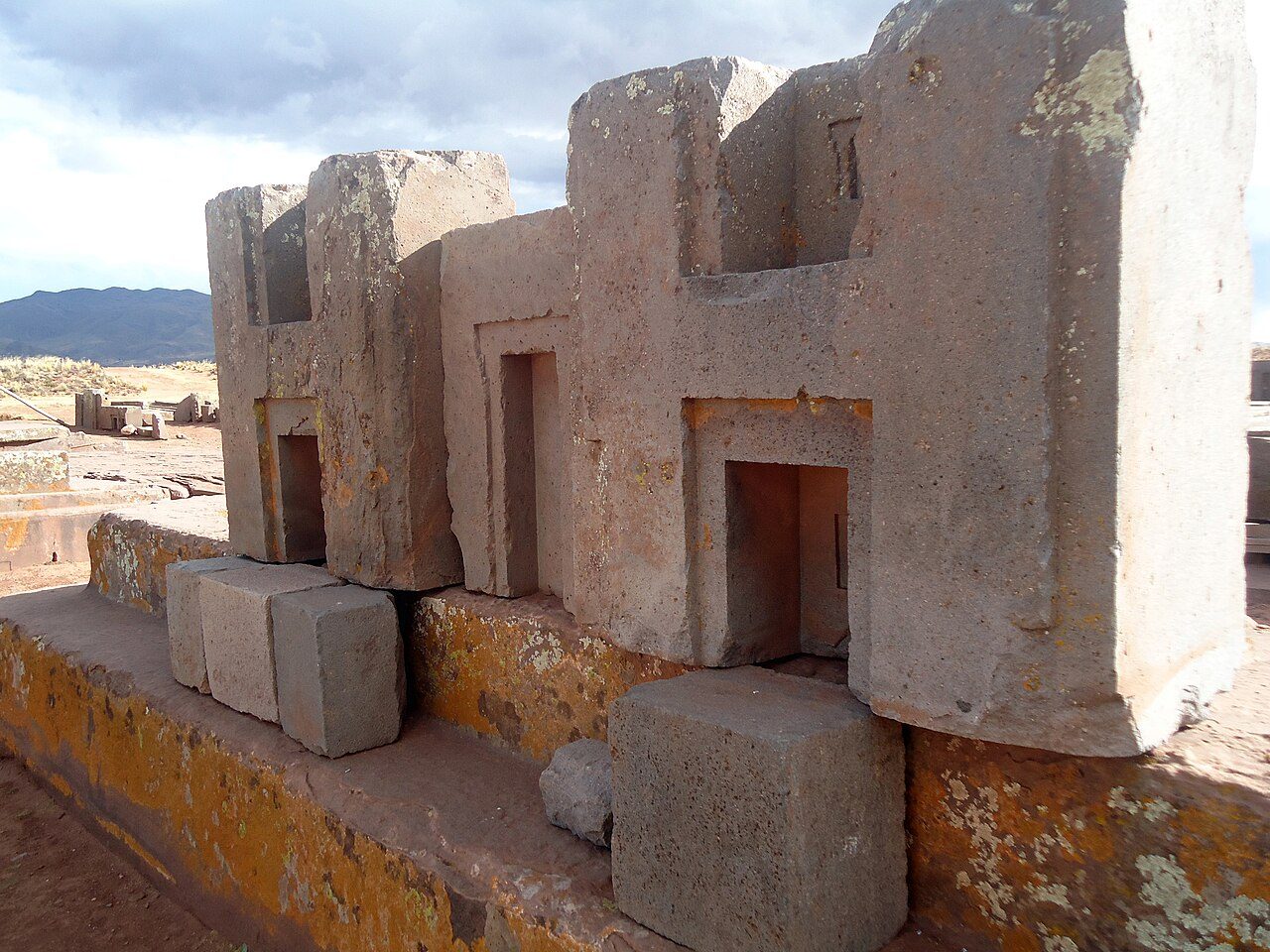
Puma Punku, one of Tiwanaku's buildings, is famous for its exact, repeated stone blocks. Centuries of looting broke up much of the site. Modern researchers have rebuilt parts of it as small printed models from measurements made by nineteenth-century visitors.
Mentioned on these pages
Linked people and places
Where this comes from
Comes from Alexei Vranich, "Reconstructing ancient architecture at Tiwanaku, Bolivia: the potential…. A research article: An article written by a researcher and published in a scholarly journal or book. Most such journals have other experts check a paper before it is printed, so it carries more weight than a news story, though later studies can still change the picture.
What this means
A real place with records. Sources are listed below.
For Tiwanaku, the original record exists and is linked: Alexei Vranich, "Reconstructing ancient architecture at Tiwanaku, Bolivia: the potential…. That tells you the record is real and what it says. It does not mean every claim in it is true.
Primary records exist: an original document, a published text, an official file or a dated report. We link to them. This level says the record exists and what it says, not that every claim in it is true.
Sources
- A research articleAn article written by a researcher and published in a scholarly journal or book. Most such journals have other experts check a paper before it is printed, so it carries more weight than a news story, though later studies can still change the picture.Alexei Vranich, "Reconstructing ancient architecture at Tiwanaku, Bolivia: the potential and promise of 3D printing", Heritage Science 6 (2018), CC BY 4.0Primary text
- Internet ArchiveA nonprofit digital library in San Francisco, founded in 1996, that holds millions of scanned books, papers and recordings. A scan there shows the pages of a real printed book or document.Pedro de Cieza de Leon, Chronicle of Peru, part 1 (Seville, 1553), chapter 105, trans. Clements R. Markham, The Travels of Pedro de Cieza de Leon (Hakluyt Society, 1864), pp. 374-376Primary text
No public-domain picture of this place yet. We do not show drawn or generated likenesses.