The record
And Cush begat Nimrod: he began to be a mighty one in the earth. He was a mighty hunter before the LORD… And the beginning of his kingdom was Babel.
Genesis 10:8–10 · Hebrew Bible
Translation: King James Version (1611; standard 1769 text), with Apocrypha · Public domain
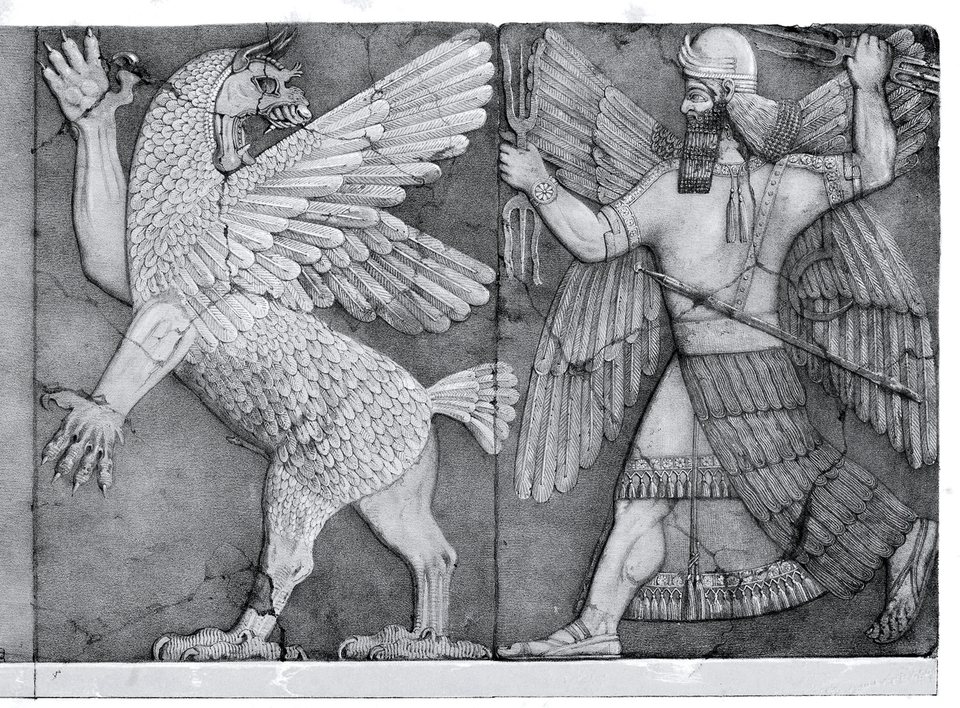
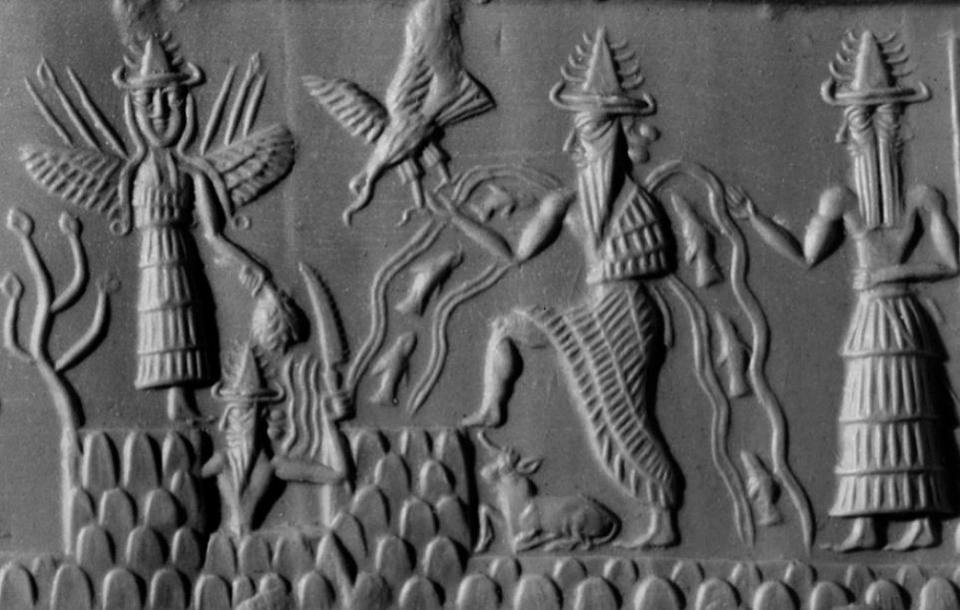
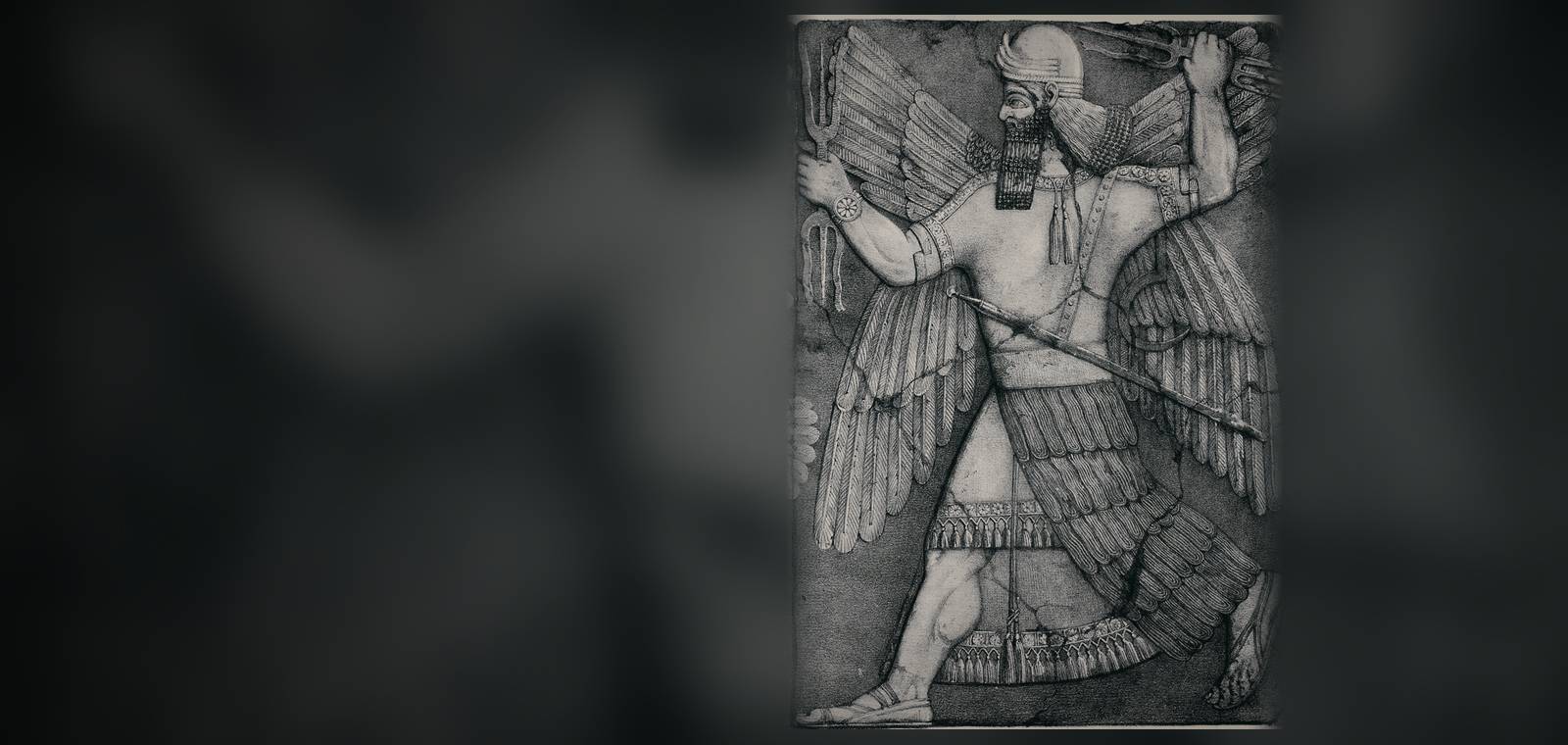
Ninurta was a Mesopotamian god of war and of farming, son of Enlil and guardian of his father's city of Nippur. He was closely linked, and eventually identified, with Ningirsu, the god of the city of Girsu. Assyrian kings loved him: Ashurnasirpal II built him a great temple at Kalhu, the city now called Nimrud.
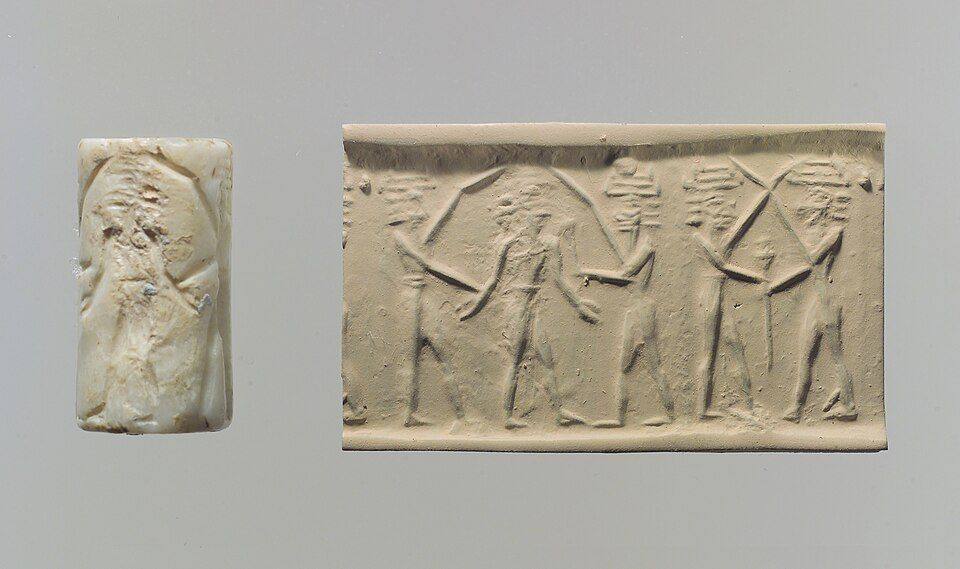
His major Sumerian epic, Lugal-e or The Exploits of Ninurta, begins when his weapon Sharur warns him about the Asag, a monster born of heaven and earth who has made the stones of the mountains his army. Ninurta attacks, 'pounded the Asag like roasted barley', and afterward piles up the stones to hold back the waters, turning the land to fertile fields.
He then judges the stones one by one, cursing those that fought against him and blessing those that stayed loyal, which explains in myth why some stones are prized and others trampled. In another myth, Anzu, he recovers the Tablet of Destinies stolen from Enlil by the monstrous bird Anzu.
Some writers connect Ninurta with the biblical hunter Nimrod, and the ruins of his temple city are still called Nimrud. That link is debated. What is not debated is that his favorite companion is a weapon that talks. The poem gives Sharur long speeches of its own, and Ninurta listens to them as he would to a trusted officer.