Strangest fact
McDivitt was a trained test pilot sitting in a spacecraft, and he saw a solid object with a visible shape close enough to worry about a collision. Yet nobody has ever matched it to a known satellite, because the one NORAD suggested was too far away to look like anything but a dot.
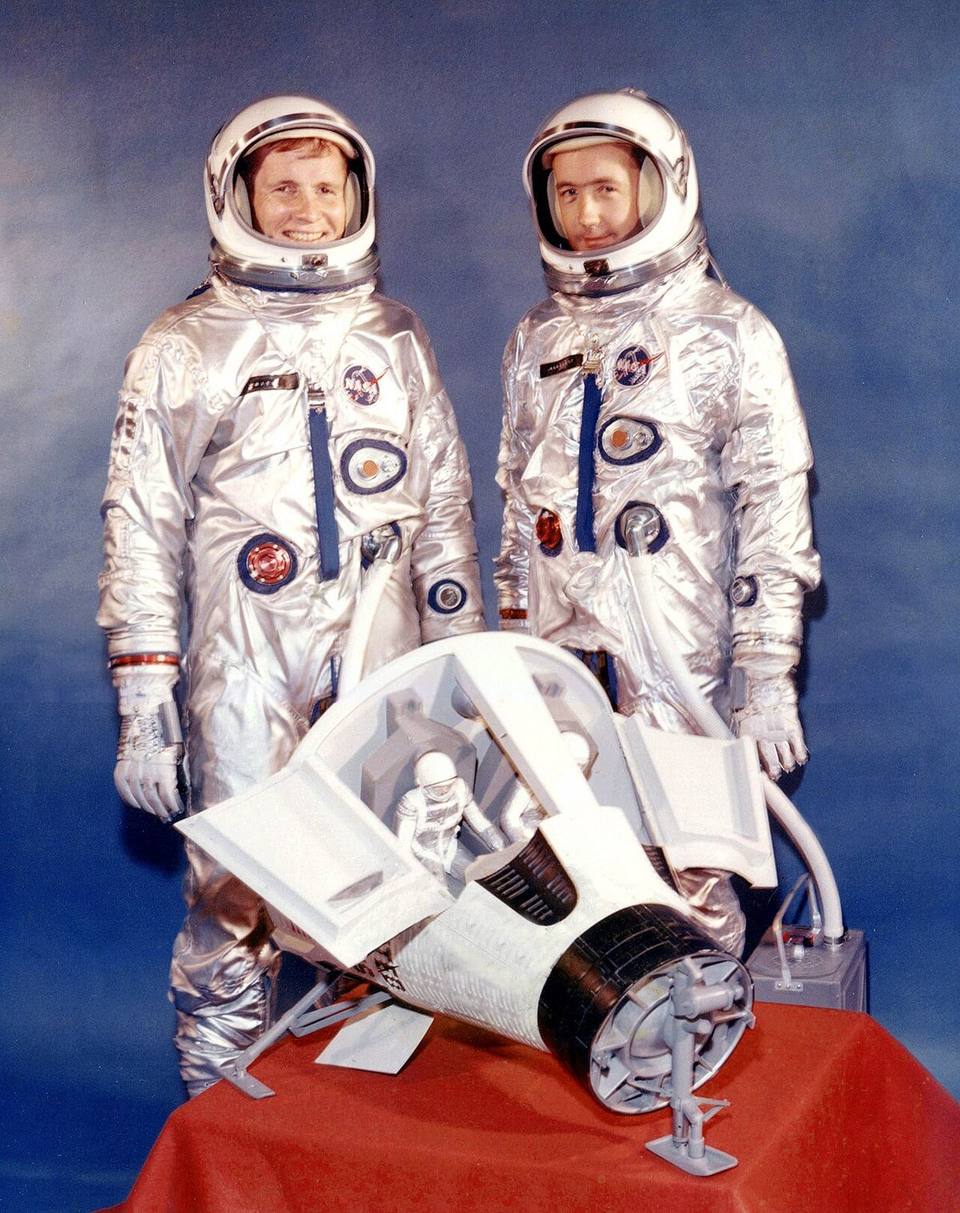
Gemini 4 launched on June 3, 1965, with James McDivitt as command pilot and Ed White as pilot; it was the flight on which White made the first American spacewalk. The next day, over the Pacific, McDivitt saw an object outside the window.
The Condon Report, the University of Colorado UFO study published for the Air Force in 1968, has a chapter on astronaut sightings written by the astronomer Franklin Roach. He interviewed McDivitt on October 3, 1967. In Roach's summary, McDivitt saw a cylindrical-shaped object with an antenna-like extension
that looked white or silvery against the sky. He felt it was closing in and that it might be necessary to take action to avoid a collision.
He lost it when sunlight hit the dirty window. Roach listed it as one of three astronaut sightings that have not been adequately explained.
NORAD checked known objects near the spacecraft and suggested the Pegasus B satellite, but that was about 2,000 kilometers away, much too far to show any shape, and McDivitt questioned the match. Roach also noted that McDivitt said the pictures NASA released after the flight were definitely not of the object he had seen.
Those released frames became famous in UFO books, especially one showing a bright blob with a tail. In a 1978 Skeptical Inquirer article, the former NASA engineer James Oberg reported that McDivitt said that frame was a reflection on the window, and that McDivitt himself took the object to be another man-made satellite. Some observers believe it was the spent upper stage of his own Titan II rocket.