Credible Theories Sign in

The record

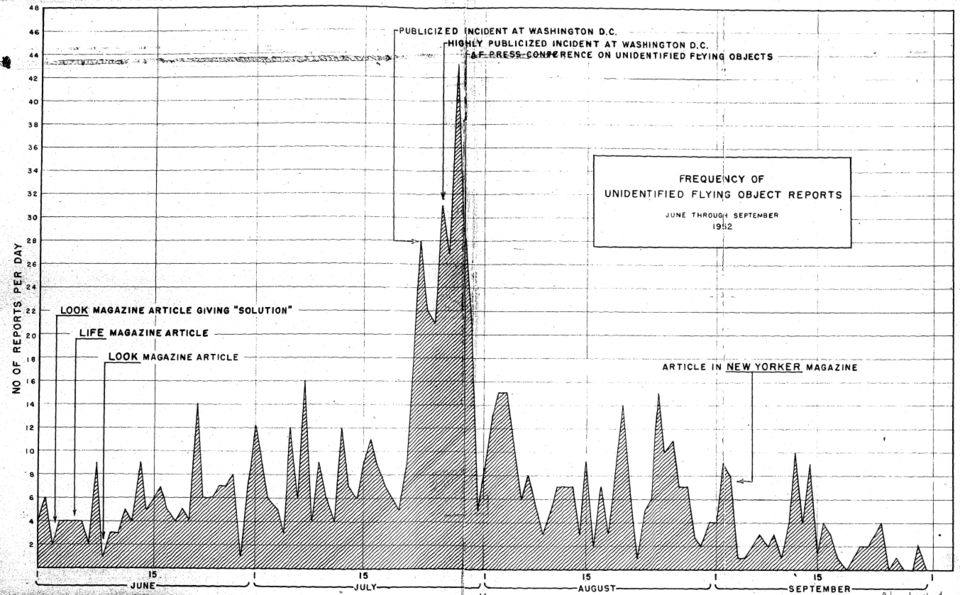
Project Blue Book was the US Air Force's official investigation of unidentified flying objects, based at Wright-Patterson Air Force Base. It was the last and longest of three projects. The National Archives dates Project Sign from December 1947 to February 1949. It was followed by Project Grudge, a scaled-down continuation of Sign that ended in August 1949. Blue Book itself ran from March 1952 to December 1969.

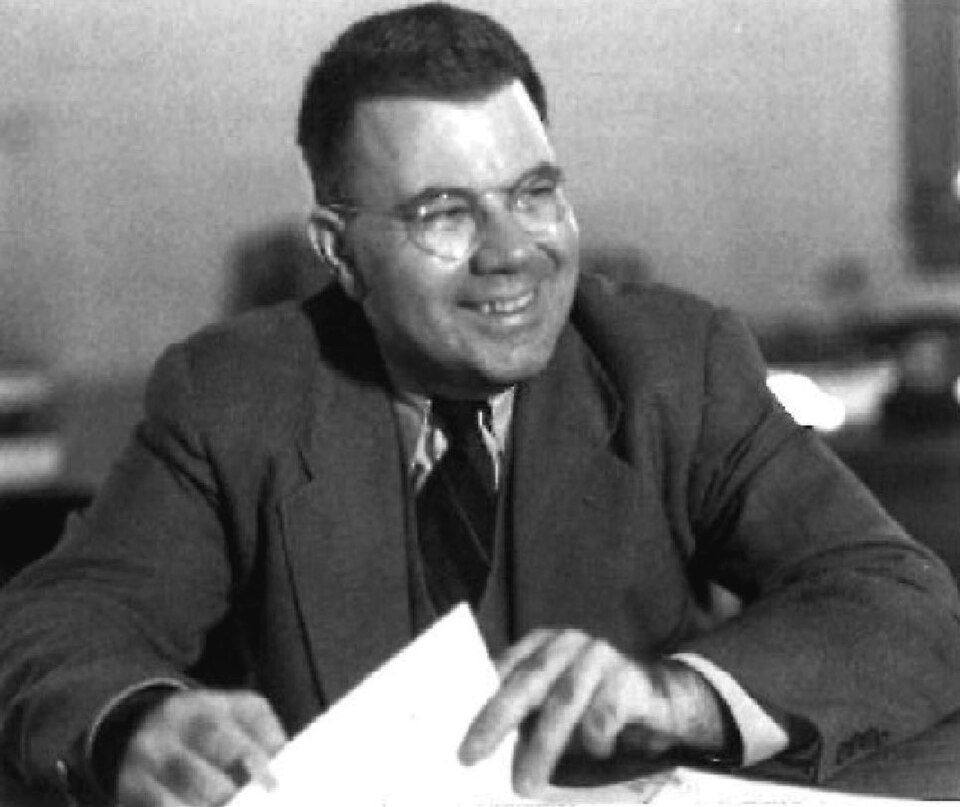
The totals are well known. From 1947 to 1969, the Air Force recorded 12,618 sightings, and 701 of them remain "Unidentified." Blue Book's first director, Edward J. Ruppelt, is credited with making unidentified flying object the official term in place of phrases like flying saucer. The astronomer J. Allen Hynek was the project's scientific consultant from start to finish. Hynek is also credited with creating the categories now known as close encounters.

On December 17, 1969, the Secretary of the Air Force announced that Blue Book was ending. The decision followed the University of Colorado study and a National Academy of Sciences review. The Air Force concluded that no UFO it had evaluated has ever given any indication of threat to our national security. It found no evidence that the unidentified sightings represent technological developments or principles beyond the range of present-day scientific knowledge. And there has been no evidence indicating that sightings categorized as 'unidentified' are extraterrestrial vehicles.

The records went to the National Archives: about 42 cubic feet of paper records, which researchers can read on 94 rolls of 35mm microfilm (publication T-1206). The Archives also holds still pictures, films and sound recordings. On Blue Book's 50th anniversary in 2019, it put selected records on display. The holdings include case files arranged by date, administrative files, and records of the Air Force Office of Special Investigations.
Questions people ask about Project Blue Book

What did the Condon Report conclude about UFOs?

The Condon Report was the Air Force funded study at the University of Colorado, led by physicist Edward Condon from 1966. Released in January 1969, it said two decades of UFO study had added nothing to science and that more extensive study was probably not justified. The project was controversial: two members were fired in 1968 after a dispute over a leaked internal memo.

Did J. Allen Hynek believe in UFOs?

Hynek began as a skeptic who expected most reports to have ordinary causes. Over time he grew frustrated with how the Air Force handled cases, and he was mocked in 1966 for suggesting swamp gas behind a wave of Michigan sightings. After the project closed he wrote The UFO Experience (1972) and in 1973 founded the Center for UFO Studies.

Is the TV show Project Blue Book based on real events?

Only loosely. The History channel drama ran for two seasons, in 2019 and 2020, with Aidan Gillen playing J. Allen Hynek. Episodes borrowed the names and settings of real cases, but most of the plots, characters and government conspiracies were invented for television. The real files, by contrast, are mostly routine reports and short case summaries.

The open question

Still strange: Blue Book's first director is credited with making unidentified flying object the official term in place of phrases like flying saucer.

The Condon Report: Did Science Close the Book on UFOs? →
  1. Step 1 of 4 · This fileProject Blue Book
  2. Step 2 of 4 · Next fileThe Condon Report: Did Science Close the Book on UFOs?
  3. Step 3 of 4 · Next fileThe Robertson Panel: Why a CIA Panel Wanted to Debunk UFOs
  4. Step 4 of 4 · Next fileThe 1952 Washington UFO Sightings: What Did Radar See?
About these videos

Found by a YouTube search for this topic, not checked by us. The player loads from YouTube only when you press play.

Where this comes from

EvidenceDocumented

Comes from Unidentified Flying Objects and Air Force Project Blue Book, U.S. National Archives. The US Air Force program that collected and studied UFO reports from 1952 until it closed in 1969, after earlier projects named Sign and Grudge. It logged 12,618 sightings and found most had ordinary causes; 701 stayed 'unidentified'.

What this means

The original document is public and linked below.

For Project Blue Book, the original record exists and is linked: Unidentified Flying Objects and Air Force Project Blue Book, U.S. National Archives. That tells you the record is real and what it says. It does not mean every claim in it is true.

Primary records exist: an original document, a published text, an official file or a dated report. We link to them. This level says the record exists and what it says, not that every claim in it is true.

See all five labels

Sources

  1. Project Blue BookThe US Air Force program that collected and studied UFO reports from 1952 until it closed in 1969, after earlier projects named Sign and Grudge. It logged 12,618 sightings and found most had ordinary causes; 701 stayed 'unidentified'. Its records are at the US National Archives.Unidentified Flying Objects and Air Force Project Blue Book, U.S. National ArchivesPrimary text Archived copy, 2026-09-27
  2. US National ArchivesThe National Archives and Records Administration, the US government agency that keeps the nation's official records, such as Project Blue Book's UFO files.Public Interest in UFOs Persists 50 Years After Project Blue Book Termination, National Archives News, December 5, 2019Primary text Archived copy, 2026-09-07
  3. Central Intelligence Agency (CIA)The official website of the CIA, the US government's foreign intelligence agency. Its online Reading Room holds documents the agency has declassified, meaning released from secrecy.How to Investigate a Flying Saucer, Central Intelligence Agency, January 21, 2016Primary text Archived copy, 2026-09-23
  4. WikipediaA free online encyclopedia written and edited by volunteers. It is a good starting point and usually lists its own sources, but anyone can change it, so we treat it as a guide to better sources, not the final word.Project Blue Book, WikipediaReference Archived copy, 2026-09-27

Quotations come from public-domain translations. A book in our Library links to its Library page; other links open the free online copy or the reference page.

Updated

Credible or not?

Tap one to see how other readers voted.

Discussion