The record
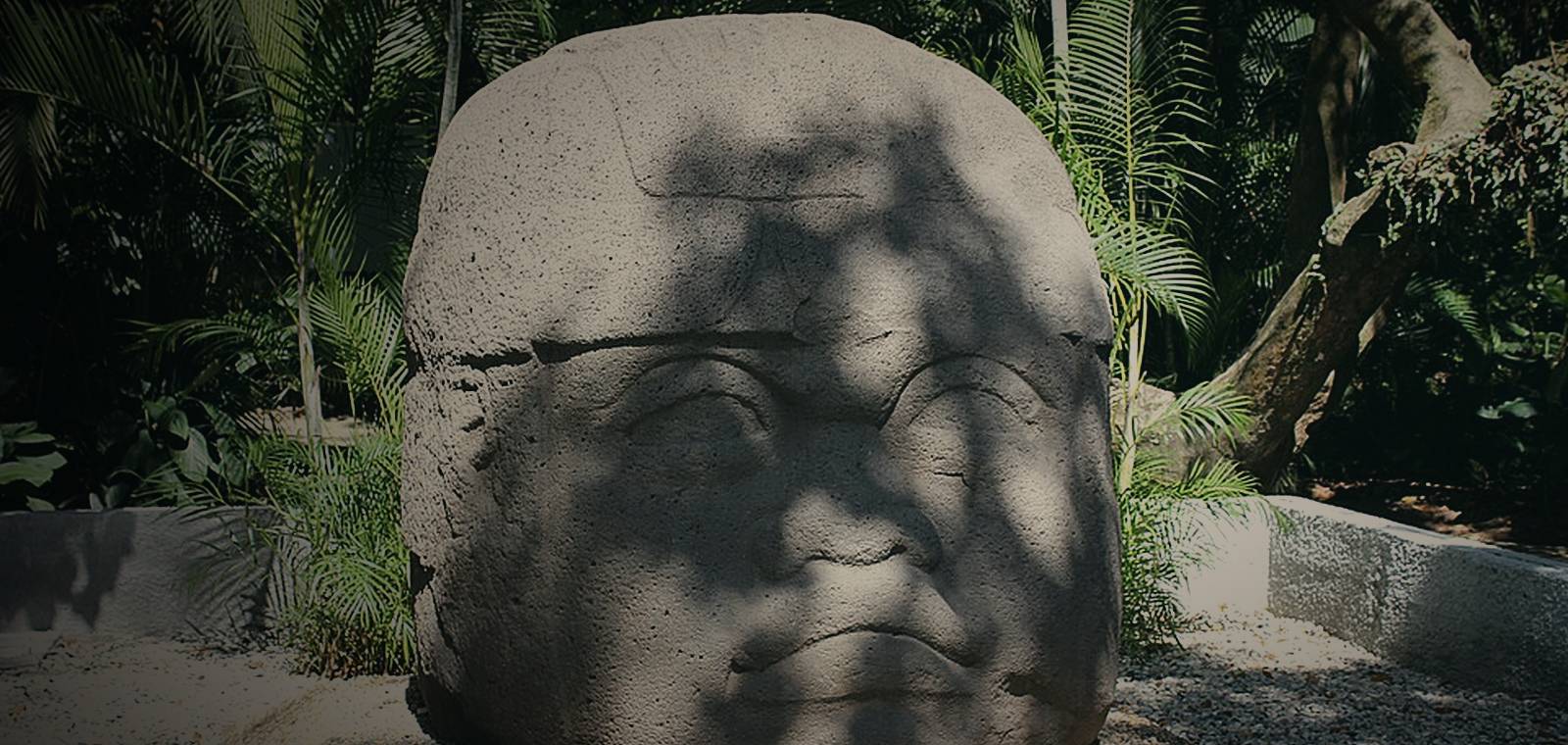
The first colossal head came out of the ground by accident. José María Melgar, writing in 1871, said that in 1862 he heard of a head found near a sugar plantation called Hueyapan, in the state of Veracruz. A workman clearing land for a cornfield had seen what seemed to be the bottom of a huge inverted iron kettle
sticking out of the soil. When it was dug out it was a giant carved head. Melgar went to see it and "was amazed".
Matthew Stirling of the Smithsonian excavated that head at Tres Zapotes in 1938-39. In his 1943 report he calls it one of the major art objects of the New World
, carved from a block of gray basalt and weighing more than 10 tons. He found it set on a foundation of unworked stones at the ancient plaza level, so it had been buried by earth piling up around it, not by sinking. A basalt outcrop about a mile away may have supplied the stone; otherwise, he wrote, it was moved some 10 miles.
By 1967 twelve heads were known. A Berkeley team that studied them all reported that the stone for most came from Cerro Cintepec in the Tuxtla Mountains, and that one La Venta head weighs 24 tons and stands 2.41 metres tall. With one exception, they wrote, every head shows deliberate damage: grooves, niches, gouges and pits. Artnet News counts 17 heads found to date, most at San Lorenzo, the largest weighing 45 tons.