













What is Howard Carter known for?
The Griffith Institute at Oxford, which holds his excavation records, says Howard Carter was born in Kensington, London, in 1874, the son of an animal painter who taught him to draw. He went to Egypt in 1891, aged seventeen, to work for the Archaeological Survey.
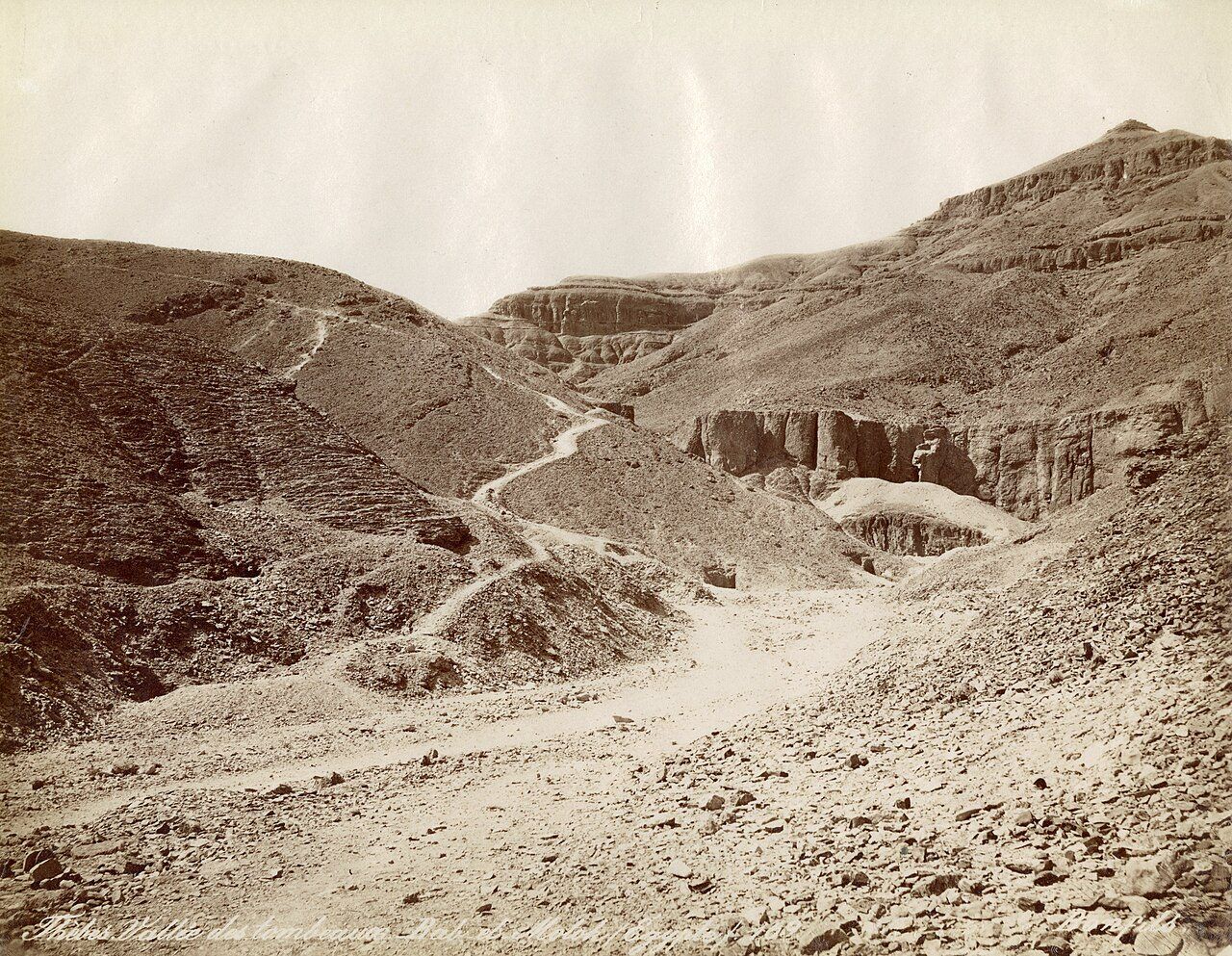
Carter writes that it had been his ambition since his first visit to Egypt to dig in the Valley of the Kings. As Inspector of the Antiquities Department he found and cleared two tombs there for Theodore Davis. From 1907 he excavated for Lord Carnarvon, and in June 1914 they received the concession for the valley.
On 4 November 1922 his workmen found a step cut in the rock. Weeks later he made a small hole in the sealed doorway and, asked by Carnarvon whether he could see anything, answered, "Yes, wonderful things." The Griffith Institute lists his seasons at the tomb running into the 1930s. He died in 1939.
Mentioned on these pages
Linked people and places
Where this comes from
Comes from Howard Carter and A. C. Mace, The Tomb of Tut-ankh-Amen, vol. 1 (London: Cassell, 1923). Internet Archive: A nonprofit digital library in San Francisco, founded in 1996, that holds millions of scanned books, papers and recordings. A scan there shows the pages of a real printed book or document.
What this means
A real person with records. Sources are listed below.
For Howard Carter, the original record exists and is linked: Howard Carter and A. C. Mace, The Tomb of Tut-ankh-Amen, vol. 1 (London: Cassell, 1923). That tells you the record is real and what it says. It does not mean every claim in it is true.
Primary records exist: an original document, a published text, an official file or a dated report. We link to them. This level says the record exists and what it says, not that every claim in it is true.
Sources
- Internet ArchiveA nonprofit digital library in San Francisco, founded in 1996, that holds millions of scanned books, papers and recordings. A scan there shows the pages of a real printed book or document.Howard Carter and A. C. Mace, The Tomb of Tut-ankh-Amen, vol. 1 (London: Cassell, 1923)Primary text
- Griffith Institute (University of Oxford)The Griffith Institute at the University of Oxford, which keeps Egyptology archives, including Howard Carter's records of Tutankhamun's tomb.Griffith Institute, University of Oxford, "Howard Carter", Tutankhamun: Excavating the Archive (people)