The record
At first I could see nothing, the hot air escaping from the chamber causing the candle flame to flicker, but presently, as my eyes grew accustomed to the light, details of the room within emerged slowly from the mist, strange animals, statues, and gold — everywhere the glint of gold.
Howard Carter and A. C. Mace, The Tomb of Tut-ankh-Amen, vol. 1 (1923) · Egypt and Hermes
Translation: Howard Carter and A. C. Mace, The Tomb of Tut-ankh-Amen, vol. 1 (London: Cassell, 1923) · Public domain
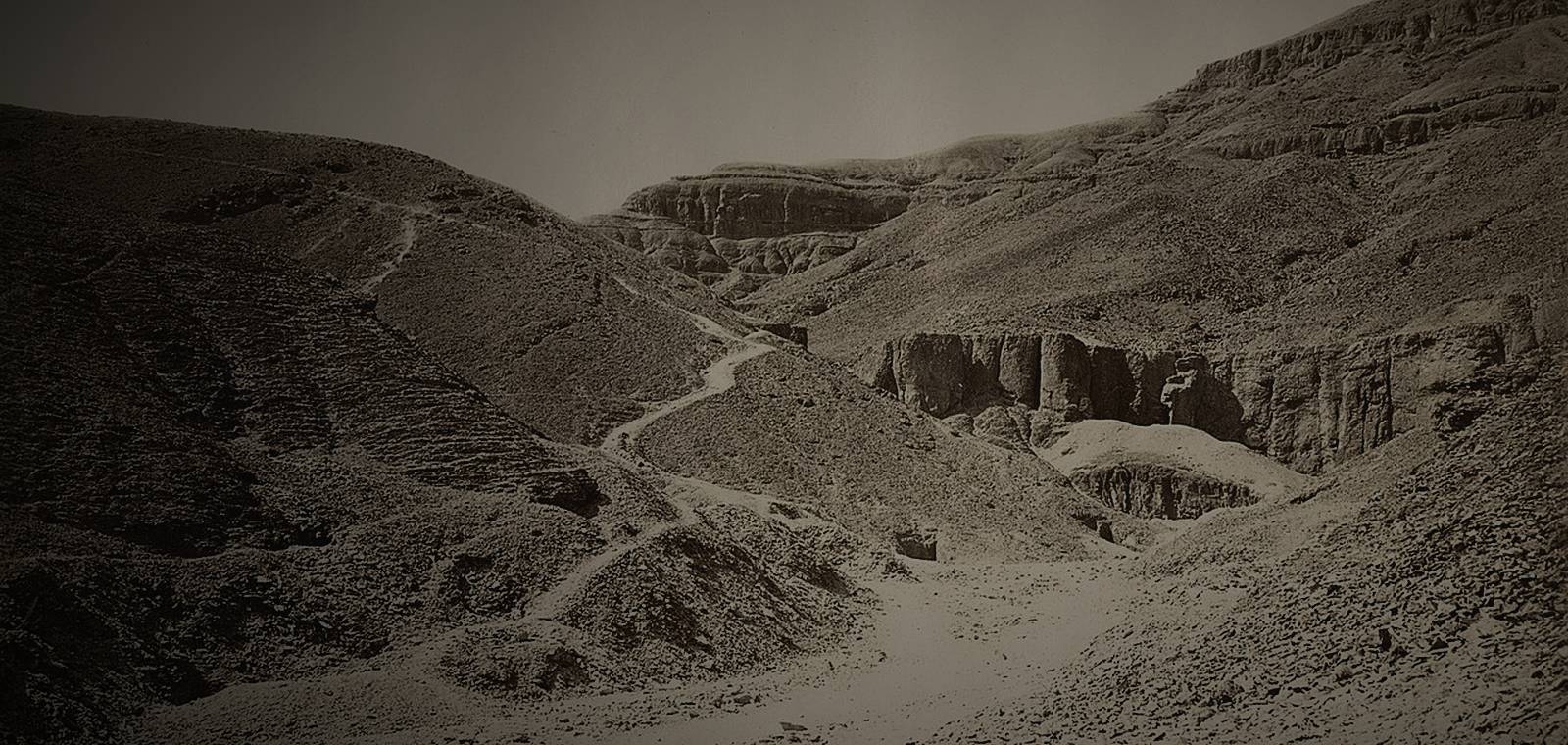
On the west bank of the Nile at Thebes, Egypt's kings of the New Kingdom were buried in tombs cut deep into a desert valley. UNESCO lists the tombs of the Valley of the Kings, roughly 1500 to 1000 BCE, as part of Ancient Thebes with its Necropolis. Strabo saw them in the first century BCE: in caves, are tombs of kings, which are stone-hewn, are about forty in number, are marvellously constructed, and are a spectacle worth seeing.
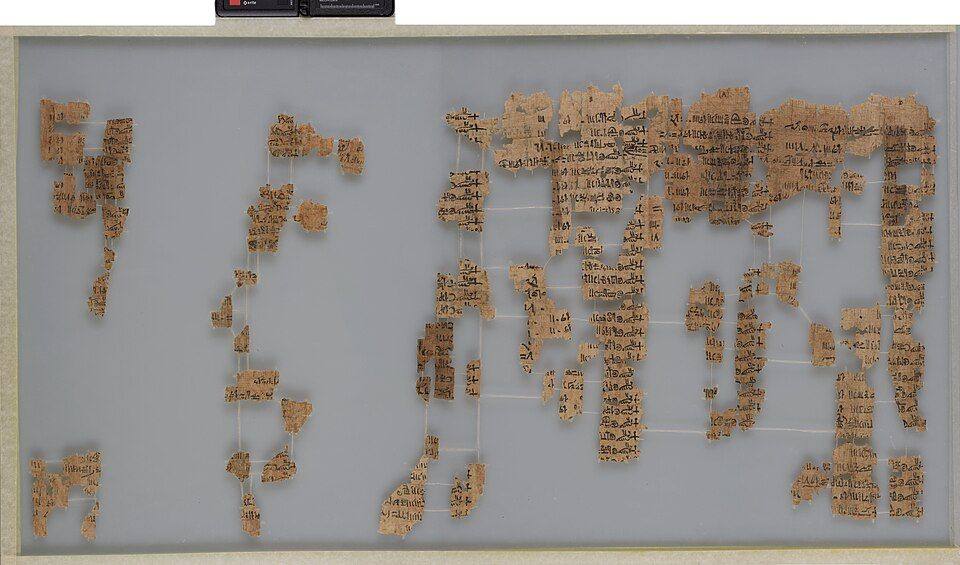
Robbers came early. Howard Carter's 1923 book describes papyri from the reign of Ramesses IX recording an inquiry into tomb robbery on the west bank. One mayor accused his rival of letting ten royal tombs be entered; the inspectors found one actually broken into and attempts on two others, and the accused mayor treated that as a full vindication.
By 1914 the valley was thought to be finished. Carter writes that Belzoni, a century earlier, believed there were "no more" tombs than were then known, and that Gaston Maspero, head of the Antiquities Department, agreed with Theodore Davis that the site was exhausted
. Carter and Lord Carnarvon took the concession anyway. On 4 November 1922 his workmen found a step cut in the rock beneath the first hut they cleared, below the entrance to the tomb of Ramesses VI. It led to the tomb of Tutankhamun, with its seals intact.