












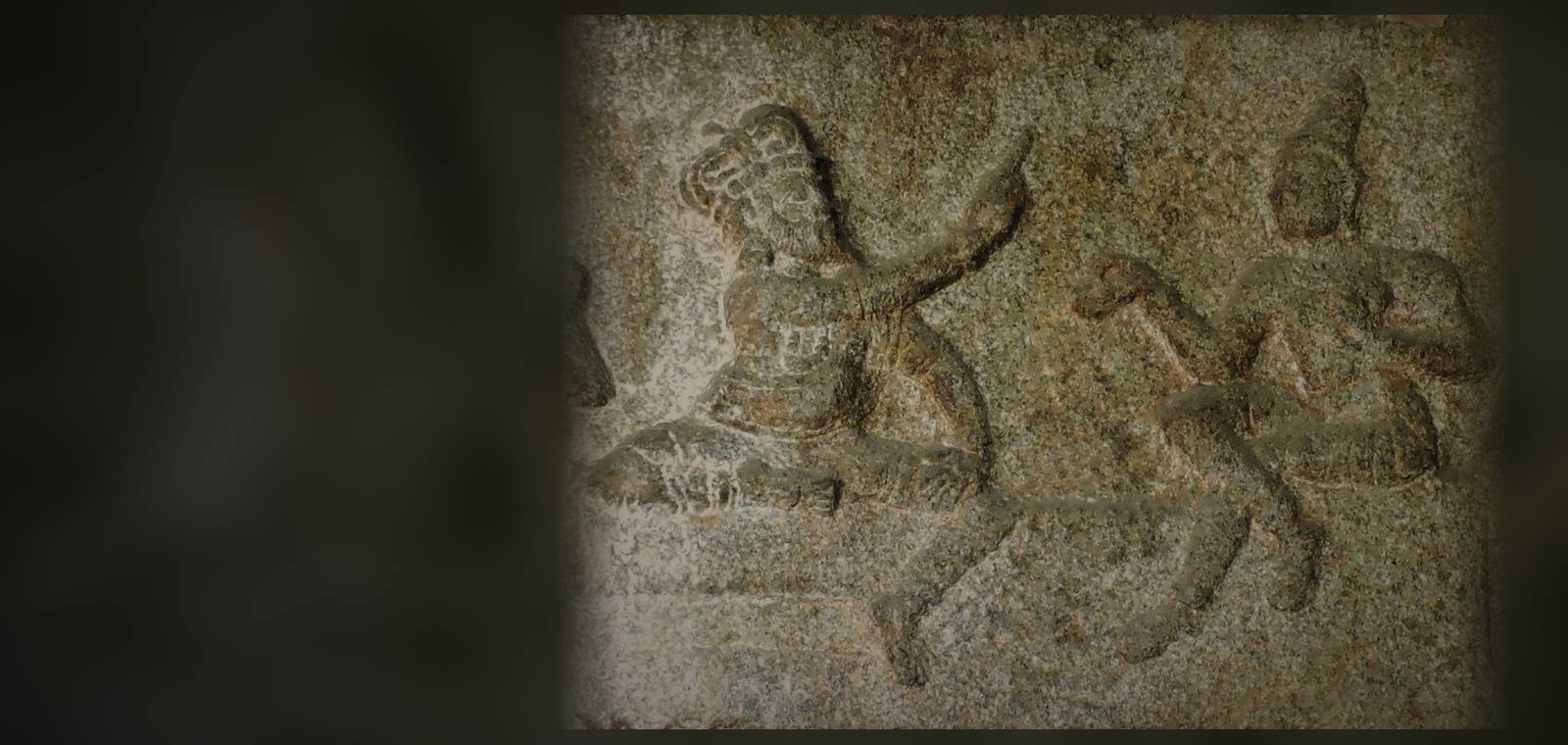
What is Yudhishthira known for?
Yudhishthira is the eldest of the five Pandava brothers in the Mahabharata, a son of Kunti by Dharma, the god of righteousness. He is known for his devotion to truth and duty.
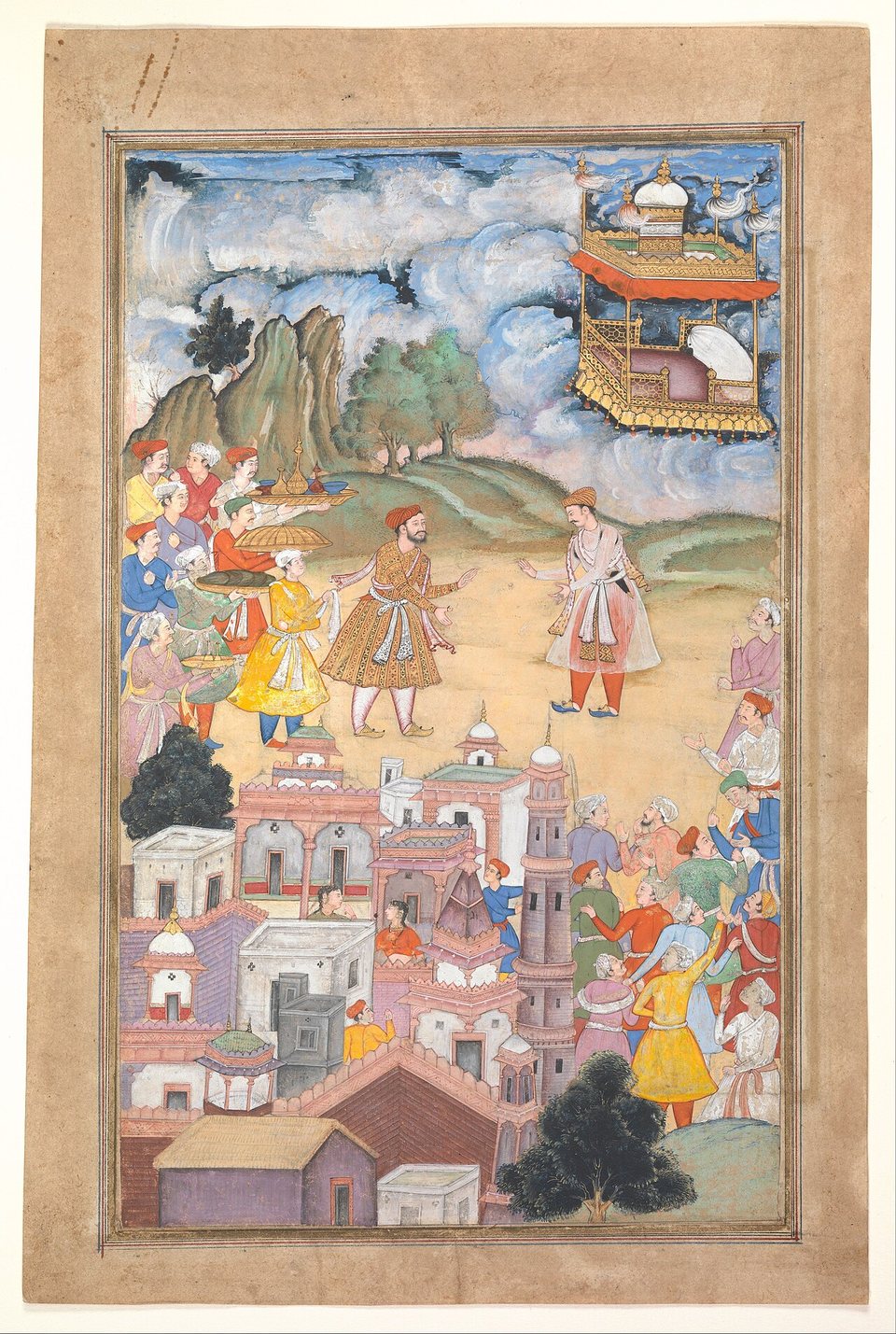
His great failing is gambling. In a rigged dice game against his cousins, the Kauravas, he loses his wealth, his kingdom, his brothers and their shared wife Draupadi, leading to thirteen years of exile. In the Vana Parva, Krishna visits the exiled brothers and explains to Yudhishthira that he could not prevent the game because he was away defending Dwaraka from King Salva and his flying city, Saubha.
After the Kurukshetra war, Yudhishthira becomes king. In the epic's final books he sets out for heaven with his brothers, Draupadi and a dog that turns out to be Dharma in disguise. He is a figure of epic literature.
Titles and honors
- Titles
- King of Indraprastha in the Mahabharata
- Chakravarti Samrat (emperor) after the Rajasuya
- Dharmaraja (Lord of Dharma)
- Death toll and kills
- In the text Deaths in the Kurukshetra War: 1,660,020,000, as he states (Mahabharata)
The same story, told elsewhere
Shared story · Death and return
Journey to the Underworld: Ishtar, Orpheus, Izanagi and Savitri
Someone they love has died, so they walk into the land of the dead to bring them back. In Greece, Japan and among the Cherokee one small broken rule ruins everything, while in India a wife talks Death himself into letting go.
Mahabharata, Vana Parva (Savitri and Yama) is one telling. The same story is told 7 more times, in 6 parts of the world. Follow it:
- Babylonian (Akkadian)Mesopotamia · c. 1000-600 BCE · Ancient text
- GreekIonia · c. 725-675 BCE · Ancient text
- Hindu (Sanskrit epic)Northern India · c. 400 BCE · Ancient textTied to this page
- RomanRome, Italy · 29-19 BCE · Ancient text
- Roman (Greek story)Rome, Italy · c. 8 CE · Ancient text
- Japanese (Shinto)Japan · 712 CE · Medieval text
- NorseIceland · c. 1220 CE · Medieval text
- Cherokee (North America)Eastern Cherokee, western North Carolina, USA · 1887-1890 · Recorded folklore
The open question: Did the story of the forbidden look back travel from people to people, or did people far apart each decide that the dead are lost through one small mistake? Join the debate
Mentioned on these pages
- FileSaubha, the flying city
- PersonKing Salva (Shalva)
- PersonPandavas
Linked people and places
Where this comes from
Comes from The Mahabharata, Vana Parva, trans. Kisari Mohan Ganguli, sacred-texts.com. One of the two great Sanskrit epics of India, about a war between two branches of a royal family. With about 100,000 verses it is one of the longest poems ever made.
What this means
A story or tradition. It is documented as a story; nothing independent shows it happened.
Yudhishthira is known from stories, scripture or tradition. The texts are real and we quote them (for example The Mahabharata, Vana Parva, trans. Kisari Mohan Ganguli, sacred-texts.com), but nothing outside those texts shows that Yudhishthira was real as described.
The page covers something known from myths, scripture or tradition. The texts are real and we quote them, but no independent record shows the events or beings were real.
Sources
- The MahabharataOne of the two great Sanskrit epics of India, about a war between two branches of a royal family. With about 100,000 verses it is one of the longest poems ever made. It was mostly put together between about 300 BC and AD 300. Kisari Mohan Ganguli made the first full English version, 1883 to 1896.The Mahabharata, Vana Parva, trans. Kisari Mohan Ganguli, sacred-texts.com Online copyPrimary text Archived copy, 2026-10-03
- Encyclopaedia BritannicaAn encyclopedia first published in Scotland in 1768 and now online. Its articles are written and checked by named experts and editors, which makes it a reliable source for basic facts.Encyclopaedia Britannica, 'Mahabharata'Reference Archived copy, 2026-08-19
- WikipediaA free online encyclopedia written and edited by volunteers. It is a good starting point and usually lists its own sources, but anyone can change it, so we treat it as a guide to better sources, not the final word.Wikipedia, 'Yudhishthira'Reference Archived copy, 2026-09-20
- WikipediaWikipedia, 'Kurukshetra War'Reference Archived copy, 2026-09-11
No public-domain picture of this person yet. We do not show drawn or generated likenesses.