Credible Theories Sign in
Sumer and Babylon · Inanna and Enki

Inanna's Boat of Heaven, Inanna and Enki

Share

In plain words

This is a summary of Inanna and Enki, a Sumerian myth written around 2000 to 1800 BCE. The goddess Inanna visits Enki, god of wisdom, who gets drunk and gives her over a hundred "me", the divine powers behind civilization, such as kingship and writing. She loads them into the Boat of Heaven and escapes while his monsters chase her.

ReferenceInanna and Enki
Writtenc. 2000–1800 BCE
SetEridu and Uruk
Inanna visits Enki in Eridu. He gets drunk and gives her over a hundred me: kingship, the throne, the craft of the smith, writing, music, and more. She loads them into the Boat of Heaven and escapes to Uruk while Enki's monsters chase her.

Documented · Retold in English, c. 2000–1800 BCE Summary by the editors. Translation: Summary in my own words

Read it literally

Civilization as a set of physical items that can be stolen and carried in a vehicle. The me are the hard drives.

What scholars say

The me are the 'divine powers' of civilization.

Themes Looks like technology From the sky
People and places hereUruk

The same story, told elsewhere

Shared story · Death and return

Journey to the Underworld: Ishtar, Orpheus, Izanagi and Savitri

Someone they love has died, so they walk into the land of the dead to bring them back. In Greece, Japan and among the Cherokee one small broken rule ruins everything, while in India a wife talks Death himself into letting go.

The Descent of Ishtar to the Underworld is one telling. The same story is told 7 more times, in 6 parts of the world. Follow it:

  1. Babylonian (Akkadian)Mesopotamia · c. 1000-600 BCE · Ancient textTied to this page
  2. GreekIonia · c. 725-675 BCE · Ancient text
  3. Hindu (Sanskrit epic)Northern India · c. 400 BCE · Ancient text
  4. RomanRome, Italy · 29-19 BCE · Ancient text
  5. Roman (Greek story)Rome, Italy · c. 8 CE · Ancient text
  6. Japanese (Shinto)Japan · 712 CE · Medieval text
  7. NorseIceland · c. 1220 CE · Medieval text
  8. Cherokee (North America)Eastern Cherokee, western North Carolina, USA · 1887-1890 · Recorded folklore

The open question: Did the story of the forbidden look back travel from people to people, or did people far apart each decide that the dead are lost through one small mistake? Join the debate

Questions people ask about Inanna and Enki

How does the myth of Inanna and Enki end?

When Enki sobers up, he sends his minister Isimud and a series of monsters to stop the boat at seven stopping places. Each time, Inanna's servant Ninshubur fights them off. Inanna reaches Uruk and unloads the divine powers, even adding some that were not on Enki's list. Enki finally accepts that the gifts are gone.

Where can I read Inanna and Enki?

A free English translation is on the Electronic Text Corpus of Sumerian Literature, run by the University of Oxford, listed as text 1.3.1. It is based on clay tablets mostly from the city of Nippur. Parts of the text are broken, so the list of powers has gaps, and translators mark missing lines.

Who was the goddess Inanna?

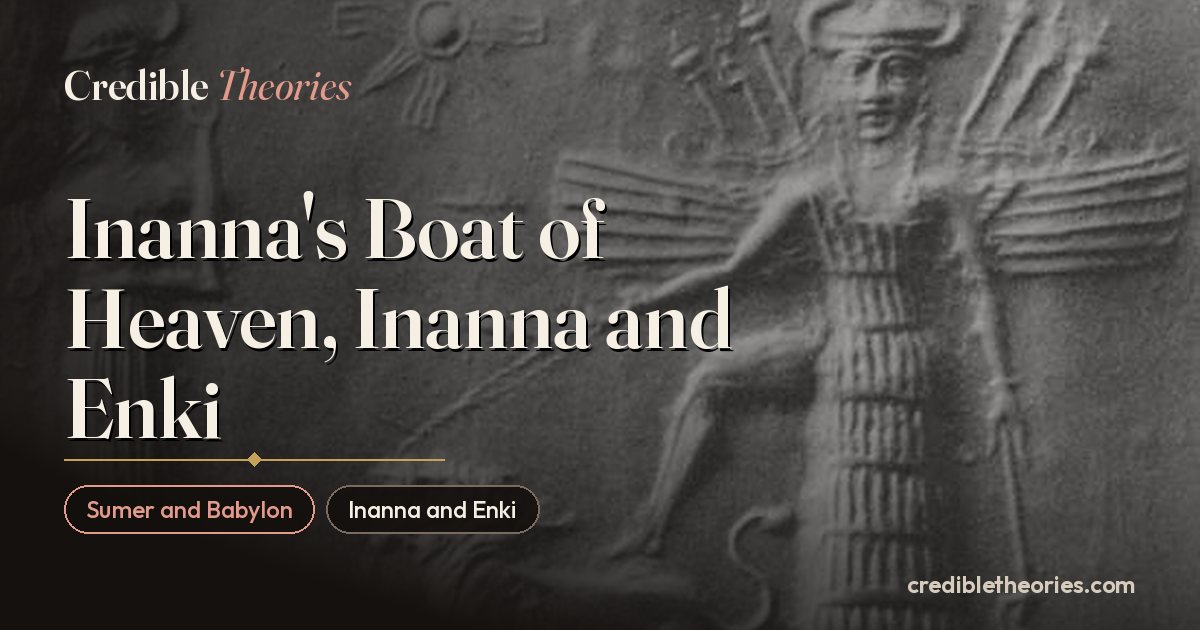
Inanna was the Sumerian goddess of love, sexuality and war, also linked with the planet Venus. She was the patron goddess of Uruk, where her temple, the Eanna, stood. Later Akkadian speakers knew her as Ishtar. The priestess Enheduanna, often called the first known author by name, wrote hymns to her around 2300 BCE.

Used on these files

  • Enki: Who Was the Sumerian God Who Saved Humanity? Myth or legendEnki saves humanity from the Flood without technically breaking his oath: bound to secrecy, he tells the plan to a wall while the hero listens on the other side. The Sumerian god of fresh water also designs the first humans, and in another story gives away civilization while drunk. Who walked off with it?
  • Eridu: The City Where Kingship First Came From Heaven DocumentedArchaeologists found eighteen temples stacked in the same spot at Eridu, each rebuilt on top of the last for roughly three thousand years, starting around 5400 BCE. The Sumerians said it was the oldest city in the world, where kingship first descended from heaven. How much of the legend does the digging support?
  • Inanna: The Goddess Who Stole the Powers of Civilization Myth or legendTo revive Inanna in the underworld, Enki makes two small beings from the dirt under his fingernails. She is also the goddess who, the story says, stole more than a hundred divine powers, the me behind kingship, priesthood and music, and sailed them home to Uruk in the Boat of Heaven. How did she get away with it?

Where this comes from

EvidenceDocumented

Comes from Inanna and Enki, Inanna and Enki. A Sumerian myth in which the goddess Inanna visits Enki, god of wisdom, and sails away with the 'me', the divine powers behind civilization, which he gave away while drinking. It survives on clay tablets copied in about 1900 to 1600 BC.

What this means

The text exists and is quoted from a published translation. What it describes is a separate question.

Primary records exist: an original document, a published text, an official file or a dated report. We link to them. This level says the record exists and what it says, not that every claim in it is true.

See all five labels

Sources

  1. Enki and the World OrderA Sumerian poem in which Enki, god of fresh water and wisdom, puts the world in order, giving lands and gods their jobs. It survives on clay tablets copied in about 1900 to 1600 BC. Oxford University's ETCSL project gives it in English.Enki and the World Order, ETCSL t.1.1.3, University of OxfordPrimary text Archived copy, 2026-08-03
  2. The Sumerian King ListA list of the kings of Sumer and their cities, starting with kings 'before the Flood' who are said to have reigned for tens of thousands of years. It was written down around 2000 to 1800 BC. The best copy, the Weld-Blundell Prism, is in the Ashmolean Museum, Oxford.The Sumerian King List, trans. Electronic Text Corpus of Sumerian Literature (ETCSL t.2.1.1), University of OxfordPrimary text Archived copy, 2026-09-19
  3. Inanna and EnkiA Sumerian myth in which the goddess Inanna visits Enki, god of wisdom, and sails away with the 'me', the divine powers behind civilization, which he gave away while drinking. It survives on clay tablets copied in about 1900 to 1600 BC.Inana and Enki, ETCSL t.1.3.1, University of OxfordPrimary text Archived copy, 2026-09-27

Scholarly dates are rounded. The wording follows the named public-domain translation.

More from Sumer and Babylon

The story before and after this one, and what each shares with Inanna's Boat of Heaven.

Photo credits
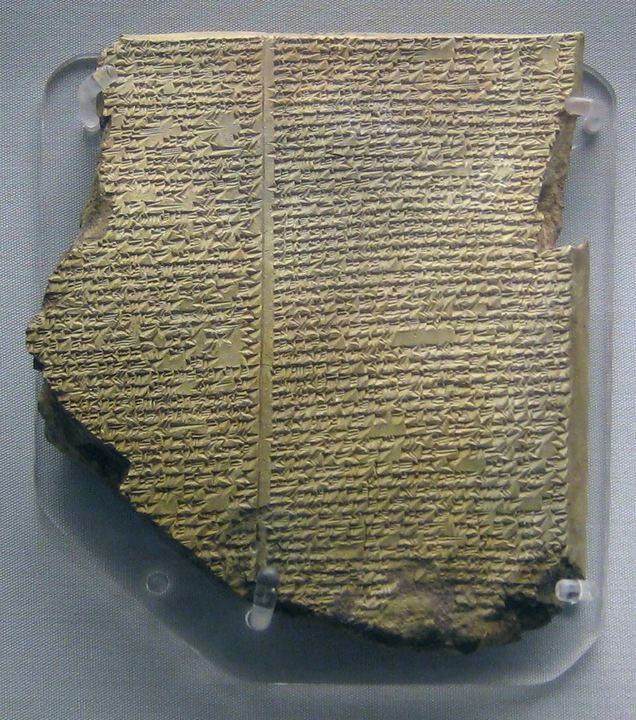
‹ Before thisUtnapishtim's boat and the torches of the AnunnakiGilgamesh, tablet XI

In its flood story, the god Ea tells a man named Utnapishtim to tear down his house and build a boat.

Same theme: Looks like technology
Photo credits
Next ›Sharur, the weapon that talksLugal-e (The Exploits of Ninurta)

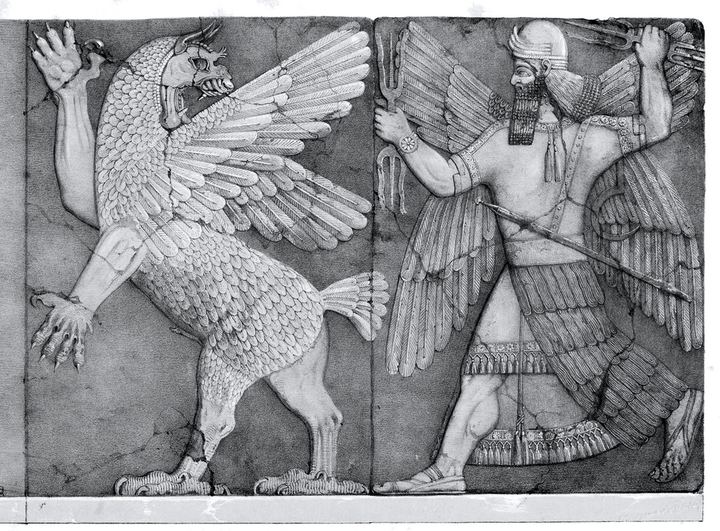
In the poem, his weapon Sharur flies ahead to scout an enemy monster called Asag.

Same theme: Looks like technologySame theme: From the sky

Updated

Discussion