Credible Theories Sign in
Sumer and Babylon · Lugal-e (The Exploits of Ninurta)

Sharur, the weapon that talks, Lugal-e

Share

In plain words

This is a summary from Lugal-e, a long Sumerian poem written around 2100 BCE about the warrior god Ninurta. In the poem, his weapon Sharur flies ahead to scout an enemy monster called Asag. It reports back to Ninurta with advice, and it can also fight on its own.

ReferenceLugal-e (The Exploits of Ninurta)
Writtenc. 2100 BCE
SetMythic time
Ninurta's weapon Sharur flies ahead to scout the enemy Asag, reports back to him with advice, and fights on its own.

Documented · Retold in English, c. 2100 BCE Summary by the editors. Translation: Summary in my own words

Read it literally

A sentient weapon that flies on reconnaissance. A drone with an AI.

What scholars say

Sumerian epic.

Themes Looks like technology From the sky
Questions people ask about Lugal-e

How old is Lugal-e?

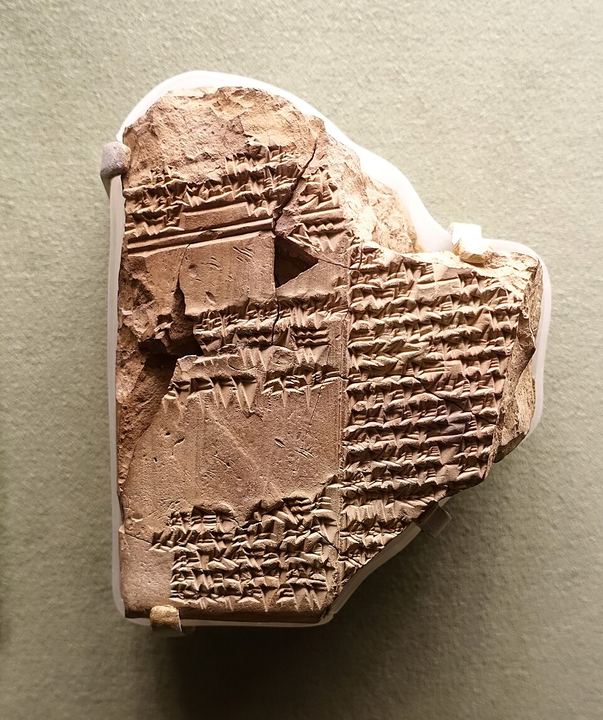
Scholars think the poem took shape in the late third millennium BCE, possibly around the time of Gudea, ruler of Lagash. More than 80 copies survive, many from the Old Babylonian period. Scribes kept copying it for well over a thousand years, and later copies add a line-by-line Akkadian translation.

Who was Ninurta, the god who carries Sharur?

Ninurta was a Sumerian warrior and farming god, a son of the chief god Enlil. His main temple, the Eshumesha, stood in the city of Nippur. Under the Assyrians his worship grew, and King Ashurnasirpal II built him a large temple at Kalhu. In Lagash a closely related god was worshipped as Ningirsu.

What happens after Ninurta defeats Asag?

Ninurta piles up stones to build mountains that hold back the waters, sending them into the Tigris for farming. His mother then visits him, and he gives her the mountain and a new name, Ninhursag, 'Lady of the Mountain'. Scholars read this part of the poem as a myth about how the land and its water were organized.

Used on these files

  • Ninurta: The Warrior God Who Put the Stones on Trial Myth or legendAfter defeating an army of living stones, the warrior god Ninurta holds a trial of rocks, pronouncing a different fate on each kind of stone for how it behaved in the war. His weapon can talk, too; scholars read the myth as floods, mountains and irrigation dressed up as battle. What does a verdict on stones sound like?
  • Sharur: The Oldest Talking Weapon in Literature? Myth or legendIn a Sumerian epic from around 2100 BCE, a mace talks. Sharur brings its god news of a monster, flies over the mountains to scout the enemy, returns to brief him, and gives tactical advice, about four thousand years before anyone built a scout drone; scholars call it a personified divine weapon. What does a weapon say mid-battle?

Where this comes from

EvidenceDocumented

Comes from Lugal-e (The Exploits of Ninurta), Lugal-e (The Exploits of Ninurta). A long Sumerian poem about the warrior god Ninurta, who defeats a monster called Asag with help from his talking weapon, Sharur. It was copied for well over a thousand years, from about 1900 BC on, later with a Babylonian translation line by line.

What this means

The text exists and is quoted from a published translation. What it describes is a separate question.

Primary records exist: an original document, a published text, an official file or a dated report. We link to them. This level says the record exists and what it says, not that every claim in it is true.

See all five labels

Sources

  1. Lugal-e (The Exploits of Ninurta)A long Sumerian poem about the warrior god Ninurta, who defeats a monster called Asag with help from his talking weapon, Sharur. It was copied for well over a thousand years, from about 1900 BC on, later with a Babylonian translation line by line.The Exploits of Ninurta (Lugal-e), ETCSL t.1.6.2, University of OxfordPrimary text Archived copy, 2026-09-06

Scholarly dates are rounded. The wording follows the named public-domain translation.

More from Sumer and Babylon

The story before and after this one, and what each shares with Sharur, the weapon that talks.

Photo credits
‹ Before thisInanna's Boat of HeavenInanna and Enki

The goddess Inanna visits Enki, god of wisdom, who gets drunk and gives her over a hundred "me", the divine powers behind civilization, such as kingship and writing.

Same theme: Looks like technologySame theme: From the sky
Photo credits
Next ›Xisuthrus buries the writings before the FloodBerossus, Babyloniaca, via Alexander Polyhistor

The book is lost, and only quotes by later writers survive.

Same theme: Looks like technology

Updated

Discussion