Money He Could Never Spend
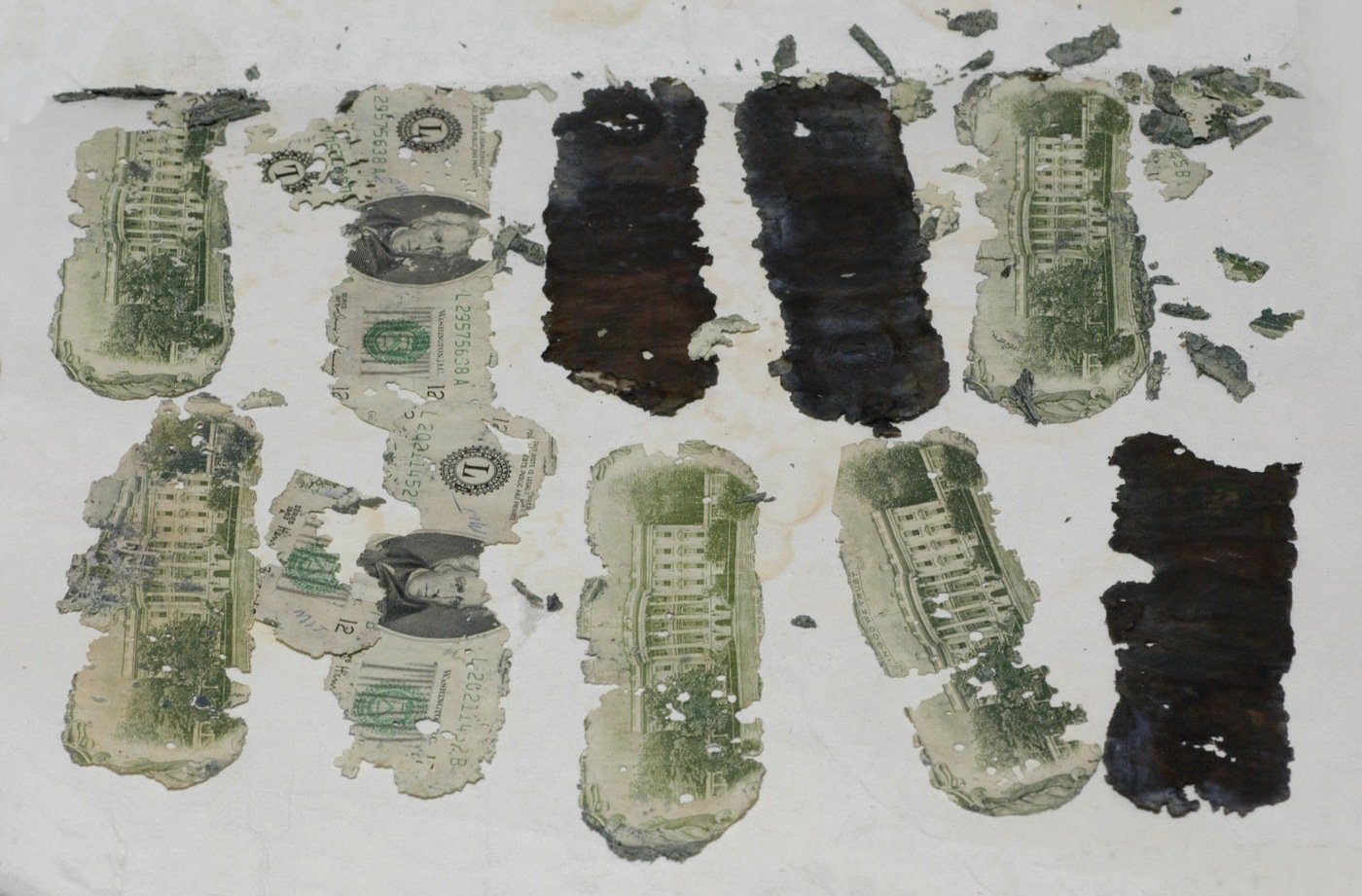
Federal Bureau of Investigation (FBI). Public domain. Picture source
The serial numbers go public, no ransom bill ever turns up in a shop, a boy finds three rotting bundles on a Columbia River beach in 1980, and in 2016 the FBI stops actively investigating.
1972 to 2016, from the published serial numbers to Tena Bar and the end of the active case
The story
A month after the jump, the FBI sends the serial numbers to banks, casinos and racetracks. In early 1972 they are printed for the public. Newspapers offer rewards for a single bill. In this story, the man reads the lists in a diner far from Washington and understands that his fortune is now a trap. Every twenty could put him in prison.
So he does the one thing that fits the record: he never spends it. Not one ransom bill is ever confirmed in circulation. In this story, he hides the bag and goes back to an ordinary life, older and limping, with a secret he can tell no one.
Then, on February 10, 1980, an 8-year-old named Brian Ingram is smoothing sand for a campfire at Tena Bar on the Columbia River, about nine miles below Vancouver, Washington. He finds three packets of rotting twenties, still in rubber bands. The serial numbers match. It is $5,800, the first real clue in more than eight years.
A 2020 study of algae on one of those bills found that the money went into water in a warm season, months after the November jump, not on the night itself. The story cannot explain that, and neither can anyone else. Maybe a hidden bag washed out in a spring flood. Maybe the money took a path nobody has guessed.
In July 2016, after 45 years, the FBI moves its people off the case. The file stays open to new evidence about the money or the parachutes. In this story, that is where the trail ends: one man, one jump, and about $194,000 that never came back. Whether he lived is still a guess. The record only shows that nobody ever proved he died.
What the record says
I took my arm and raked it along the sand, and then I felt something fluffed up in the sand,
Brian Ingram, who found the money at age 8, speaking in 1986, as quoted in HistoryLink.org Essay 23059
The Cooper bill contained diatoms from summer bloom species suggesting that the money was not directly buried dry and the immersion happened months after the late November hijacking.
Kaye and Meltzer, Scientific Reports (2020), abstract
Although the FBI appreciated the immense number of tips provided by members of the public, none to date have resulted in a definitive identification of the hijacker.
FBI Seattle statement, July 2016, as quoted by the Associated Press in the Christian Science Monitor
The FBI sent the serial numbers to financial institutions about a month after the hijacking, and they were made public in early 1972; no ransom bill was found in circulation. On February 10, 1980, Brian Ingram found three packets of the ransom, two of 100 bills and one of 90, at Tena Bar on the Columbia River; the FBI matched the serial numbers, and in 1986 a court split the bills between the Ingrams and the insurer, with some kept as evidence. A 2020 peer-reviewed diatom study concluded the money went into water months after the hijacking. On July 8, 2016, the FBI redirected the resources assigned to the case, saying it would still take physical evidence tied to the parachutes or the money. That the hijacker lived, hid the money and never spent it is this story's supposition, not a finding.