Credible Theories Sign in

The record

From the text
Of old was the age when Ymir lived; Sea nor cool waves nor sand there were; Earth had not been, nor heaven above, But a yawning gap, and grass nowhere.
Documented · Medieval text, c. 900–1100 CE
Voluspa 3 (Poetic Edda) · Norse
Translation: Henry Adams Bellows, The Poetic Edda (1923) · Public domain

Ymir is the primeval giant of Norse mythology, the first living being and the ancestor of the frost giants. The Voluspa places him at the very start of time: Of old was the age when Ymir lived; sea nor cool waves nor sand there were. In the poem Vafthrudnismal he is also called Aurgelmir, and his descendants are the frost giants who become the gods' oldest enemies.

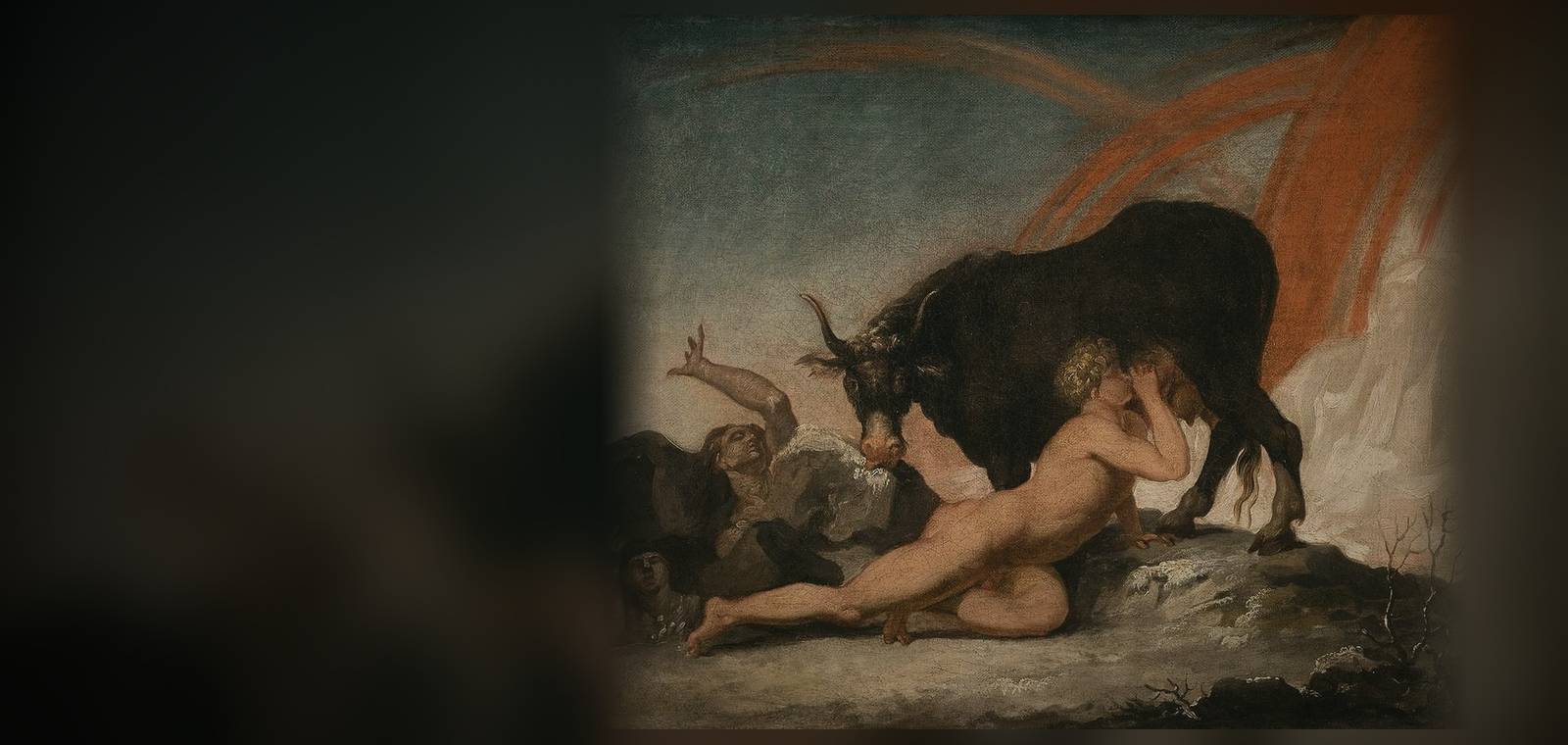
Snorri Sturluson's Prose Edda (c. 1220) tells the fuller story. In the empty gap called Ginnungagap, rime from icy Niflheim met sparks from fiery Muspell, and the melting drops quickened into Ymir. A cow named Audhumla fed him with rivers of milk. While he slept, a man and a woman grew under his left arm, and one of his legs begot a son with the other. The gods themselves came later, from a being the cow licked out of salty ice.

Odin and his brothers Vili and Ve then killed Ymir. So much blood poured out that it drowned the frost giants, all but Bergelmir and his wife, who escaped and restarted the giant race. The gods carried the body into the middle of the gap and built the cosmos from it: flesh became earth, blood became sea and lakes, bones became mountains, and the skull was raised as the sky, held up at its four corners by four dwarves named North, South, East and West.

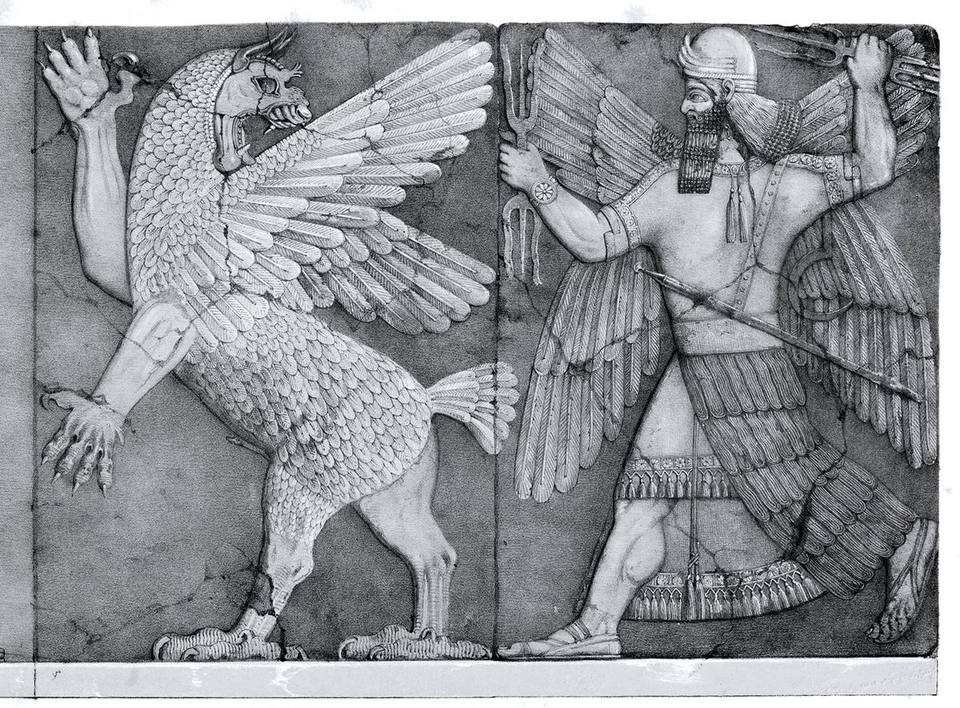
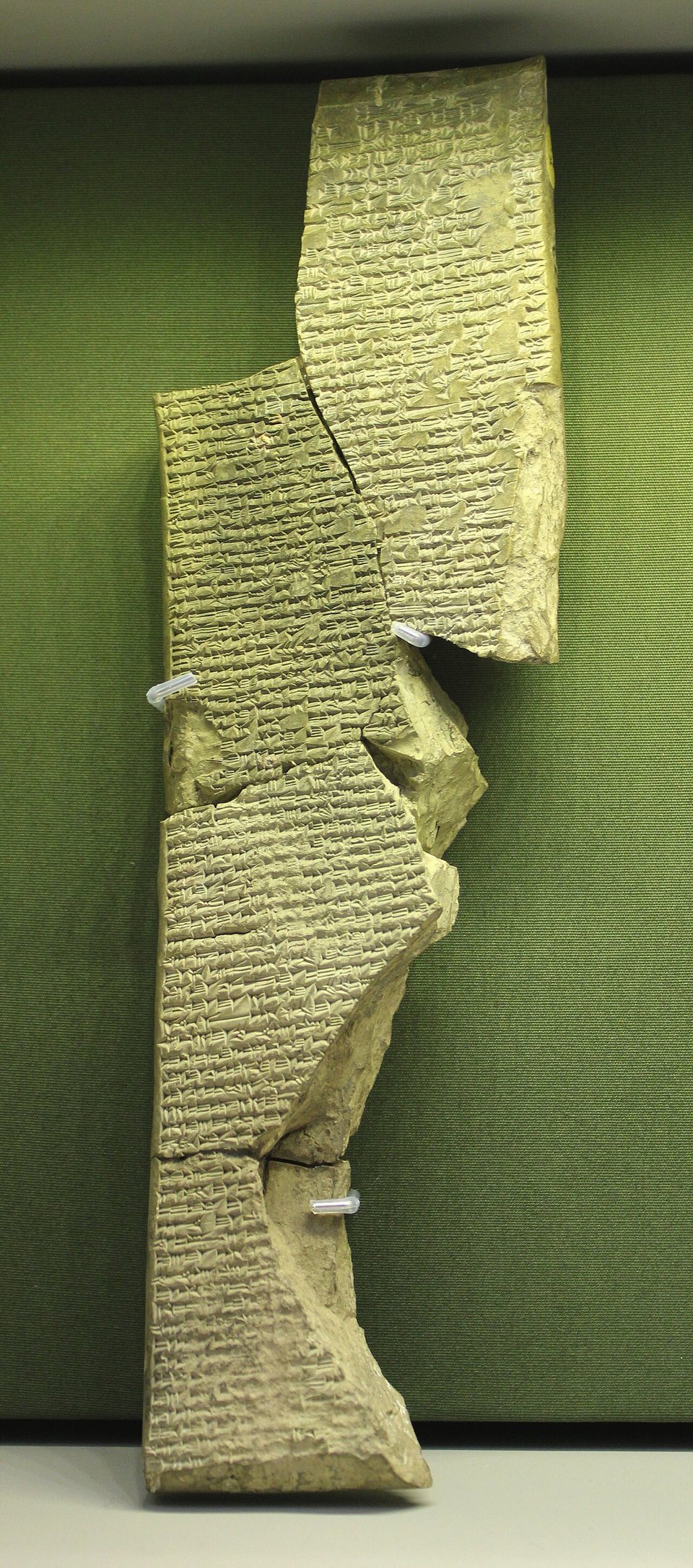
Scholars see Ymir as a Norse form of an old Indo-European theme, the world made from a sacrificed primal being, comparable to Purusha in the Rig Veda. His name may be related to Sanskrit Yama, meaning "twin", which fits a being who produced offspring by himself. People who read these myths alongside the Near East often point to Tiamat, whose split body forms heaven and earth in Enuma Elish: in both, the world is built out of an older, defeated giant.
The same story, told elsewhere

Shared story · Floods and lost lands

Flood Stories Around the World

A god warns one good man, a boat is built, the world drowns and birds are sent out to find land. The same story turns up from Iraq to India to Greece, with cousins in China, Scandinavia and Guatemala.

Prose Edda, Gylfaginning (Bergelmer) is one telling. The same story is told 9 more times, in 6 parts of the world. Follow it:

  1. Vedic IndiaNorthern India · c. 800-600 BCE · Ancient text
  2. Babylonian (Akkadian)Mesopotamia · 7th century BCE · Ancient text
  3. Hebrew BibleJudah / Babylon · c. 600-400 BCE · Ancient text
  4. ChineseYellow River valley, China · 1st millennium BCE · Ancient text
  5. Zoroastrian (Persian)Iran / Central Asia · 1st millennium BCE · Ancient text
  6. Babylonian, retold in GreekBabylon · c. 280 BCE · Ancient text
  7. GreekGreece · 1st or 2nd century CE · Ancient text
  8. IslamArabia · 7th century CE · Medieval text
  9. NorseIceland · c. 1220 CE · Medieval textTied to this page
  10. K'iche' MayaHighland Guatemala · c. 1554-1558 · Retold in English

The open question: One real flood remembered by many peoples, or many different floods that each people told in its own way? Join the debate

Shared story · Beginnings

Creation from the Primeval Waters and the Cosmic Egg

Before anything existed there was dark water. Or an egg. Babylon, Genesis, the Rig Veda, Egypt, Finland and the Quran all start the world in almost the same place.

Poetic Edda, Voluspa is one telling. The same story is told 9 more times, in 5 parts of the world. Follow it:

  1. BabylonianBabylon, Mesopotamia · c. 1700-1100 BCE · Ancient text
  2. Vedic IndiaNorthwest India · c. 1200-1000 BCE · Ancient text
  3. GreekBoeotia, Greece · c. 700 BCE · Ancient text
  4. Hebrew BibleJudah / Babylon · c. 600-400 BCE · Ancient text
  5. EgyptianThebes, Egypt · c. 310 BCE · Ancient text
  6. Babylonian, retold in GreekBabylon · c. 280 BCE · Ancient text
  7. Hindu law codeIndia · c. 200 BCE · Ancient text
  8. IslamArabia · 7th century CE · Medieval text
  9. NorseIceland · c. 1000 CE · Medieval textTied to this page
  10. FinnishFinland and Karelia · 1820 · Recorded folklore

The open question: Why would people who never met all start the world in dark water? A shared idea, or the most natural guess anyone would make? Join the debate

Shared story · Beginnings

Giants and the Races Before Us

Genesis has the Nephilim, Greece has the Giants, the North has the frost giants, Arabia has the tall people of 'Ad and the Maya have Zipacna, who piled up mountains. Why does almost everyone remember giants?

Prose Edda, Gylfaginning (Ymir and the frost giants) is one telling. The same story is told 7 more times, in 4 parts of the world. Follow it:

  1. Hebrew BibleCanaan · c. 700-400 BCE · Ancient text
  2. GreekBoeotia, Greece · c. 700 BCE · Ancient text
  3. Hebrew BibleJudah · c. 600-400 BCE · Ancient text
  4. Jewish apocalyptic (Second Temple)Judea · c. 300-200 BCE · Ancient text
  5. GreekGreece · 1st or 2nd century CE · Ancient text
  6. IslamSouthern Arabia · 7th century CE · Medieval text
  7. NorseIceland · c. 1220 CE · Medieval textTied to this page
  8. K'iche' MayaHighland Guatemala · c. 1554-1558 · Retold in English

The open question: Real bones dug up and explained, a memory of older peoples, or something else that made giants a story almost everywhere? Join the debate

Questions people ask about Ymir

How was the world made from Ymir?

The Eddic poem Grimnismal adds details beyond Snorri's summary. It says the gods made the clouds from Ymir's brains and the trees from his hair, and from his eyebrows they built Midgard, the walled home of humans. Snorri adds that maggots in the giant's flesh became the dwarves, who were given human understanding by the gods.

Who were Odin's ancestors in the Ymir story?

The cow Audhumla licked the salty ice for three days, and a man named Buri came out of it. Buri had a son, Borr, who married Bestla, the daughter of a giant. Their sons were Odin, Vili and Ve. That means the gods who killed Ymir were partly descended from his own giant family.

Is anything in space named after Ymir?

Yes. Ymir is a small moon of Saturn found in 2000 by a team led by astronomer Brett Gladman. It is roughly 18 kilometers across and circles Saturn backward, far from the planet. It belongs to a group of distant moons that astronomers name after giants of Norse myth, such as Skathi, Mundilfari and Suttungr.

The open question

Still strange: The story says a man and a woman grew under Ymir's left arm while he slept, and one of his legs had a son with the other.

Ginnungagap: The Yawning Void Where Fire Met Ice →
  1. Step 1 of 4 · This fileYmir
  2. Step 2 of 4 · The passageBefore the world: Ymir and the gap, Voluspa 3 (Poetic Edda)
  3. Step 3 of 4 · The longer textThe Poetic Edda
  4. Step 4 of 4 · Next fileGinnungagap: The Yawning Void Where Fire Met Ice
About these videos

Found by a YouTube search for this topic, not checked by us. The player loads from YouTube only when you press play.

Where it turns up

Where this comes from

EvidenceMyth or legend

Comes from Voluspa 3, Poetic Edda, trans. Henry Adams Bellows (1923). The Poetic Edda: A collection of Old Norse poems about gods such as Odin and Thor and about the world's beginning and end. The poems are older, but they survive mainly in one Icelandic manuscript of about 1270, found in 1643 and now in Reykjavik.

What this means

A story or tradition. It is documented as a story; nothing independent shows it happened.

Ymir is known from stories, scripture or tradition. The texts are real and we quote them (for example Voluspa 3, Poetic Edda, trans. Henry Adams Bellows (1923)), but nothing outside those texts shows that Ymir was real as described.

The page covers something known from myths, scripture or tradition. The texts are real and we quote them, but no independent record shows the events or beings were real.

See all five labels

Sources

  1. The Poetic EddaA collection of Old Norse poems about gods such as Odin and Thor and about the world's beginning and end. The poems are older, but they survive mainly in one Icelandic manuscript of about 1270, found in 1643 and now in Reykjavik. Henry Adams Bellows's English version came out in 1923.Voluspa 3, Poetic Edda, trans. Henry Adams Bellows (1923) Online copyPrimary text Archived copy, 2026-06-05
  2. The Prose Edda, by Snorri SturlusonA book about Norse myths and poetry written around 1220 by Snorri Sturluson, an Icelandic chieftain and scholar. It retells the making of the world from the body of the giant Ymir and many tales of the gods. Arthur Gilchrist Brodeur's English version came out in 1916.Snorri Sturluson, Prose Edda, Gylfaginning 5–8, trans. Arthur Gilchrist Brodeur (1916) Online copyPrimary text Archived copy, 2026-08-20
  3. WikipediaA free online encyclopedia written and edited by volunteers. It is a good starting point and usually lists its own sources, but anyone can change it, so we treat it as a guide to better sources, not the final word.Wikipedia, "Ymir"Reference Archived copy, 2026-09-18
  4. Encyclopaedia BritannicaAn encyclopedia first published in Scotland in 1768 and now online. Its articles are written and checked by named experts and editors, which makes it a reliable source for basic facts.Encyclopaedia Britannica, "Ymir"Reference

Quotations come from public-domain translations. A book in our Library links to its Library page; other links open the free online copy or the reference page.

Updated

Credible or not?

Tap one to see how other readers voted.

Discussion