Credible Theories Sign in

The record

From the text
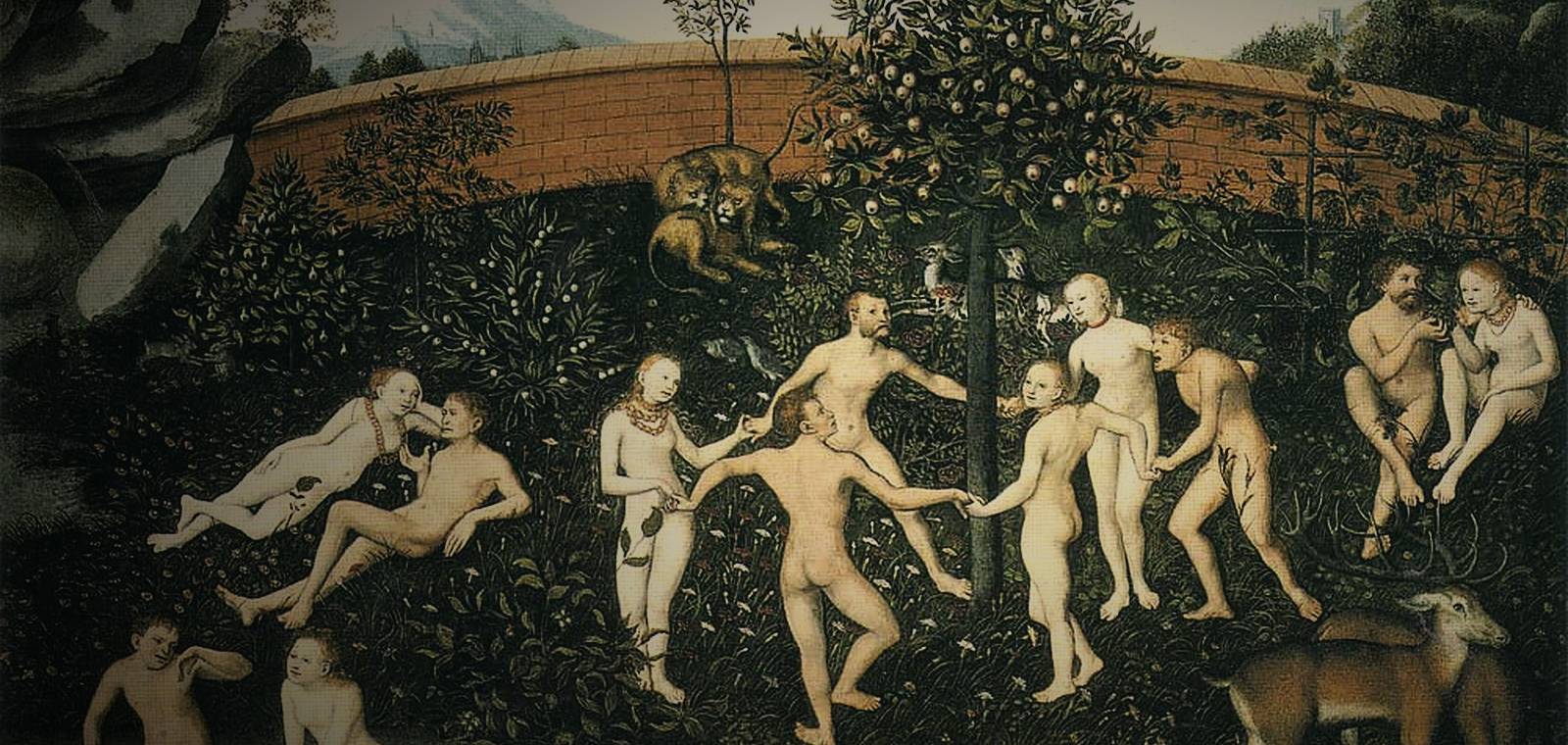
First of all the deathless gods who dwell on Olympus made a golden race of mortal men… a god-like race of hero-men who are called demi-gods, the race before our own.
Documented · Ancient text, c. 700 BCE
Hesiod, Works and Days 109–201 · Greece and Rome
Translation: Hugh G. Evelyn-White, Hesiod, the Homeric Hymns and Homerica (Loeb, 1914) · Public domain

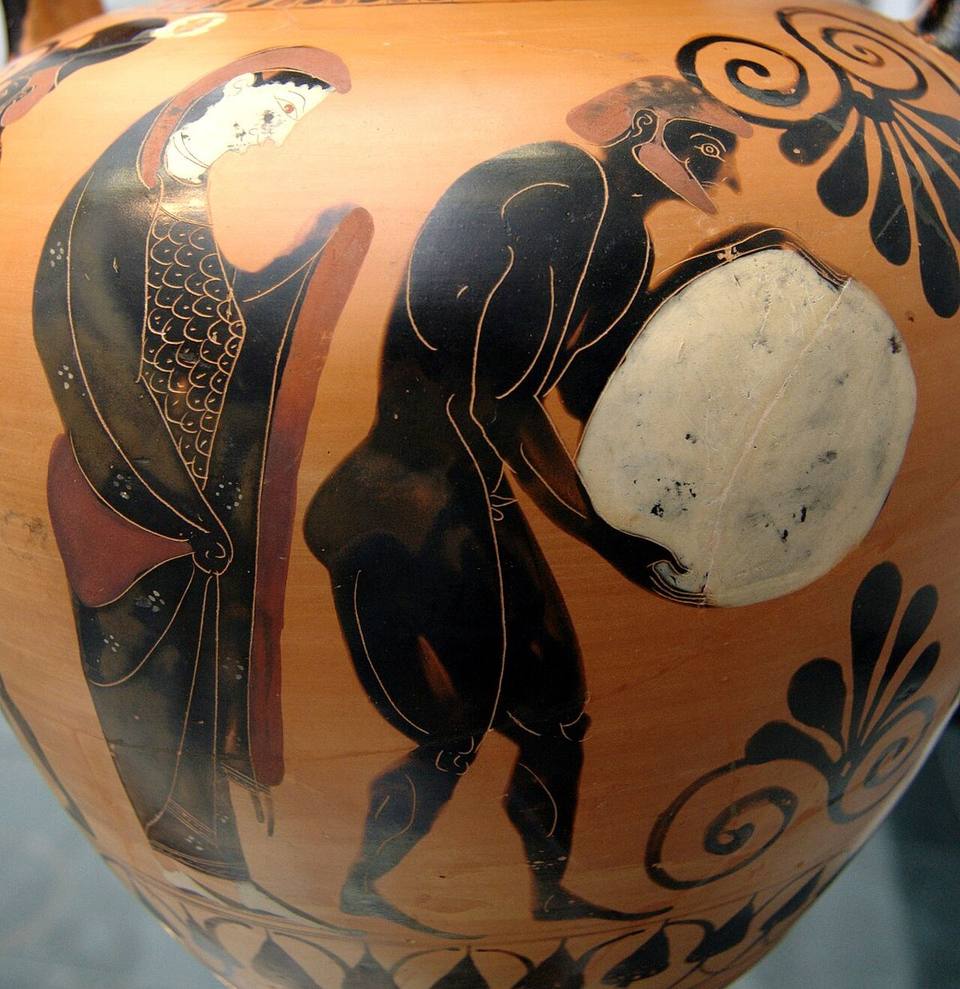
In Works and Days, a poem of farming advice and moral warning from around 700 BCE, Hesiod tells a history of humankind in five stages. The gods of Olympus first made a golden race of mortal men who lived in the time of Cronus. They lived like gods without sorrow of heart, never grew old, and died as if falling asleep. After the earth covered them, they became kindly spirits who watch over mortals.

The next race, of silver, was far worse: its people stayed children at their mothers' side for a hundred years, then lived a short, foolish adulthood and would not honor the gods, so Zeus put them away. Zeus then made a race of bronze, sprung from ash trees, terrible and strong, whose armor, houses and tools were all bronze. They destroyed each other. The fourth race breaks the metal pattern: the heroes or demigods who fought at Thebes and Troy, some of whom now live on the Isles of the Blessed.

The fifth is our own. For now truly is a race of iron, and men never rest from labour and sorrow by day, and from perishing by night. Hesiod wishes he had died before it or been born after it, and predicts Zeus will destroy this race too when babies are born with gray hair.

Scholars compare the scheme with the four metals of Nebuchadnezzar's dream in Daniel 2, with a Zoroastrian vision of metal ages, and with the Hindu yugas. The heroic race is often read as Hesiod fitting the epic past into an older four-metal myth. For readers of ancient visitor theories, it reads as humanity rebuilt in versions, each one replaced.
The same story, told elsewhere

Shared story · Floods and lost lands

Flood Stories Around the World

A god warns one good man, a boat is built, the world drowns and birds are sent out to find land. The same story turns up from Iraq to India to Greece, with cousins in China, Scandinavia and Guatemala.

Apollodorus, The Library (Deucalion and Pyrrha) is one telling. The same story is told 9 more times, in 6 parts of the world. Follow it:

  1. Vedic IndiaNorthern India · c. 800-600 BCE · Ancient text
  2. Babylonian (Akkadian)Mesopotamia · 7th century BCE · Ancient text
  3. Hebrew BibleJudah / Babylon · c. 600-400 BCE · Ancient text
  4. ChineseYellow River valley, China · 1st millennium BCE · Ancient text
  5. Zoroastrian (Persian)Iran / Central Asia · 1st millennium BCE · Ancient text
  6. Babylonian, retold in GreekBabylon · c. 280 BCE · Ancient text
  7. GreekGreece · 1st or 2nd century CE · Ancient textTied to this page
  8. IslamArabia · 7th century CE · Medieval text
  9. NorseIceland · c. 1220 CE · Medieval text
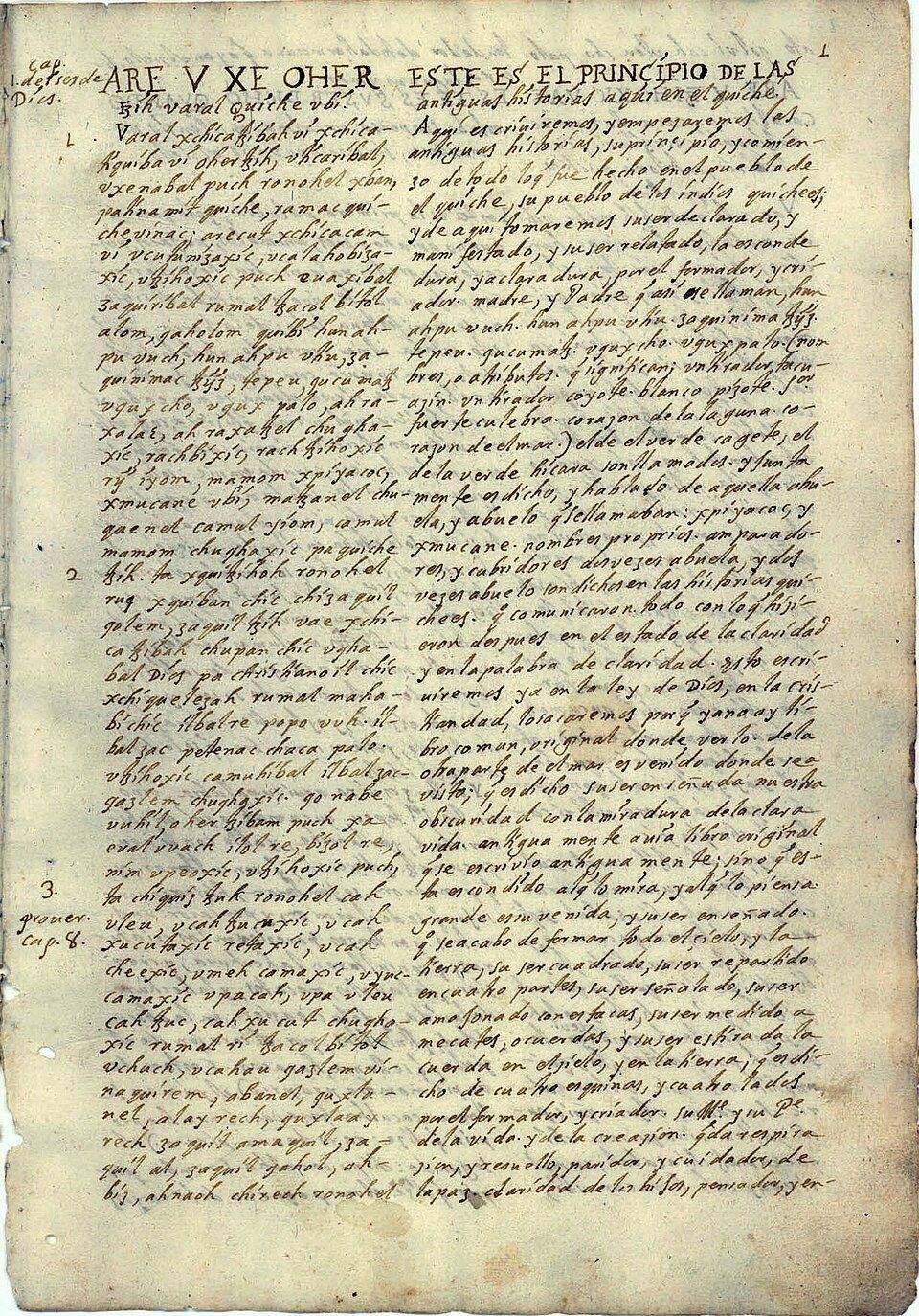
  10. K'iche' MayaHighland Guatemala · c. 1554-1558 · Retold in English

The open question: One real flood remembered by many peoples, or many different floods that each people told in its own way? Join the debate

Shared story · Beginnings

Giants and the Races Before Us

Genesis has the Nephilim, Greece has the Giants, the North has the frost giants, Arabia has the tall people of 'Ad and the Maya have Zipacna, who piled up mountains. Why does almost everyone remember giants?

Hesiod, Works and Days (the bronze race) is one telling. The same story is told 7 more times, in 4 parts of the world. Follow it:

  1. Hebrew BibleCanaan · c. 700-400 BCE · Ancient text
  2. GreekBoeotia, Greece · c. 700 BCE · Ancient textTied to this page
  3. Hebrew BibleJudah · c. 600-400 BCE · Ancient text
  4. Jewish apocalyptic (Second Temple)Judea · c. 300-200 BCE · Ancient text
  5. GreekGreece · 1st or 2nd century CE · Ancient text
  6. IslamSouthern Arabia · 7th century CE · Medieval text
  7. NorseIceland · c. 1220 CE · Medieval text
  8. K'iche' MayaHighland Guatemala · c. 1554-1558 · Retold in English

The open question: Real bones dug up and explained, a memory of older peoples, or something else that made giants a story almost everywhere? Join the debate

Shared story · Beginnings

The Lost Golden Age and the Ages of the World

Gold, silver, bronze, iron: Greece, Persia and the Book of Daniel all count the ages of the world in metals, India counts four yugas, and the Norse and Maya see whole worlds destroyed and remade.

Hesiod, Works and Days (the five races) and Ovid, Metamorphoses, Book 1 are two tellings. The same story is told 8 more times, in 6 parts of the world. Follow it:

  1. GreekBoeotia, Greece · c. 700 BCE · Ancient textTied to this page
  2. Greek (Plato)Athens · c. 360 BCE · Ancient text
  3. Greek, about EgyptAthens, telling an Egyptian story · c. 360 BCE · Ancient text
  4. Hindu law codeIndia · c. 200 BCE · Ancient text
  5. Hebrew BibleJudea · c. 165 BCE · Ancient text
  6. RomanRome · c. 8 CE · Ancient textTied to this page
  7. Zoroastrian (Persian)Iran · 9th to 13th centuries CE · Medieval text
  8. Zoroastrian (Persian)Iran · 9th century CE · Medieval text
  9. NorseIceland · c. 1000 CE · Medieval text
  10. K'iche' MayaHighland Guatemala · c. 1554-1558 · Retold in English

The open question: Why do so many traditions believe the past was better and the world is running down? Memory, or human nature? Join the debate

Shared story · Beginnings

Stealing Fire: Prometheus, Maui and the Water Spider

Fire was kept from people, hidden away by gods or guarded by jealous owners, until someone took it. A Greek god hides it in a hollow stalk, a Maori hero tricks it out of his grandmother, and a little Cherokee spider carries a coal home on her back.

Hesiod, Works and Days (Prometheus) is one telling. The same story is told 6 more times, in 6 parts of the world. Follow it:

  1. Vedic IndiaNorthwestern India · c. 1500-1000 BCE · Ancient text
  2. GreekBoeotia, Greece · c. 700 BCE · Ancient textTied to this page
  3. PersianIran · c. 1010 CE · Medieval text
  4. Maori (New Zealand)New Zealand · 1840 · Recorded folklore
  5. CherokeeSouthern Appalachians · 1887-1890 · Recorded folklore
  6. Aboriginal Australian (Noongahburrah)Northwestern New South Wales, Australia · 1896 · Recorded folklore
  7. Pacific Northwest (Native American)Columbia River country, Pacific Northwest, USA · 1910 · Retold in English

The open question: Are these stories a real memory of how precious and hard to get fire once was, or just a natural way for any people to explain where a useful thing came from? Join the debate

Shared story · Death and return

How Death Came: Eden, Adapa and the Chameleon

Again and again, people almost lived forever. A man refuses the food of life, a snake steals the plant of youth, a slow chameleon arrives too late, and a woman throws a stone that sinks. Each time, the chance was lost.

Hesiod, Works and Days (Pandora's jar) is one telling. The same story is told 8 more times, in 6 parts of the world. Follow it:

  1. Babylonian (Akkadian)Mesopotamia · c. 1400-1350 BCE · Ancient text
  2. Babylonian (Akkadian)Mesopotamia · c. 1200-1000 BCE · Ancient text
  3. Hebrew BibleJudah / Babylon · c. 900-500 BCE · Ancient text
  4. GreekBoeotia, Greece · c. 700 BCE · Ancient textTied to this page
  5. Japanese (Shinto)Japan · 712 CE · Medieval text
  6. Khoikhoi (South Africa / Namibia)Southern Africa · 1800 · Recorded folklore
  7. Maori (New Zealand)New Zealand · 1840 · Recorded folklore
  8. Zulu (South Africa)Natal · 1868-1870 · Recorded folklore
  9. Blackfoot (Plains)Northern Great Plains · 1892 · Recorded folklore

The open question: Do these stories share one ancient source, or does every people eventually ask why we die and arrive at the same kind of answer? Join the debate

Shared story · Beginnings

People Made From Clay: Adam, Nuwa, Prometheus and the Potter Gods

A god kneels in the mud, shapes a body with his hands and breathes it into life. That scene is told in Iraq, Israel, Egypt, Greece, China, Arabia, Guatemala, Sudan and New Zealand.

Apollodorus, The Library (Prometheus makes people) is one telling. The same story is told 8 more times, in 6 parts of the world. Follow it:

  1. Babylonian (Akkadian)Mesopotamia · c. 1700 BCE · Ancient text
  2. Ancient EgyptianEgypt · c. 1215 BCE · Ancient text
  3. Hebrew BibleJudah · c. 900-450 BCE · Ancient text
  4. GreekGreece · 1st or 2nd century CE · Ancient textTied to this page
  5. ChineseChina · c. 195 CE · Retold in English
  6. IslamArabia · 7th century CE · Medieval text
  7. K'iche' MayaHighland Guatemala · c. 1554-1558 · Retold in English
  8. Maori (New Zealand)Aotearoa · 19th century · Retold in English
  9. Shilluk (South Sudan)White Nile, South Sudan · 1911 · Retold in English

The open question: Did one old story about a potter god travel from people to people, or does anyone who works with clay end up imagining that we were made from it? Join the debate

Questions people ask about Hesiod's five races of men

What are the five ages of man in Hesiod?

In order, Hesiod names the races of gold, silver, bronze, the heroes, and iron, the last being his own time. Each metal race is worse than the one before, with the heroes as a brief better spell. Later Roman poets, above all Ovid in the Metamorphoses, retold the myth as four metal ages and left out the heroes.

Why did Hesiod write Works and Days?

Hesiod addressed the poem to his brother Perses, who had quarreled with him over their father's land and, Hesiod says, bribed local lords to win. The poem urges Perses to give up lawsuits and earn his living by honest farm work. Hesiod farmed at Ascra, a village in Boeotia below Mount Helicon.

Is the ages of man story meant as real history?

Most scholars think not. They see a lesson about moral decline that sets up Hesiod's call for justice and hard work. Some trace it to an older Eastern pattern, and a Persian text pictures history as a tree with branches of four metals. No ancient Greek writer treated the races as peoples one could dig up.

The open question

Still strange: The silver race had a century-long childhood followed by a brief, reckless adulthood, the opposite of how humans age.

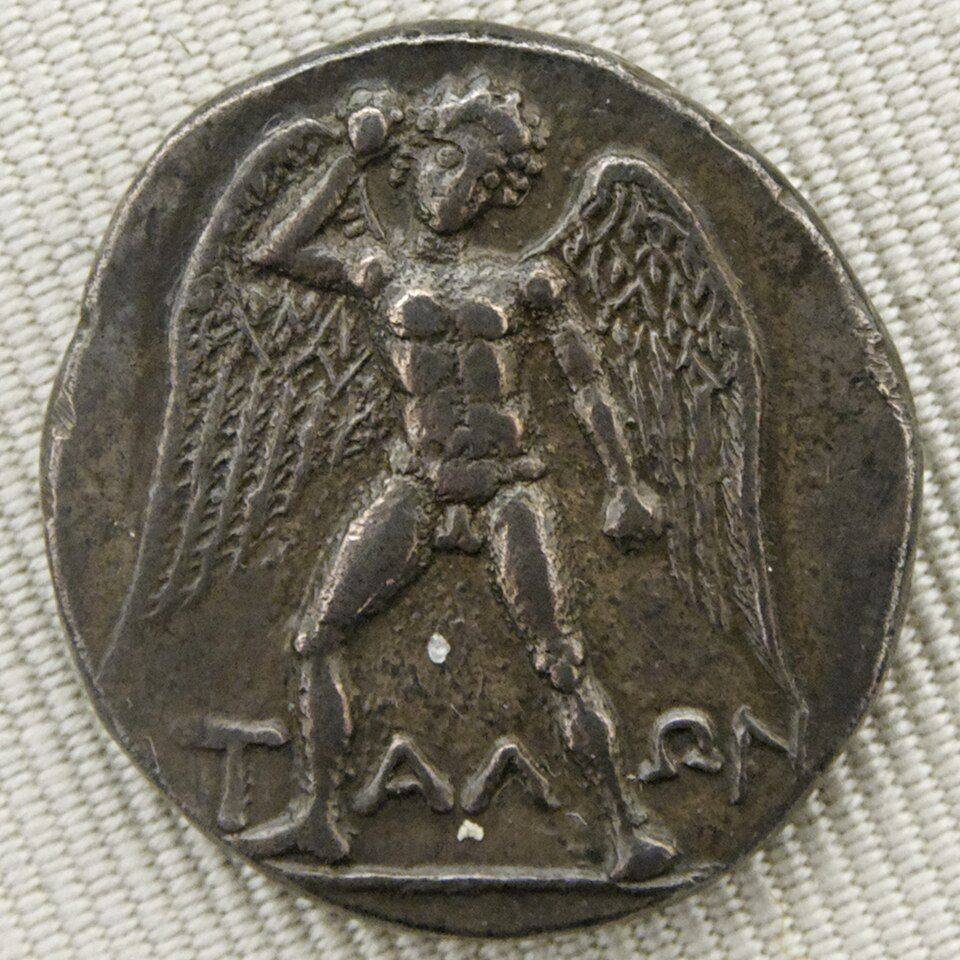
Talos: The Bronze Giant Who Guarded Crete →
  1. Step 1 of 4 · This fileHesiod's five races of men
  2. Step 2 of 4 · The passageThe five races of men, Hesiod, Works and Days 109–201
  3. Step 3 of 4 · The longer textHesiod, the Homeric Hymns, and Homerica
  4. Step 4 of 4 · Next fileTalos: The Bronze Giant Who Guarded Crete
About these videos

Found by a YouTube search for this topic, not checked by us. The player loads from YouTube only when you press play.

Where it turns up

Where this comes from

EvidenceDocumented

Comes from Hesiod, Works and Days 109–201, trans. Hugh G. Evelyn-White (1914). Hesiod's Works and Days: A Greek poem by Hesiod, written about 700 BC, full of advice on farming and honest living. It tells the myth of five ages of humans, from a golden age through a race of heroes to the hard iron age of the poet's own time.

What this means

The text exists and is quoted from a published translation. What it describes is a separate question.

For Hesiod's five races of men, the original record exists and is linked: Hesiod, Works and Days 109–201, trans. Hugh G. Evelyn-White (1914). That tells you the record is real and what it says. It does not mean every claim in it is true.

Primary records exist: an original document, a published text, an official file or a dated report. We link to them. This level says the record exists and what it says, not that every claim in it is true.

See all five labels

Sources

  1. Hesiod's Works and DaysA Greek poem by Hesiod, written about 700 BC, full of advice on farming and honest living. It tells the myth of five ages of humans, from a golden age through a race of heroes to the hard iron age of the poet's own time.Hesiod, Works and Days 109–201, trans. Hugh G. Evelyn-White (1914) Online copyPrimary text Archived copy, 2026-09-30
  2. The Book of DanielA book of the Bible about Daniel, a Jewish captive at the court of Babylon, with stories such as the lions' den and visions of angels and future kingdoms. It is set in the 500s BC, but most scholars think the visions were written around 165 BC.Daniel 2:31–45, King James Version Online copyPrimary text Archived copy, 2026-10-01
  3. WikipediaA free online encyclopedia written and edited by volunteers. It is a good starting point and usually lists its own sources, but anyone can change it, so we treat it as a guide to better sources, not the final word.Wikipedia, "Ages of Man"Reference Archived copy, 2026-09-18

Quotations come from public-domain translations. A book in our Library links to its Library page; other links open the free online copy or the reference page.

Updated

Credible or not?

Tap one to see how other readers voted.

Discussion