The record
The Vaimanika Shastra ('science of vimanas') is a Sanskrit text on aircraft that was dictated by Pandit Subbaraya Shastry, who said he received it through psychic channeling from the ancient sage Bharadvaja. It was written down between about 1918 and 1923 by G. Venkatachala Sharma. G. R. Josyer announced it in 1952 and published an English translation in 1973.
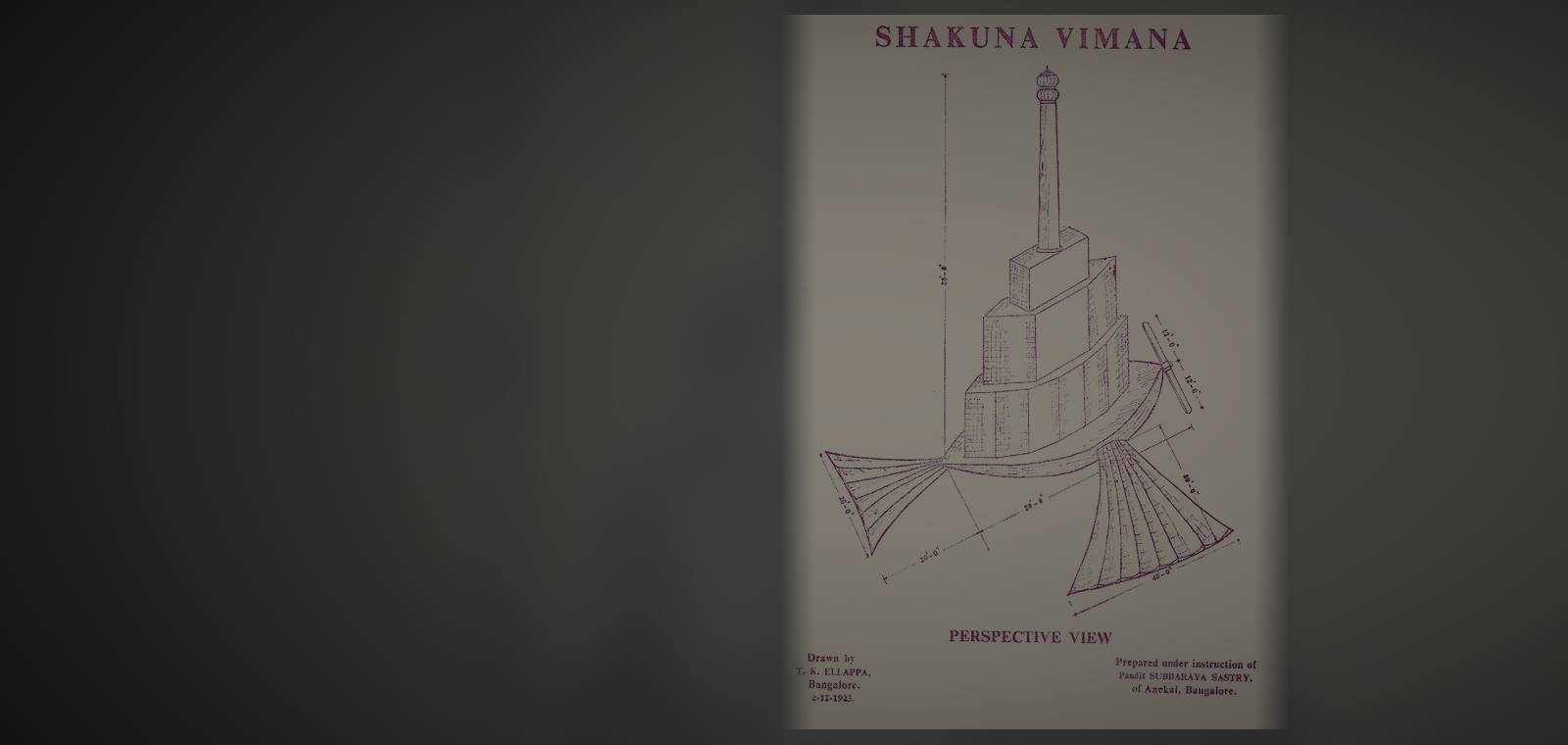
It describes several types of vimana, including the Shakuna, Sundara, Rukma, and Tripura, with sections on pilots' training, clothing, food, metals, and mechanisms. Drawings were added by a local draftsman working under Shastry's instructions. It also lists exotic metals and substances with Sanskrit names that match no known materials, and describes devices for photography, cloaking, and weather that sound modern because they were imagined in a modern era.
In 1974, a team at the Indian Institute of Science in Bangalore, led by aeronautical engineer H. S. Mukunda, studied the text. They concluded that the craft described were 'poor' designs at best, that they showed no understanding of how aircraft fly, and that they were incapable of flight. They also noted the drawings reflected the machinery of the early 20th century.
So the Vaimanika Shastra is a modern document. That makes it no less interesting: a text produced by a man who said an ancient sage spoke through him, at the moment when real airplanes first filled the news. It also shows how quickly a modern text can acquire an ancient reputation once it is quoted without its history.
How far can we trust the source?
This story rests mostly on one source. Here is that track record.
5/100 · Mostly unreliable
Subbaraya Shastry dictated the Vaimanika Shastra between 1918 and 1923, saying it was revealed to him psychically from an ancient sage.
Read more
Engineers at the Indian Institute of Science studied it in 1974 and found that its aircraft could not fly and that the text is modern, not ancient. He may have believed his own account, but its central claims are not supported.
This rates how well the factual claims hold up against later evidence and scholarship. It is not a judgment of character or honesty. How the meter works