












The Last Leg from Lae
Share
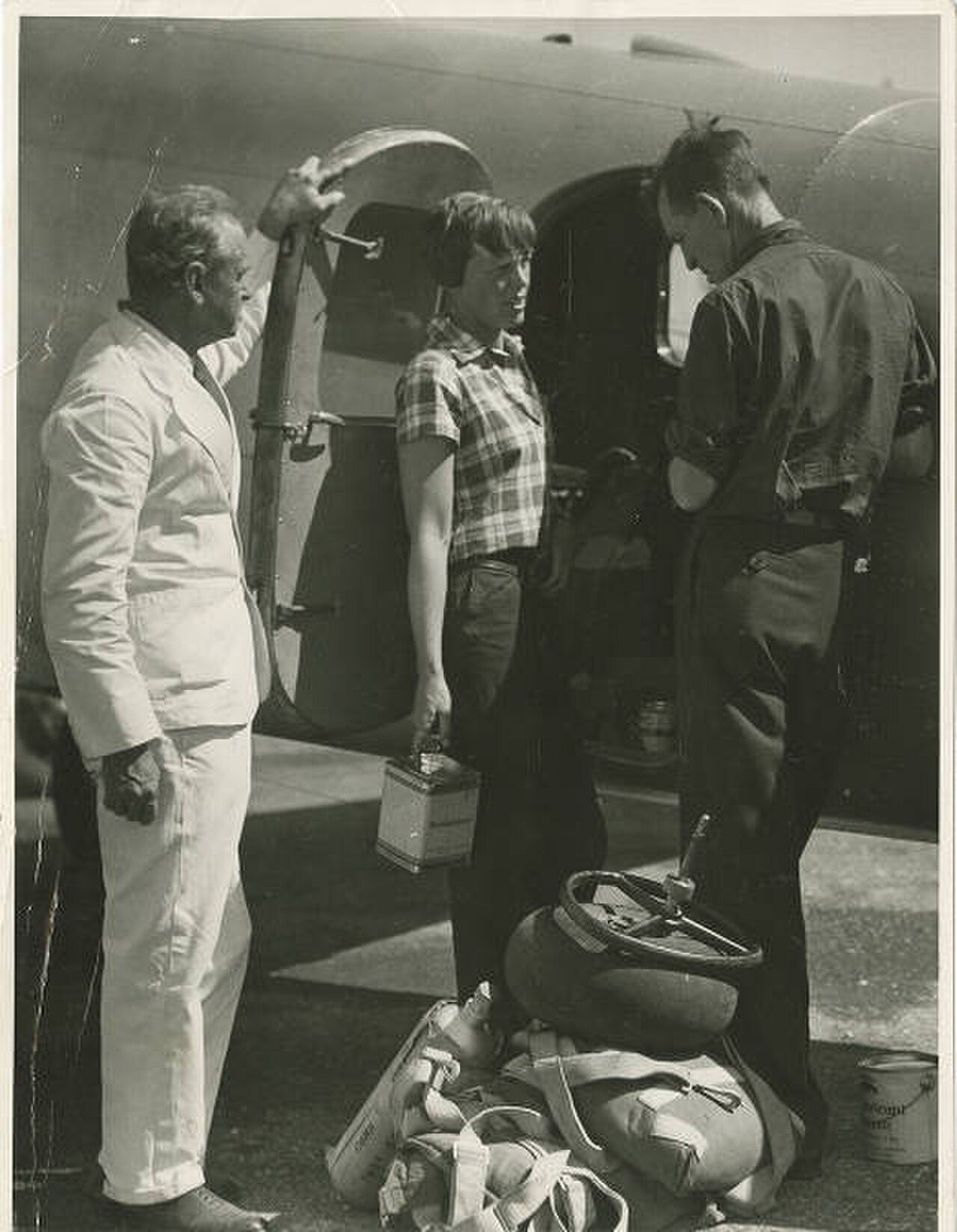
Amelia Earhart and her navigator Fred Noonan take off from New Guinea for tiny Howland Island, the hardest leg of their flight around the world.
1 to 2 July 1937, overnight across the central Pacific
The theory
In the summer of 1937 Amelia Earhart is trying to fly around the world. Fred Noonan flies with her in the Lockheed Electra as her navigator.
They leave Lae, New Guinea, at ten in the morning. Ahead lies open ocean. At the end of it is Howland Island, a small flat island in the middle of the Pacific.
A Coast Guard ship, the Itasca, waits at Howland to talk to them by radio and guide them in. All night the radio men listen. They hear her voice now and then, faint and broken by static.
Before dawn she says she is about two hundred miles out. Then about a hundred. She asks the ship to take a bearing on her voice. The story begins here, with a plane that is close but cannot see where it is going.
What we know
The departure time comes from the Navy's own report of the search. The radio log entries are typed by the Itasca's operators and record what they heard; they are not a recording of her exact words. The log shows Earhart asking for bearings, and the ship radioing back that it could not take a bearing on her voice on 3105. Nothing in this chapter is supposed; it is all in the record.
What the texts say
The official records and reports this chapter rests on, quoted word for word.
Amelia Earhart Putnam and Fred J. Noonan, engaged in a land plane flight around the world, departed Lae, New Guinea, at 1000, 2 July (zone-minus-ten-time), or 2400, 1 July, G.C.T., for Howland Island.
ABOUT TWO HUNDRED MILES OUT APPX WHISTLING NW
PSE TAKE BEARING ON US AND REPORT IN HALF HOUR I WILL MAKE NOISE IN MIC ABT 100 MILES OUT