The Long Dark
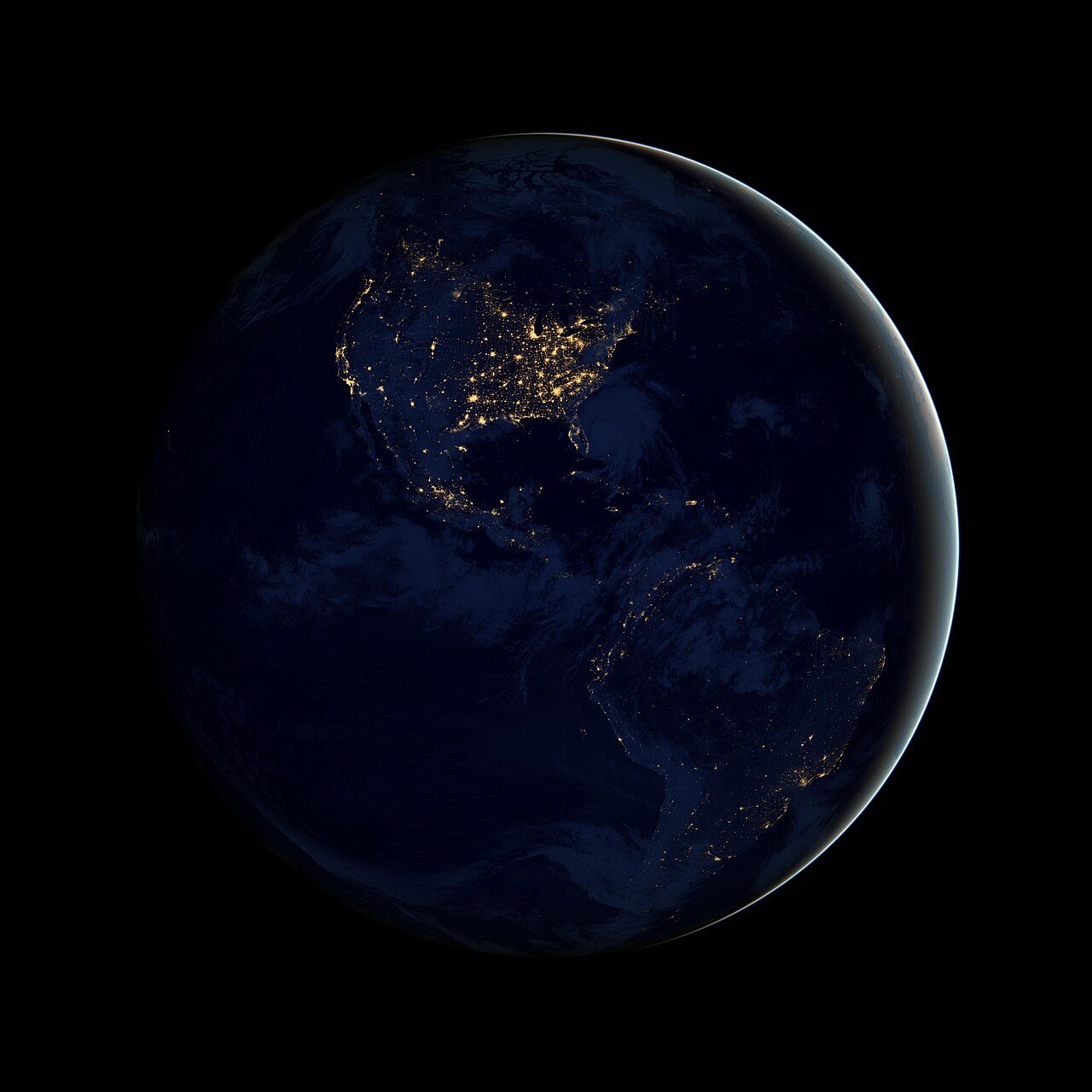
NASA Earth Observatory (Suomi NPP satellite data, 2012). Public domain. Picture source
If big transformers are damaged, the blackout could last weeks or longer, and water, hospitals and phones start to fail too.
Story: the days and weeks after. Record: official risk studies from 2012, 2013 and 2019
The story
In most places, the lights come back within hours or days. Crews restart the grid one piece at a time, the way they did in Quebec.
But in this story, a few of the giant transformers that serve crowded cities have cooked inside. Those are not things you keep on a shelf. If a new one has to be ordered, Lloyd's says it takes at least five months to arrive.
Where they failed, the dark lasts. Backup generators at hospitals run until their fuel trucks cannot get through. Phone towers on battery go quiet. City water pumps stop, so taps run dry and toilets do not flush.
Cash machines and card readers stop working. Shops cannot keep food cold. Neighbors share what they have. Utilities in other regions send crews and spare parts.
How long would it last? Nobody knows for sure. One insurance study guessed weeks to a year or two for tens of millions of Americans. The grid's own reliability body thinks a wide but shorter blackout is the more likely result.
What the record says
The total U.S. population at risk of extended power outage from a Carrington-level storm is between 20-40 million, with durations of 16 days to 1-2 years.
Lloyd's, Solar Storm Risk to the North American Electric Grid (2013), Executive Summary
Extreme space weather events can degrade or damage critical infrastructures, which may result in direct or cascading failures across key services such as electric power, communications, water supply, healthcare, and transportation.
National Space Weather Strategy and Action Plan (2019), Executive Summary
Most people wouldn't even be able to flush their toilet because urban water supplies largely rely on electric pumps.
NASA Science, 'Near Miss: The Solar Superstorm of July 2012' (2014)
The Lloyd's study (2013, with Atmospheric and Environmental Research) estimated that a Carrington-level storm could leave 20 to 40 million people in the US without power for 16 days to 1 or 2 years, that new transformers would take at least five months to arrive, and that the cost could be 0.6 to 2.6 trillion US dollars. NASA cites a National Academy of Sciences study putting the cost above 2 trillion dollars. NERC's 2012 report disagrees on the worst part: it says its work does not support the failure of a large number of big transformers, and that voltage collapse is the far more likely result, though old transformers of some designs could be damaged. The 2019 US strategy warns of cascading failures in power, communications, water, healthcare and transportation. The scenes in this chapter are the story's picture of those official warnings, not events that have happened.