The record
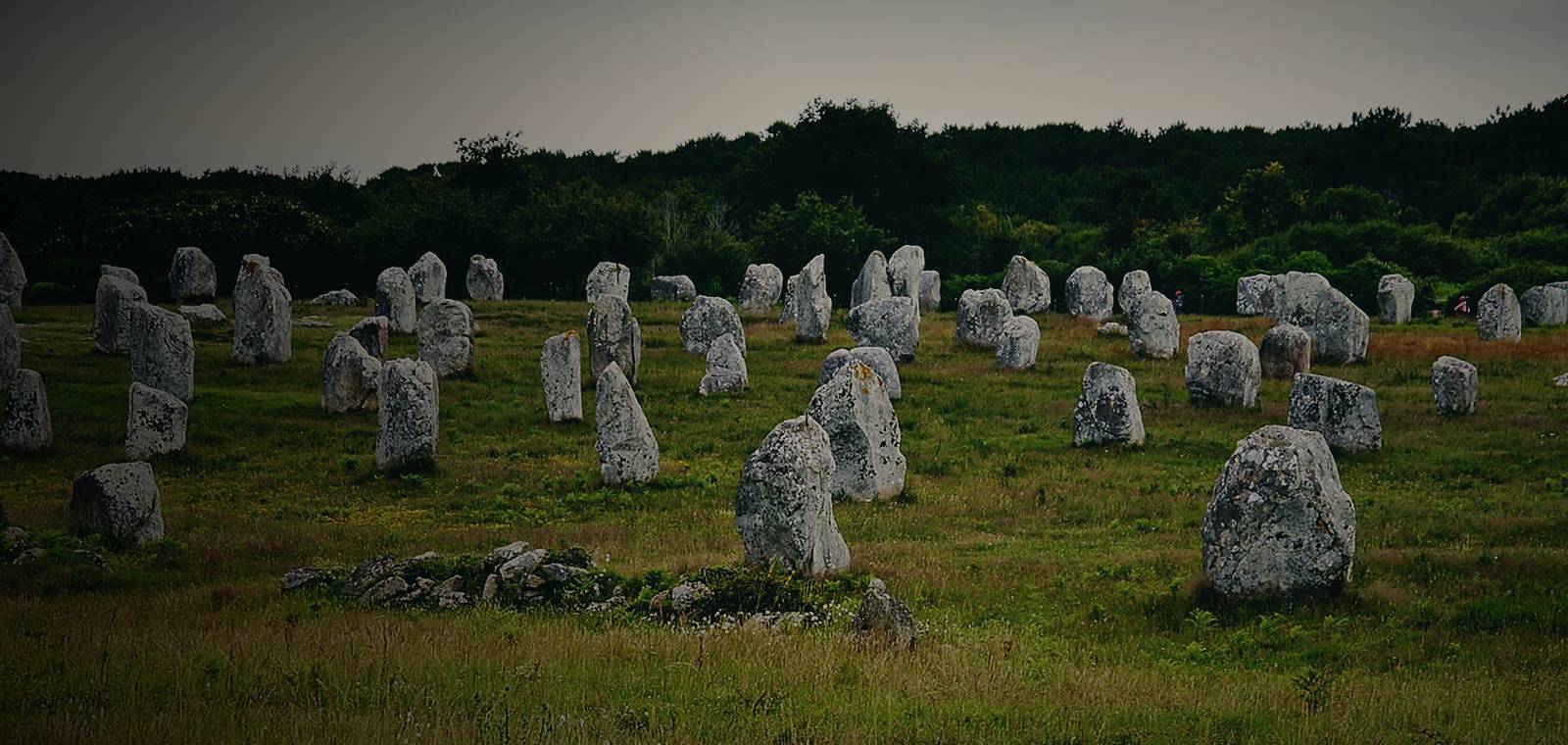
Around the town of Carnac in Brittany, in northwest France, long rows of standing stones, or menhirs, cross the fields and heath. The three best known are Ménec, Kermario and Kerlescan. A University of Gothenburg report of 2025 counts more than 3,000 standing stones stretching over 10 kilometers, from Carnac and La Trinité-sur-Mer to Erdeven.
The antiquary James Miln excavated among them. In his Excavations at Carnac (1881) he noted that the largest stones stand at the head of each row and get smaller toward the east, and that local people called the rows the soldiers of Saint Cornély, naming one stone in the Ménec rows the Colonel and another the General. Peasants, he wrote, told visitors that these stones were once an army of pagan invaders thus metamorphosed by a miracle.
Miln also found menhirs from the rows built into Roman walls, which proved, he said, that the alignments are older than the walls, and consequently anterior to the Roman occupation.
Dating them more precisely has been hard. Brittany's acid soils destroy bone, and charcoal under a stone is not always tied to the moment it was raised. A 2019 study in PNAS by Bettina Schulz Paulsson ran a Bayesian analysis of 2,410 radiocarbon dates from across Europe. It found that megalithic graves arose within 200 to 300 years in the second half of the fifth millennium BC in northwest France, the Mediterranean and the Atlantic coast of Iberia, and that they then spread by sea.
In 2025 an excavation at Le Plasker in Plouharnel, next to Carnac, published in Antiquity, used nearly 50 radiocarbon dates. Several rows there were dated to between 4600 and 4300 BC. Their stones had been taken away, but the foundation pits remained, lined up beside hearths or cooking pits. The alignments in the Carnac region now appear to be among the earliest megalithic monuments in Europe,
Schulz Paulsson said. What the rows were for, and why fire was lit beside them, is still unknown.