The record
They say that offerings wrapt in wheat-straw are brought from the Hyperboreans to Scythia; when they have passed Scythia, each nation in turn receives them from its neighbours till they are carried to the Adriatic sea, which is the most westerly limit of their journey; thence they are brought on to the south, the people of Dodona being the first Greeks to receive them.
Herodotus, Histories 4.33 · Greece and Rome
Translation: A. D. Godley, Herodotus, vol. 2 (Loeb Classical Library, 1920) · Public domain
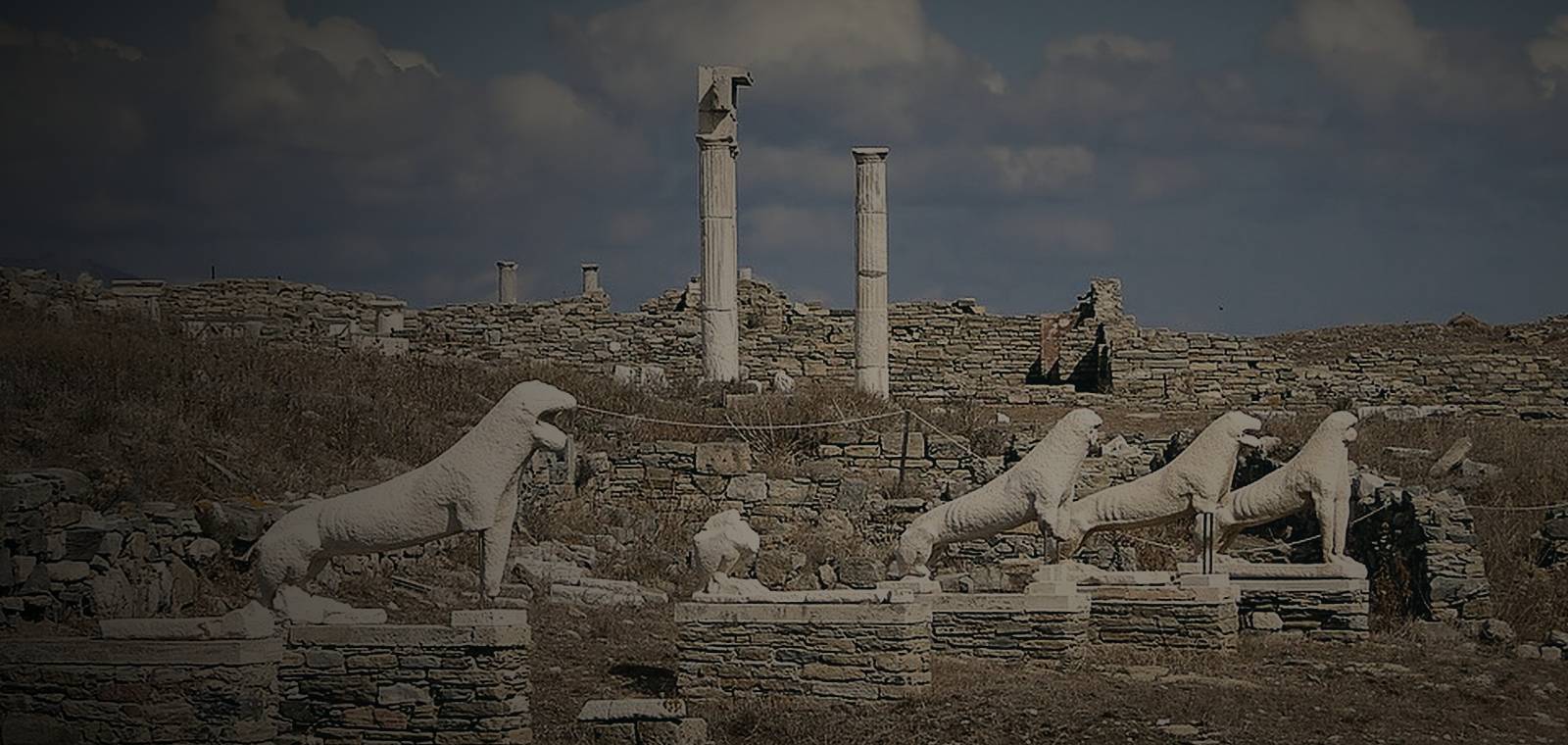
The Greeks called them Hyperboreans, the people beyond Boreas, the north wind. Herodotus admits that no one in the north could tell him anything about them. He knew of them from the poets Hesiod and Homer, and from the people of Delos, the island sacred to Apollo.
The Delians, he says, told how offerings wrapt in wheat-straw
came from the Hyperboreans, handed from one people to the next across Scythia to the Adriatic, then south through Greece until they reached Delos. The first offerings came with two maidens, Hyperoche and Laodice, and five escorts. They never went home, so the Hyperboreans began sending the gifts on by relay instead. Delian girls and boys still cut their hair in honor of the maidens and laid it on their tomb by the temple of Artemis.
Diodorus Siculus repeats a fuller account from Hecataeus and others. In the ocean beyond the land of the Celts lies an island no smaller than Sicily, so mild it gives two harvests a year. Apollo is honored there above all gods, in a sacred precinct with a temple that is spherical in shape
, and the god is said to visit every nineteen years.
Pliny the Elder placed them beyond the northern winds, if we choose to believe it
: a happy race with six months of daylight, a mild climate and no discord or sickness. Death came to them only when they had had enough of life, when they leapt from a rock into the sea. C. H. Oldfather, translating Diodorus in 1935, wrote in a note that there seemed good reason to see Britain behind the story, and in the sacred precinct the famous Stone Age remains of Stonehenge
.