












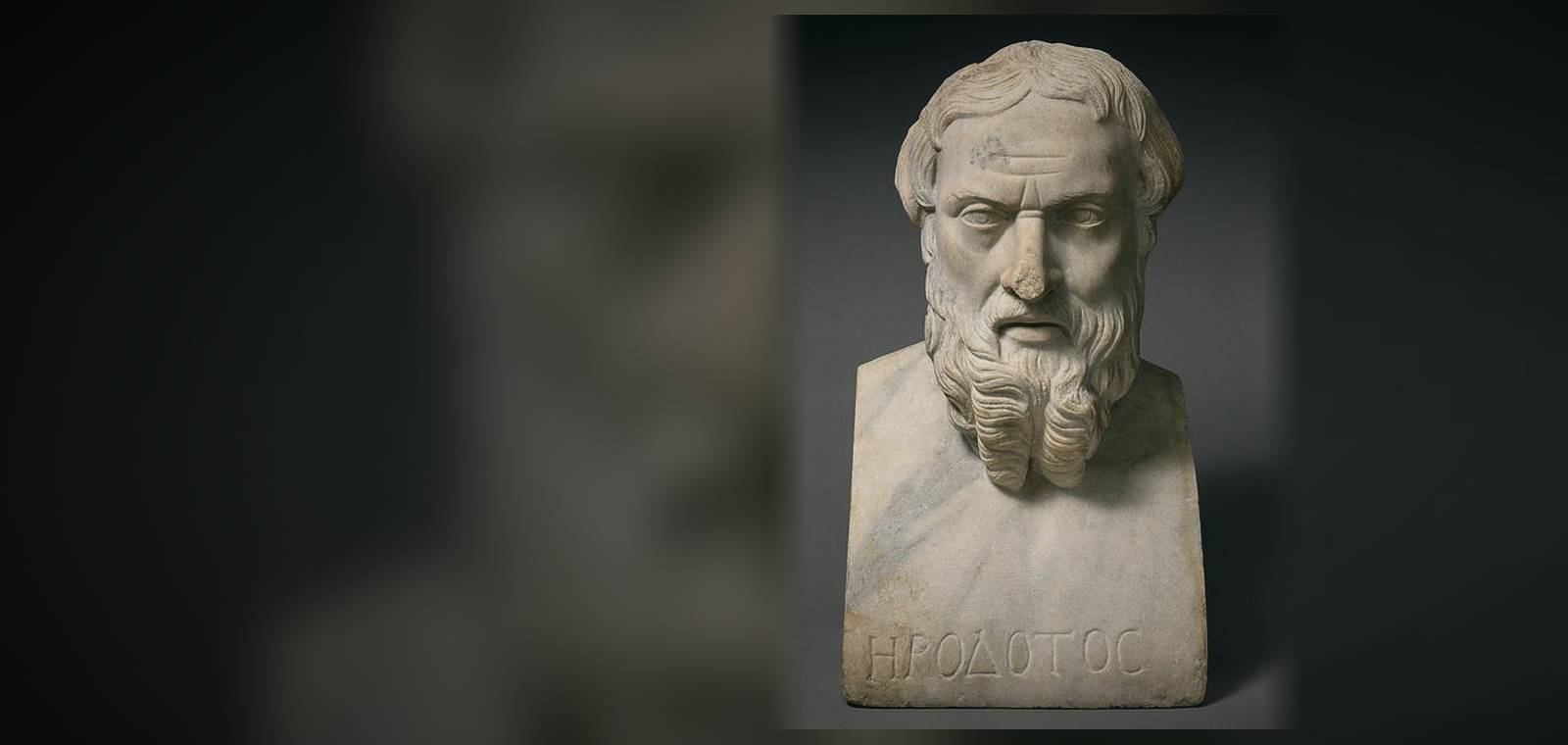
How reliable is this source?
60/100 · Mostly reliable
Herodotus is still the main source for the Persian Wars, and archaeology has confirmed much of what he reports about places and peoples. He also wrote down whatever he was told, including tall tales, and his figures and his Egyptian history are often wrong. Scholars trust him on events close to his own time and treat his stories about the distant past with care.
What checks out
- His account of the Greco-Persian Wars matches much later evidence and remains the standard narrative.
- His description of Scythian burial customs has been matched by excavated kurgans.
- He often tells readers when he doubts a story he is passing on.
What does not
- His army sizes, such as over 1.7 million for Xerxes' invasion, are far too large.
- Parts of his Egyptian king sequence are out of order and mix legend with history.
- Some stories, such as gold-digging ants in India, were long dismissed as fable.
Our main source for: Solon's journey to Egypt; The mice that ruined an Assyrian army.
This rates how well the factual claims hold up against later evidence and scholarship. It is not a judgment of character or honesty. How the meter works
What is Herodotus known for?
Herodotus was a Greek writer from Halicarnassus in Asia Minor. His Histories, an account of the wars between the Greeks and the Persian Empire, is the first great narrative history to survive from the ancient world, and it earned him the title 'father of history'.
To explain the war, Herodotus described the peoples involved. He traveled widely, including in Egypt, and recorded what priests and local informants told him about Egyptian history, customs and kings. He is the main source for Greek history between about 550 and 479 BCE and an important one for Egypt and western Asia.
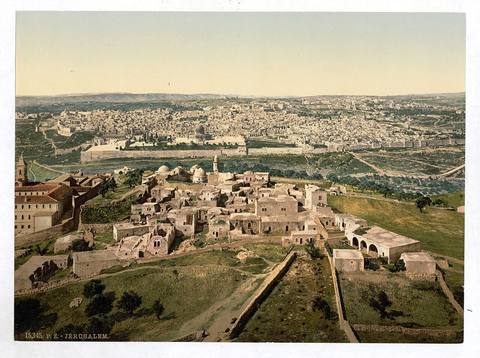
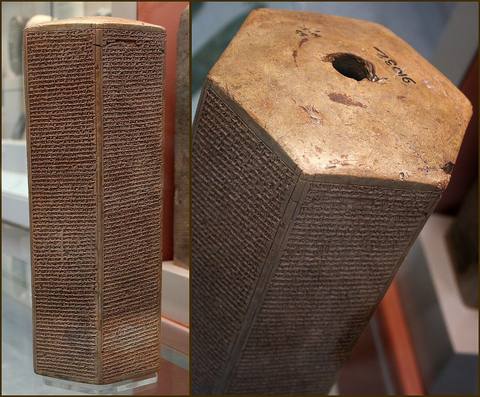
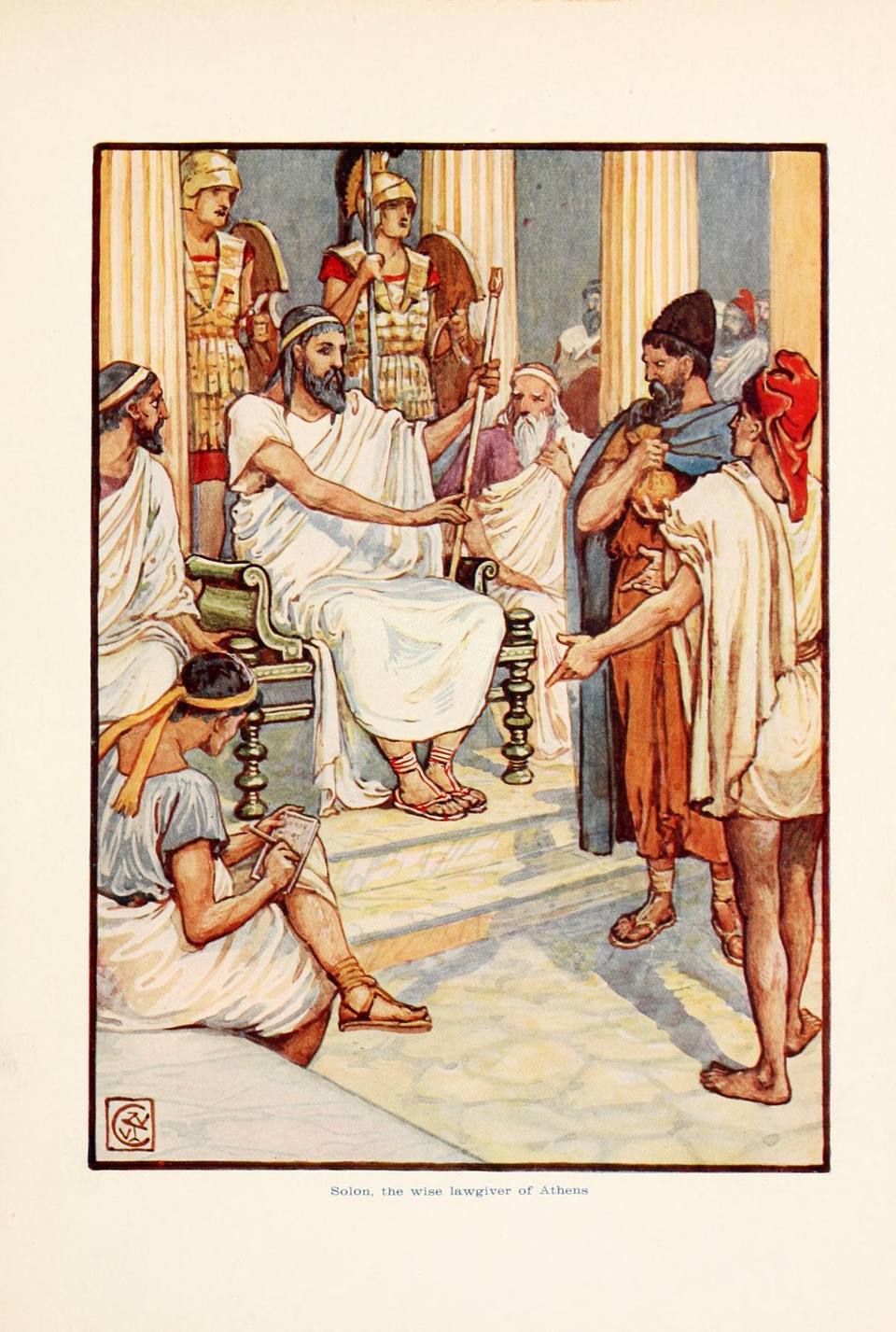
He mixes careful inquiry with stories he says he cannot vouch for. He reports that Solon visited Egypt, and he tells a separate story of field mice gnawing the bowstrings of an Assyrian army attacking Egypt, which is often compared with the Bible's account of Sennacherib's army struck down outside Jerusalem. The Egyptian priest Manetho later wrote partly to correct Greek writers like him.
The same story, told elsewhere
Shared story · Signs and numbers
The Sacred Twelve: Tribes, Disciples, Gods and Signs
Twelve tribes of Israel, twelve disciples, twelve gods of Greece and of Asgard, twelve Adityas in India, twelve signs ringing the Mithras carvings. The number twelve turns up again and again.
Herodotus, Histories, Book II is one telling. The same story is told 7 more times, in 6 parts of the world. Follow it:
- Hebrew BibleCanaan and Egypt · c. 600-400 BCE · Ancient text
- Greek (about Egypt)Egypt, as reported by Egyptian priests · c. 430 BCE · Ancient textTied to this page
- HinduNorthern India · c. 400 BCE · Ancient text
- GreekTiryns, Greece · c. 1st-2nd century CE · Ancient text
- ChristianGalilee · c. 80-90 CE · Ancient text
- RomanMithras temples across the Roman Empire · c. 100-400 CE · Ancient text
- NorseIceland · c. 1220 CE · Medieval text
- Egyptian (a modern comparison)Written in London about Egyptian texts · 1907 · Modern book
The open question: Is twelve special because of the sky and the calendar, or because each tradition chose it for its own reasons? Join the debate
Shared story · Births
Saved From the Water: Sargon, Moses and Karna
A mother seals her baby in a basket, tars the lid and lets the river take him. A stranger pulls him out, and the child grows up to rule. The same story is told of a king in Iraq, a prophet in Egypt and a warrior in India.
Herodotus, Histories, Book 1 (the birth of Cyrus) is one telling. The same story is told 8 more times, in 6 parts of the world. Follow it:
- ChineseYellow River valley, China · c. 1000-700 BCE · Ancient text
- Akkadian (Mesopotamia)Mesopotamia · c. 8th-7th century BCE · Ancient text
- Hebrew BibleJudah / Babylon · c. 600-400 BCE · Ancient text
- Persian (told by a Greek)Media and Persia · c. 430 BCE · Ancient textTied to this page
- Hindu (Mahabharata)Northern India · c. 400 BCE · Ancient text
- RomanRome, Italy · c. 27-25 BCE · Ancient text
- GreekGreece · 1st or 2nd century CE · Ancient text
- WelshWales · c. 1550 CE · Early modern text
- Maori (New Zealand)New Zealand · 1840 · Recorded folklore
The open question: Did one old Near Eastern story travel from people to people, or does every great leader's story end up with the same rescue from the river? Join the debate
Shared story · Folk tales
Cinderella Around the World: Rhodopis, Cenerentola and Aschenputtel
A girl kept in rags by her own family, one lost shoe and a royal search that ends at her door. The story is told in ancient Egypt, China, Vietnam, Italy, France, Germany, Norway, India, Ireland and Canada.
Strabo, Geography (Rhodopis and the eagle) is one telling. The same story is told 9 more times, in 7 parts of the world. Follow it:
- Greek writer in Roman EgyptNaucratis and Memphis, Egypt · c. 7 BCE · Ancient textTied to this page
- Chinese (Tang dynasty, a tale from the far south)Southern China · c. 850 to 863 CE · Medieval text
- Italian (Neapolitan)Naples, Italy · 1634-1636 · Early modern text
- FrenchParis, France · 1697 · Early modern text
- Mi'kmaq (First Nations, Atlantic Canada)Nova Scotia and the Atlantic coast of Canada · 1800 · Recorded folklore
- GermanKassel, Germany · 1812 · Recorded folklore
- NorwegianNorway · 1840 · Recorded folklore
- Indian (Deccan, Western India)Western and southern India · 1860 · Recorded folklore
- IrishTír Chonaill · 1880 · Recorded folklore
- VietnameseVietnam · 1886 · Recorded folklore
The open question: Did one great story travel the world from teller to teller, or is a lost shoe and a hidden princess an idea people everywhere invent on their own? Join the debate
Shared story · Signs and numbers
The Sun Stands Still: Joshua, Hezekiah, Athena and Maui
A general shouts at the sun to stop, and it stops. A goddess holds back the dawn, a hero lassoes the sun, and a wife's curse keeps it from rising at all.
Herodotus, Histories 2 (what the priests of Egypt said) is one telling. The same story is told 8 more times, in 7 parts of the world. Follow it:
- GreekIthaca · c. 750-650 BCE · Ancient text
- Hebrew BibleCanaan · c. 650-550 BCE · Ancient text
- Hebrew BibleJerusalem · c. 600-550 BCE · Ancient text
- Egyptian, reported in GreekEgypt · c. 430 BCE · Ancient textTied to this page
- GreekThebes, Greece · 1st or 2nd century CE · Ancient text
- ChineseChina · c. 80 CE · Ancient text
- Hindu (Puranic)India · c. 250-500 CE · Ancient text
- Ojibwe (North America)Great Lakes region, North America · 1820 · Recorded folklore
- Maori (New Zealand)Aotearoa · 1840 · Recorded folklore
The open question: When ancient writers say the sun stood still, are they remembering something people really saw in the sky, or using the boldest picture they could find for a god's power over time? Join the debate
Mentioned on these pages
- FileHyperborea, the land beyond the north wind
- FileManetho
- FileSolon and the priests of Sais
- ChapterOne History 8: The reset
- Passage185,000 dead in one night (2 Kings 19:35)
- PassageOfferings wrapped in wheat straw (Herodotus, Histories 4.33)
- PassageThe sun rose where it now sets (Herodotus, Histories 2.142)
- PersonG. C. Macaulay
- PersonHezekiah
- PersonMenes
- PersonSennacherib
- PlaceAncient Greece
- PlaceEsagila
- PlaceHeliopolis
- PlaceSais
Linked people and places
Where this comes from
Comes from Encyclopaedia Britannica, 'Herodotus'. An encyclopedia first published in Scotland in 1768 and now online. Its articles are written and checked by named experts and editors, which makes it a reliable source for basic facts.
What this means
A real person with records. Sources are listed below.
For Herodotus, the original record exists and is linked: Encyclopaedia Britannica, 'Herodotus'. That tells you the record is real and what it says. It does not mean every claim in it is true.
Primary records exist: an original document, a published text, an official file or a dated report. We link to them. This level says the record exists and what it says, not that every claim in it is true.
Sources
- Encyclopaedia BritannicaAn encyclopedia first published in Scotland in 1768 and now online. Its articles are written and checked by named experts and editors, which makes it a reliable source for basic facts.Encyclopaedia Britannica, 'Herodotus'Reference Archived copy, 2026-09-26
- WikipediaA free online encyclopedia written and edited by volunteers. It is a good starting point and usually lists its own sources, but anyone can change it, so we treat it as a guide to better sources, not the final word.Wikipedia, 'Herodotus'Reference Archived copy, 2026-10-03