Credible Theories Sign in
Greece and Rome · Herodotus, Histories 4.33

Offerings wrapped in wheat straw, Herodotus, Histories 4.33

Share

In plain words

The Delians told Herodotus that offerings wrapped in wheat straw came from the Hyperboreans. Each people handed them on to the next, across Scythia to the Adriatic, then south into Greece, where the people of Dodona were the first Greeks to receive them.

ReferenceHerodotus, Histories 4.33
WrittenWritten by Herodotus, a Greek historian, from what the people of Delos told him
SetThe long road from the Hyperboreans, beyond the north wind, to the island of Delos
They say that offerings wrapt in wheat-straw are brought from the Hyperboreans to Scythia; when they have passed Scythia, each nation in turn receives them from its neighbours till they are carried to the Adriatic sea, which is the most westerly limit of their journey; thence they are brought on to the south, the people of Dodona being the first Greeks to receive them.

Documented · Modern book, Written by Herodotus, a Greek Translation: A. D. Godley, 1920

Read it literally

Gifts from a people no one had seen travel hand to hand across the known world until they reach Apollo's island. The Hyperborea file sets this beside Diodorus's round temple on a northern island and Pliny's land of six-month days.

What scholars say

Herodotus says he heard this from the Delians; no northern people he asked knew the Hyperboreans.

Themes Council of gods
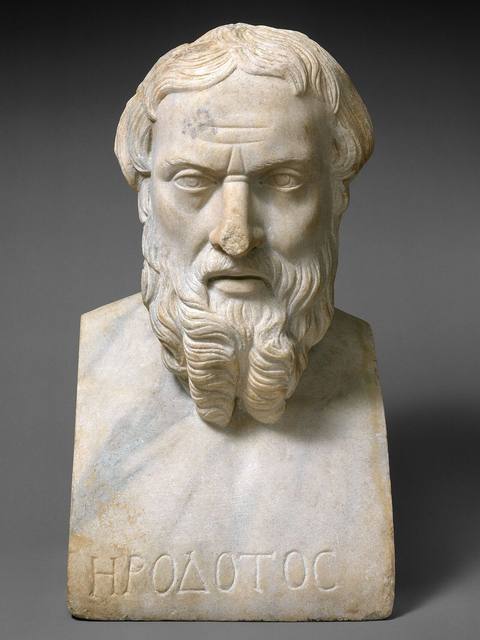
People and places hereHerodotusPliny the Elder

Questions people ask about Herodotus, Histories 4.33

Who carried the first offerings?

Two maidens the Delians called Hyperoche and Laodice, with five men as escort, now honored at Delos as the Perpherees.

What happened to the maidens?

They died at Delos. Their tomb lay at the foot of an olive tree by the temple of Artemis, where Delian girls laid a lock of hair wound on a spindle before marriage.

Used on these files

Where this comes from

EvidenceDocumented

Comes from The Histories, by Herodotus, Herodotus, Histories 4.33, read here in the A. D. Godley. A history of the wars between Greece and Persia by Herodotus, often called the father of history, written around 430 BC. It also records what he heard on his travels, such as Egyptian priests' claims about the age of their kingdom. He sometimes passes on stories he did not believe himself.

What this means

The text exists and is quoted from a published translation. What it describes is a separate question.

Primary records exist: an original document, a published text, an official file or a dated report. We link to them. This level says the record exists and what it says, not that every claim in it is true.

See all five labels

Sources

  1. The Histories, by HerodotusA history of the wars between Greece and Persia by Herodotus, often called the father of history, written around 430 BC. It also records what he heard on his travels, such as Egyptian priests' claims about the age of their kingdom. He sometimes passes on stories he did not believe himself.A. D. Godley, Herodotus, vol. 2 (Loeb Classical Library, 1920) Online copyPrimary text
  2. The Histories, by HerodotusHerodotus, Histories 4.13 and 4.32-36, trans. A. D. Godley (Loeb Classical Library, 1920), LacusCurtius Online copyPrimary text

Scholarly dates are rounded. The wording follows the named public-domain translation.

More from Greece and Rome

Two more stories, and what each shares with Offerings wrapped in wheat straw.

Photo credits
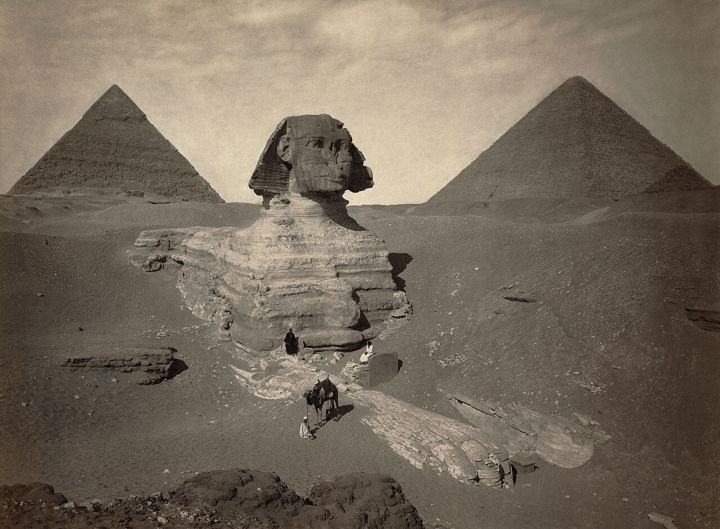
RelatedThe statue that asked for the sand to be clearedSphinx Stela of Thutmose IV, lines 9 to 10

A tablet between the paws of the Great Sphinx names King Thutmose IV and tells a story from his youth.

Also about Pliny the ElderSame theme: Council of gods
Photo credits
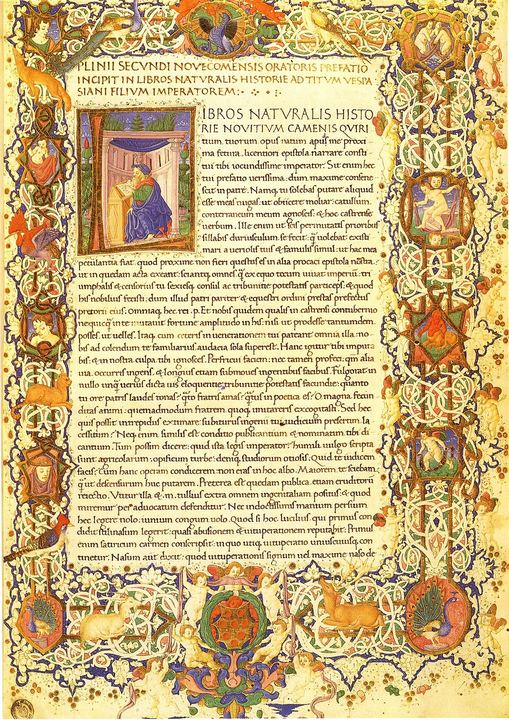
RelatedThe burning shieldPliny the Elder, Natural History 2.34

It reports that in 100 BCE a burning shield, throwing off sparks, was seen racing across the sky at sunset, from west to east.

Also about Pliny the Elder

Updated

Discussion