Credible Theories Sign in

The record

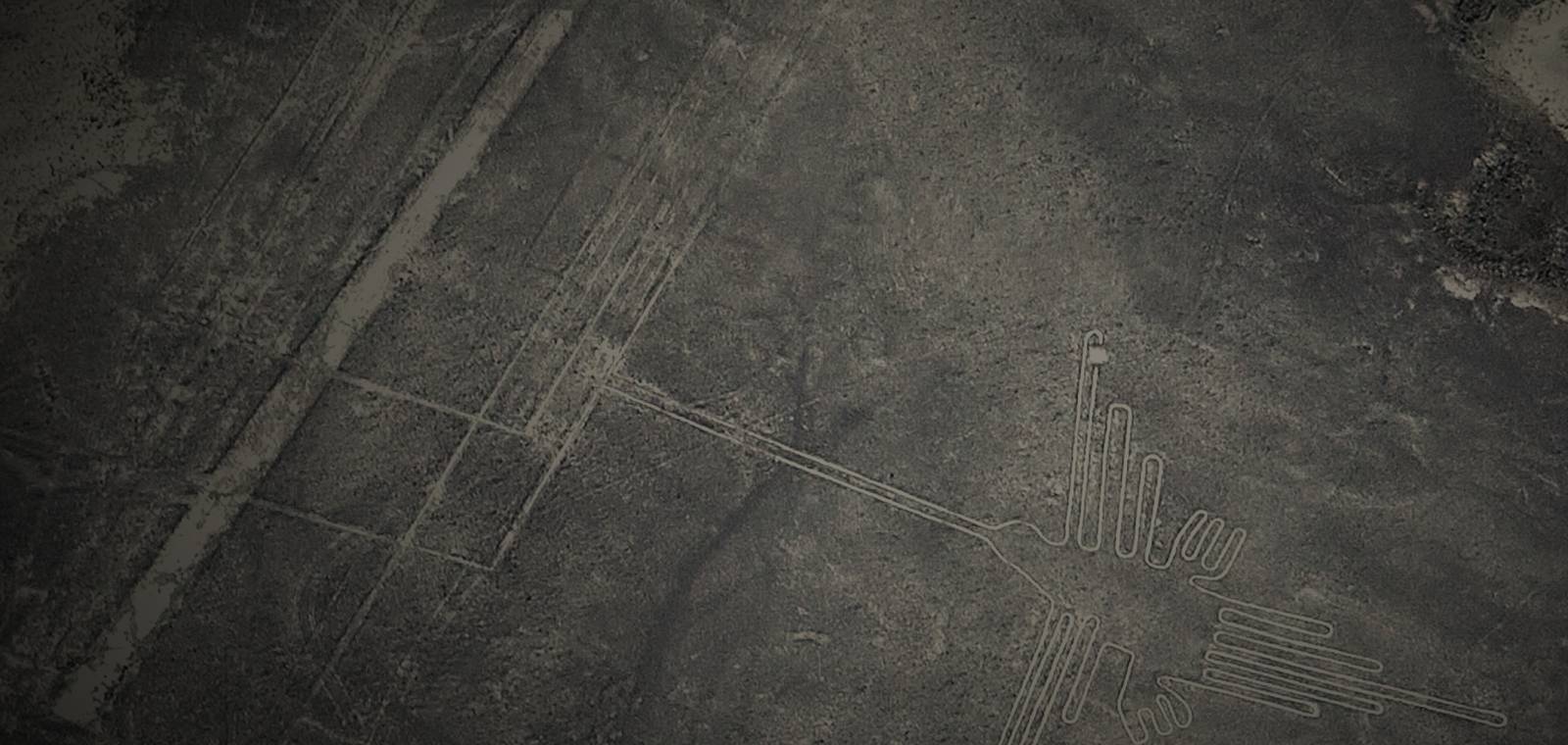
The Nazca lines are huge drawings scratched into the desert of southern Peru. UNESCO, which lists them as a World Heritage site, says they were scratched on the surface of the ground between 500 B.C. and A.D. 500 and cover about 450 square kilometers. The figures depict living creatures, stylized plants and imaginary beings, alongside straight lines and shapes that run for several kilometers.

The best-known figures, such as the hummingbird, the monkey and the spider, are so large that their shape is easiest to see from the air or from nearby hills. They are at least 2,000 years old, yet they became widely known only in the 1920s, and UNESCO dates foreign scientific study and conservation work there from 1941.

In September 2024 a team led by Masato Sakai of Yamagata University, working with IBM Research, reported in PNAS that an AI model trained on aerial photographs helped them find 303 new figurative geoglyphs in six months of field checks. Before that, 430 figures were known. The team says the giant line-type figures mostly show wild animals and were likely used for community-level ritual activities, while smaller relief-type figures sit beside old footpaths, like billboards meant to be seen by people walking past. Why a desert people drew pictures meant mainly for viewers above them is still argued over.
Questions people ask about The Nazca lines

How old are the Nazca lines?

UNESCO dates them to between 500 BCE and 500 CE, which makes the oldest about 2,500 years old.

How were the new Nazca figures found?

The 2024 team trained an AI model on aerial photographs of known figures, used it to flag likely spots, and then walked to each site to check. Field checks over six months confirmed 303 new figures.

How many Nazca figures are known now?

About 733. The 2024 survey added 303 figurative geoglyphs to the 430 already known, nearly doubling the count of figures, not counting the many straight lines and shapes.

The open question

Still strange: Desert drawings made to be seen from the sky.

Many are so big they are easiest to see whole from far above, so who were they meant for?

Maya Long Count: The Calendar Behind the 2012 Myth →
  1. Step 1 of 4 · This fileThe Nazca lines
  2. Step 2 of 4 · Next fileMaya Long Count: The Calendar Behind the 2012 Myth
  3. Step 3 of 4 · Next filePopol Vuh: The Maya Book Where Gods Made Humans Four Times
  4. Step 4 of 4 · Next fileLegend of the Suns: The Aztec Story of Four Destroyed Worlds
About these videos

Found by a YouTube search for this topic, not checked by us. The player loads from YouTube only when you press play.

Where this comes from

EvidenceDocumented

Comes from Masato Sakai and others, "AI-accelerated Nazca survey nearly doubles the number of known…. A research article: An article written by a researcher and published in a scholarly journal or book. Most such journals have other experts check a paper before it is printed, so it carries more weight than a news story, though later studies can still change the picture.

What this means

Records exist and are linked below. This page says what the records say.

For The Nazca lines, the original record exists and is linked: Masato Sakai and others, "AI-accelerated Nazca survey nearly doubles the number of known…. That tells you the record is real and what it says. It does not mean every claim in it is true.

Primary records exist: an original document, a published text, an official file or a dated report. We link to them. This level says the record exists and what it says, not that every claim in it is true.

See all five labels

Sources

  1. UNESCO World Heritage CentreThe official website of the World Heritage list kept by UNESCO, the United Nations agency for education, science and culture. Each place's page gives an expert-checked description of the site and why it matters.UNESCO World Heritage Centre, "Lines and Geoglyphs of Nasca and Palpa" (site 700)
  2. A research articleAn article written by a researcher and published in a scholarly journal or book. Most such journals have other experts check a paper before it is printed, so it carries more weight than a news story, though later studies can still change the picture.Masato Sakai and others, "AI-accelerated Nazca survey nearly doubles the number of known figurative geoglyphs and sheds light on their purpose", PNAS (September 2024), doi 10.1073/pnas.2407652121, as announced by Yamagata UniversityPrimary text
  3. UNESCO World Heritage CentreUNESCO World Heritage Centre, documents for site 700, Nasca and Palpa

Quotations come from public-domain translations. A book in our Library links to its Library page; other links open the free online copy or the reference page.

Updated

Credible or not?

Tap one to see how other readers voted.

Discussion