












Credible Theories Sign in

The record

On 19 September 1991 the German hikers Erika and Helmut Simon found a body in the ice at 3,210 meters on the Tisenjoch pass in the Schnalstal valley of South Tyrol, close to the border between Austria and Italy. The South Tyrol Museum of Archaeology says that at first it was thought a mountain climber had come to an unfortunate end. A camera team filmed the body being freed from the ice with ice picks.

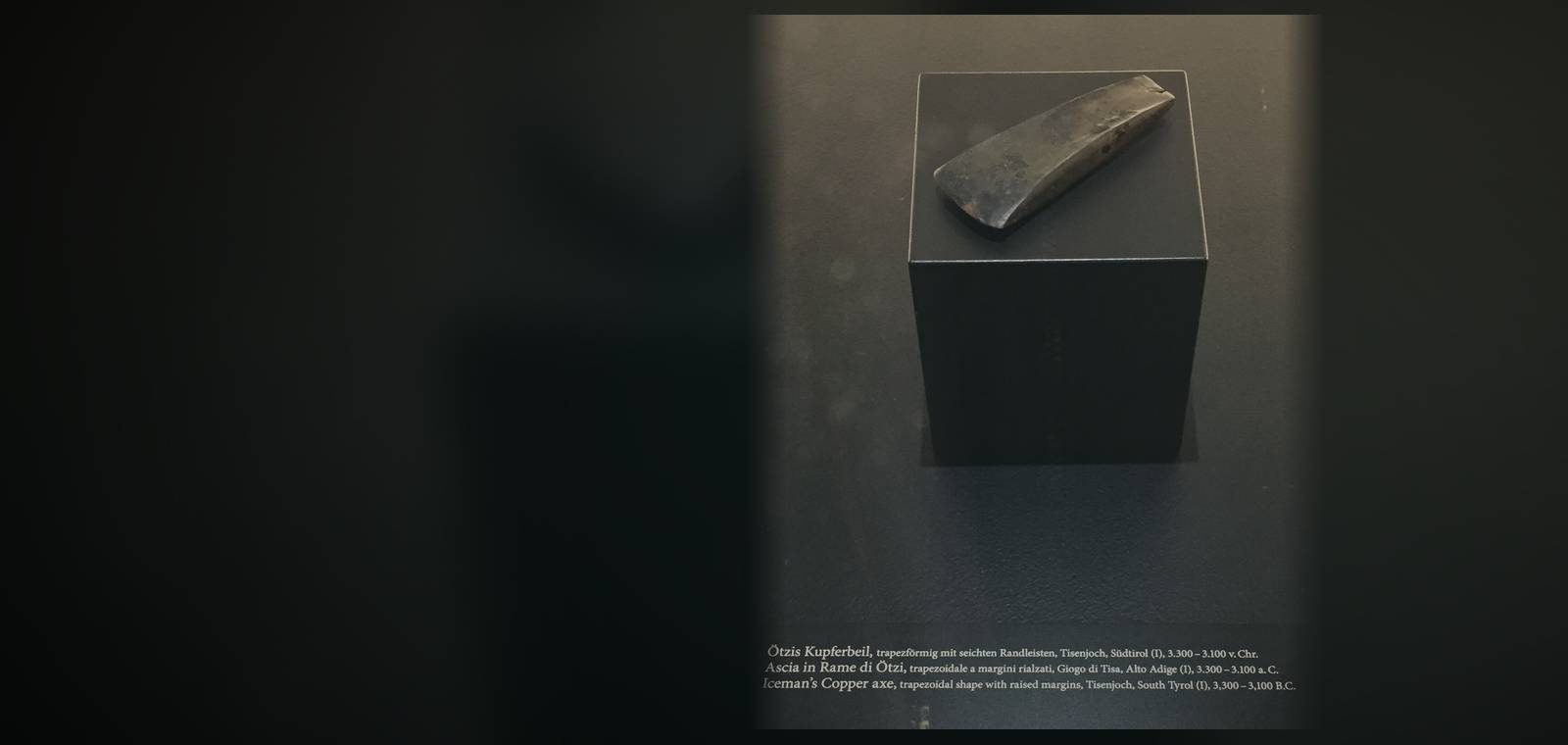
He turned out to be more than 5,300 years old, older, the museum points out, than the Egyptian pyramids and Stonehenge. He lived in the Copper Age and still used stone tools, but carried an innovative and very valuable copper axe. His clothes and gear survived with him.

Ten years after the find, in 2001, the radiologist Paul Gostner found an arrowhead lodged in the mummy's left shoulder. The museum now calls it murder. Later work counted 61 tattoos on his body, made visible by light of different wavelengths, and found he was roughly 46 years old.

In 2018 a team led by Frank Maixner of Eurac Research analyzed what was in his stomach and published the results in Current Biology. His last meal held ibex and red deer meat, einkorn wheat and traces of toxic bracken, with an unusually high share of fat, most likely from ibex. A 2023 DNA study, the museum says, found that much of his ancestry came from people of modern-day Anatolia and that he had dark skin.

Questions people ask about Ötzi the Iceman

How was the find site searched?

Archaeologists went back and dug into the ice itself for the first time, clearing snow and ice with steam blowers to recover the rest of his gear.

What did his DNA show?

A 2012 study found brown eyes and type O blood. A 2023 study added that he carried a greater chance of obesity and male pattern baldness.

Was the Iceman healthy?

Not entirely. The museum notes that the arteries of his heart already held calcium deposits, at about 46.

The open question

Still strange: A 5,300-year-old murder.

Ten years later an X-ray showed an arrowhead in his shoulder: he had been murdered.

Tamam Shud: The Somerton Man Case →
  1. Step 1 of 4 · This fileÖtzi the Iceman
  2. Step 2 of 4 · Next fileTamam Shud: The Somerton Man Case
  3. Step 3 of 4 · Next fileThe Dyatlov Pass incident
  4. Step 4 of 4 · Next fileThe 'Hitler skull' in Moscow
About these videos

Found by a YouTube search for this topic, not checked by us. The player loads from YouTube only when you press play.

Where this comes from

EvidenceWell supported

Comes from Frank Maixner and others, "The Iceman's Last Meal Consisted of Fat, Wild Meat, and…. DOI link to a research paper: A DOI is a permanent ID number for a published research paper or book. The link takes you to the paper on its publisher's website, even if that site moves.

What this means

The body, clothes and gear are held and studied at the South Tyrol Museum of Archaeology; the arrowhead, tattoos, last meal and DNA come from peer-reviewed and museum research.

For Ötzi the Iceman, several independent sources agree on the main points (3 sources listed at the bottom of this page). Experts still argue about some details.

Several independent lines of evidence agree, such as excavations, measurements or peer-reviewed studies. Experts still argue about details.

See all five labels

Sources

  1. DOI link to a research paperA DOI is a permanent ID number for a published research paper or book. The link takes you to the paper on its publisher's website, even if that site moves. The paper itself is what we cite.Frank Maixner and others, "The Iceman's Last Meal Consisted of Fat, Wild Meat, and Cereals", Current Biology 28 (2018), pp. 2348-2355Primary text
  2. South Tyrol Museum of Archaeology, "The discovery" (Ötzi the Iceman)
  3. South Tyrol Museum of Archaeology, "Milestones in Ötzi research"

Quotations come from public-domain translations. A book in our Library links to its Library page; other links open the free online copy or the reference page.

Updated

Credible or not?

Tap one to see how other readers voted.

Discussion