Credible Theories Sign in

The record

From the text
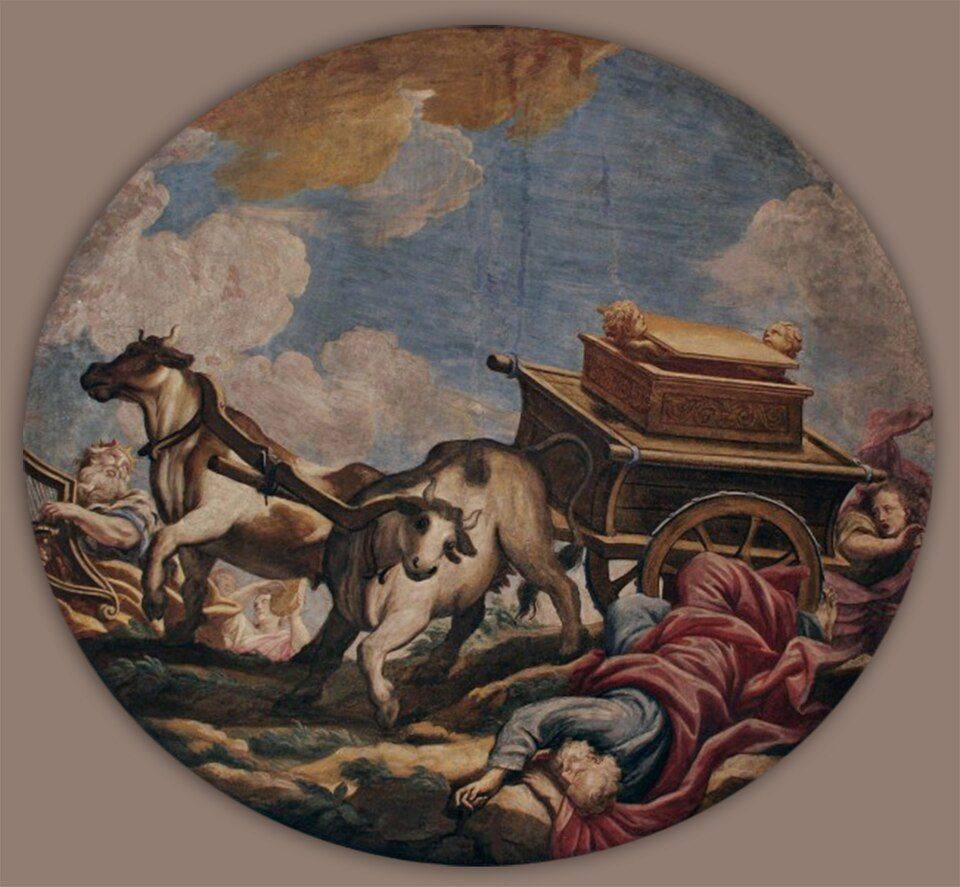
Uzzah put forth his hand to the ark of God, and took hold of it; for the oxen shook it. And the anger of the LORD was kindled against Uzzah; and God smote him there for his error; and there he died by the ark of God.
Documented · Ancient text, c. 600–500 BCE
2 Samuel 6:6–7 · Hebrew Bible
Translation: King James Version (1611; standard 1769 text), with Apocrypha · Public domain

Exodus 25 gives the plans. A chest of acacia wood two cubits and a half shall be the length thereof, and a cubit and a half the breadth thereof, and a cubit and a half the height thereof, overlaid with pure gold inside and out, carried on poles through gold rings. Its lid, the mercy seat, has two golden cherubim facing each other. God says: there I will meet with thee, and I will commune with thee from above the mercy seat, from between the two cherubims.

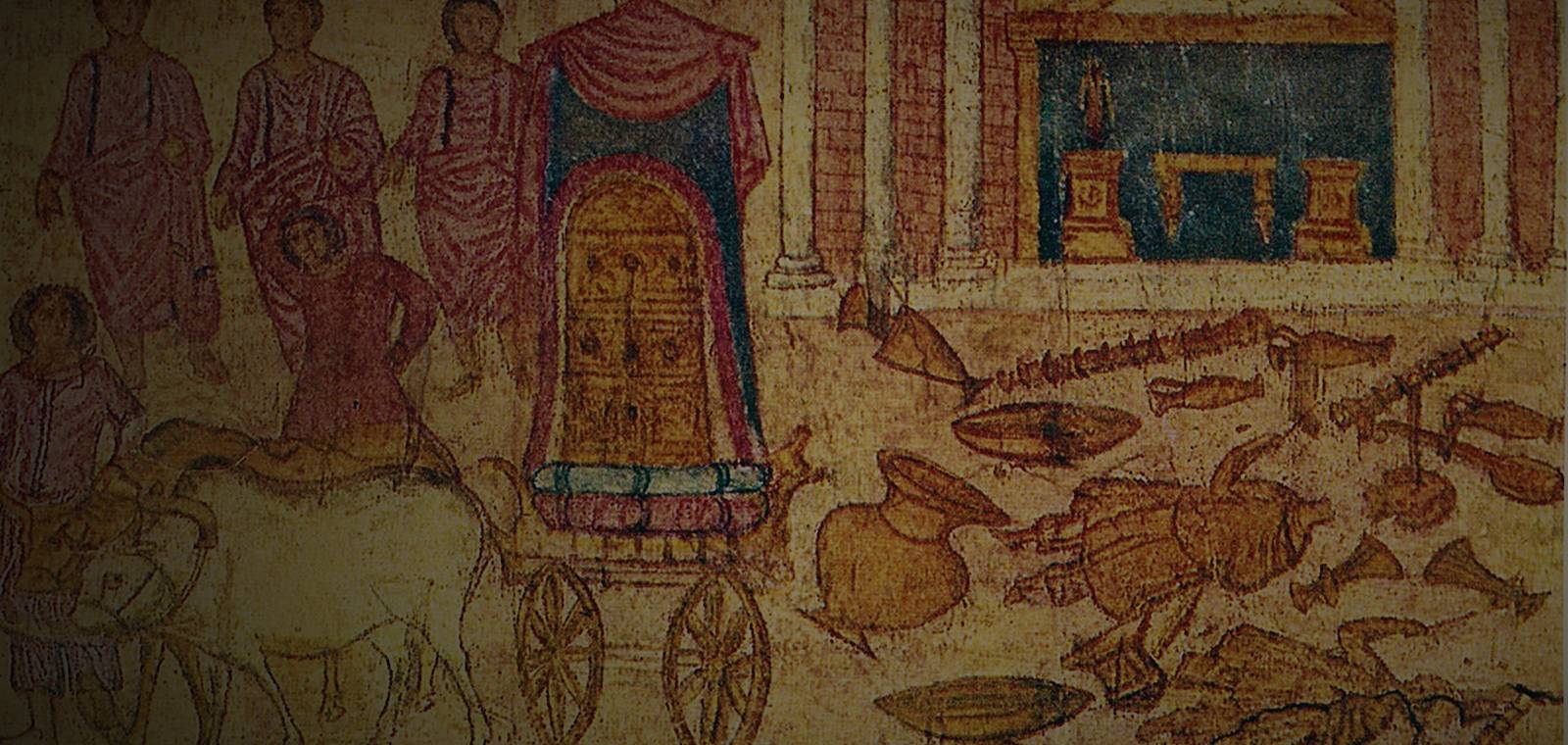
The Ark behaves like something dangerous. When the Philistines capture it, the statue of their god Dagon falls on its face before it, and the towns that hold it are struck with plague (1 Samuel 5). When it is returned, men of Beth-shemesh who look into it die (1 Samuel 6:19). When the oxen stumble and Uzzah reaches out to steady it, he is struck dead on the spot (2 Samuel 6:6–7). It leads the march around Jericho before the walls fall.

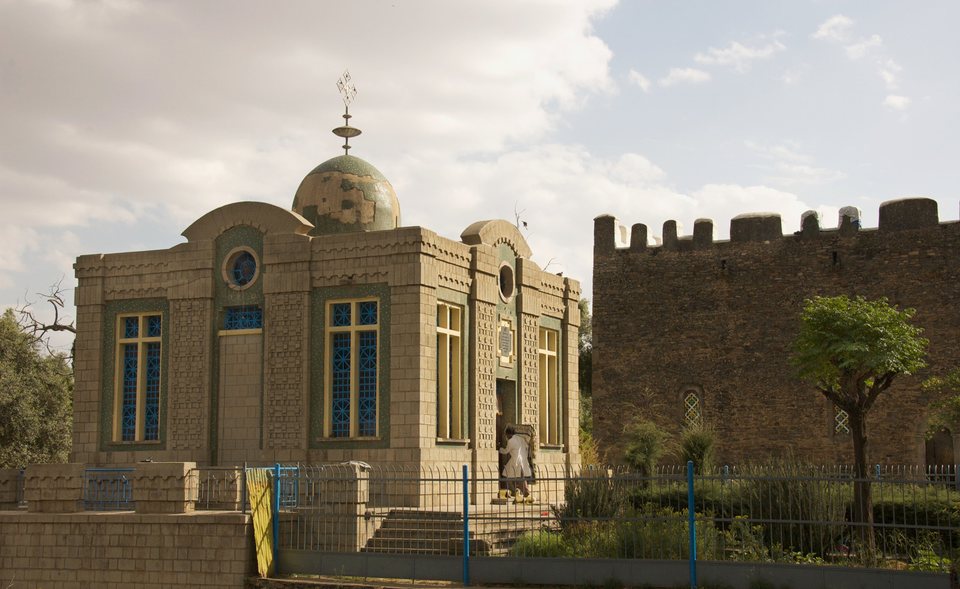
Its end is a mystery. The Ark is not mentioned among the treasures carried off when Babylon destroyed the Temple in 587 BCE. 2 Maccabees 2 says Jeremiah hid it in a cave on the mountain Moses climbed. The Ethiopian Orthodox Church says it rests in the Chapel of the Tablet at Aksum, brought there by Menelik, and every Ethiopian church keeps a tabot, a consecrated replica of its tablets.

Since Erich von Däniken's Chariots of the Gods (1968), the Ark has often been described as an electrical device or a communicator, and the 1981 film Raiders of the Lost Ark fixed that image. The biblical writers present it as the throne of an invisible God, whose holiness was lethal to the careless.
Questions people ask about Ark of the Covenant

Why did the Ark of the Covenant kill Uzzah?

In 2 Samuel 6:6-7, when the oxen stumble, Uzzah reaches out to steady the Ark and is struck dead on the spot. Men of Beth-shemesh who looked into it also died. Scholars read these stories as being about holiness and ritual rules, not machinery.

Is the Ark of the Covenant in Ethiopia?

The Ethiopian Orthodox Church says so, and every Ethiopian church keeps a tabot, a consecrated replica of its tablets. Only one outside scholar is known to have seen the object at Aksum: Edward Ullendorff, who said in 1941 it was an empty wooden box of medieval make.

What was inside the Ark of the Covenant?

According to 1 Kings 8:9, by the time of Solomon's Temple it held only the two stone tablets Moses received at Sinai. The New Testament book of Hebrews (9:4) remembers more: a golden jar of manna and Aaron's staff that budded, along with the tablets. Exodus 16 and Numbers 17 tell how the manna and the staff were set before the Ark.

The open question

Still strange: The Ark is not listed among the treasures Babylon carried off, and 2 Maccabees says Jeremiah hid it in a cave.

Uzzah: Why Did Touching the Ark of the Covenant Kill Him? →
  1. Step 1 of 4 · This fileArk of the Covenant
  2. Step 2 of 4 · The passageThe Ark kills Uzzah, 2 Samuel 6:6–7
  3. Step 3 of 4 · The longer textThe King James Bible (1611)
  4. Step 4 of 4 · Next fileUzzah: Why Did Touching the Ark of the Covenant Kill Him?
About these videos

Found by a YouTube search for this topic, not checked by us. The player loads from YouTube only when you press play.

Where it turns up

Where this comes from

EvidenceMyth or legend

Comes from Exodus 25:10–22, King James Version. The Book of Exodus: The second book of the Bible. It tells how Moses led the Israelites out of slavery in Egypt, how God gave the law at Mount Sinai, and how the Ark of the Covenant was made.

What this means

A story or tradition. It is documented as a story; nothing independent shows it happened.

Ark of the Covenant is known from stories, scripture or tradition. The texts are real and we quote them (for example Exodus 25:10–22, King James Version), but nothing outside those texts shows that Ark of the Covenant was real as described.

The page covers something known from myths, scripture or tradition. The texts are real and we quote them, but no independent record shows the events or beings were real.

See all five labels

Sources

  1. The Book of ExodusThe second book of the Bible. It tells how Moses led the Israelites out of slavery in Egypt, how God gave the law at Mount Sinai, and how the Ark of the Covenant was made. Scholars think it reached its final form by roughly 500 to 400 BC.Exodus 25:10–22, King James Version Online copyPrimary text Archived copy, 2026-10-03
  2. The Books of Samuel (1 and 2 Samuel)Two books of the Bible about the prophet Samuel, King Saul and King David, including David and Goliath and the travels of the Ark of the Covenant. Scholars think they were put together from older sources in about the 600s to 500s BC.1 Samuel 5–6, King James Version Online copyPrimary text Archived copy, 2026-10-03
  3. WikipediaA free online encyclopedia written and edited by volunteers. It is a good starting point and usually lists its own sources, but anyone can change it, so we treat it as a guide to better sources, not the final word.Wikipedia, "Ark of the Covenant"Reference Archived copy, 2026-09-24
  4. Encyclopaedia BritannicaAn encyclopedia first published in Scotland in 1768 and now online. Its articles are written and checked by named experts and editors, which makes it a reliable source for basic facts.Encyclopaedia Britannica, "Ark of the Covenant"Reference Archived copy, 2026-09-30

Quotations come from public-domain translations. A book in our Library links to its Library page; other links open the free online copy or the reference page.

Updated

Credible or not?

Tap one to see how other readers voted.

Discussion