Credible Theories Sign in

The record

The Samarangana Sutradhara is a large Sanskrit treatise on architecture and building, traditionally attributed to King Bhoja of the Paramara dynasty, who ruled from Dhara in central India in the early 11th century. Across more than eighty chapters it covers town planning, houses, temples, painting, and sculpture. It is one of the most important sources for medieval Indian architecture.

Chapter 31 deals with yantras, machines. It describes mechanical figures that move, pour water, and guard doors, and a flying device: a large bird made of light wood, with a strong, well-made body, in which mercury is placed over a fire. The heated mercury, the text says, drives the bird through the air, and a man seated inside can travel far.

Then the text stops short. It says that the method of construction is not being given in detail, not out of ignorance, but to keep it secret, because such knowledge could be misused. For readers today this is either tantalizing or convenient. Medieval writers in many cultures claimed secret knowledge, and the device may never have been built.

The book was published in the Gaekwad's Oriental Series in 1924 and 1925. Unlike the modern Vaimanika Shastra, it is a genuine medieval text. It shows real medieval interest in automata, which were also popular in the Islamic and Byzantine worlds. It is the best-known genuine Indian source for flying-machine claims.
Questions people ask about Samarangana Sutradhara

Who was King Bhoja?

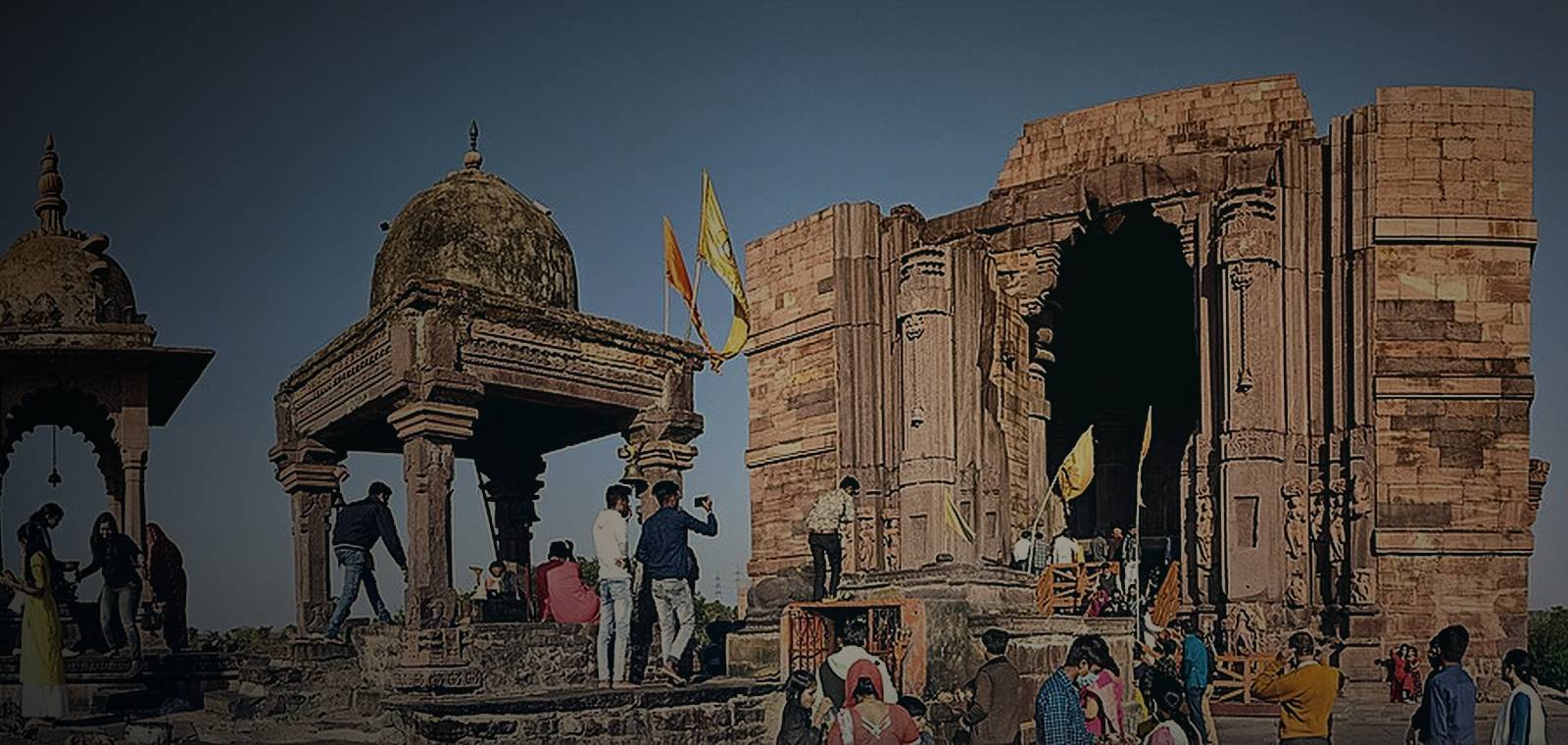
Bhoja was a Paramara king who ruled from Dhar in central India from about 1010 to 1055 CE. He was famed as a scholar and patron, and dozens of books on poetry, grammar, medicine and building carry his name. He is also linked to the huge unfinished Bhojeshwar temple at Bhojpur, near Bhopal, which holds one of India's largest stone lingams.

What does the Samarangana Sutradhara say about flying machines?

The flying bird sits in a chapter that also covers moving dolls, water devices and door guards. The passage names its parts, a light wooden body, mercury and a fire, but gives no sizes or steps. Engineers note a further problem: mercury boils at about 357 degrees Celsius and its vapor is toxic, so a rider sitting beside it would face real danger.

Is the Vaimanika Shastra a real ancient text?

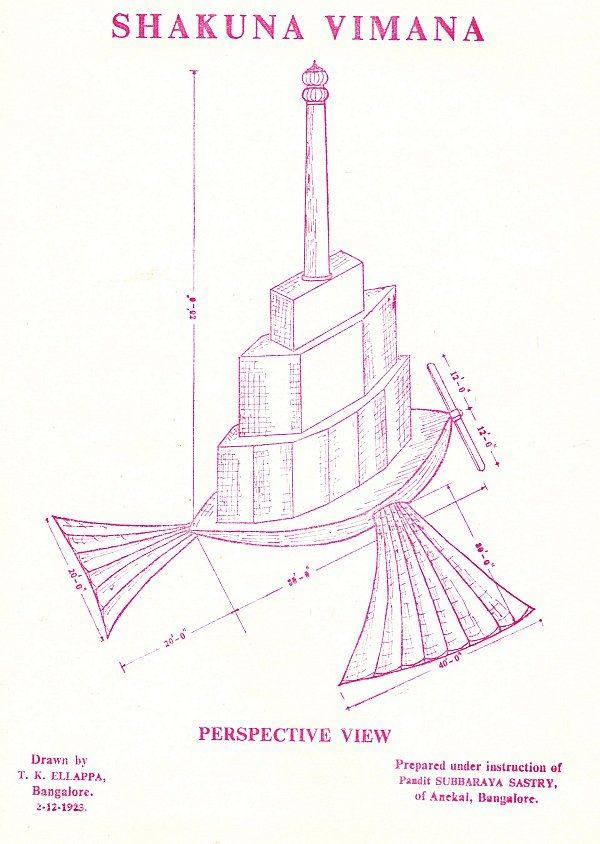
No. It first appeared in the 20th century. Pandit Subbaraya Shastry said he dictated it between 1918 and 1923 from knowledge received by spiritual means, and it was published in Hindi in 1959 and in English in 1973. A 1974 study by engineers at the Indian Institute of Science in Bangalore found that none of its aircraft designs could fly.

The open question

Still strange: A medieval manual for a flying bird that skips the key step.

Instruction manuals are supposed to explain how to make things. This one stops right at the key step. Historians note that heated mercury cannot lift anything, so the secrecy may cover for a design that never worked.

Vaimanika Shastra: The 'Ancient' Aircraft Manual From the 1920s →
  1. Step 1 of 4 · This fileSamarangana Sutradhara
  2. Step 2 of 4 · The passageMechanical birds with mercury engines, Samarangana Sutradhara, chapter 31
  3. Step 3 of 4 · Next fileVaimanika Shastra: The 'Ancient' Aircraft Manual From the 1920s
  4. Step 4 of 4 · Next filePushpaka Vimana: Ravana's Flying Palace in the Ramayana
About these videos

Found by a YouTube search for this topic, not checked by us. The player loads from YouTube only when you press play.

Where it turns up

Where this comes from

EvidenceDocumented

Comes from Samarangana Sutradhara of Bhoja, ed. T. Ganapati Sastri, Gaekwad's Oriental Series 25…. The Samarangana Sutradhara: A Sanskrit book on architecture and building, credited to King Bhoja of Dhar in central India, who ruled in the early AD 1000s. Chapter 31 describes mechanical devices, including wooden flying machines, but the descriptions are too short to build from.

What this means

The text exists and is quoted from a published translation. What it describes is a separate question.

For Samarangana Sutradhara, the original record exists and is linked: Samarangana Sutradhara of Bhoja, ed. T. Ganapati Sastri, Gaekwad's Oriental Series 25…. That tells you the record is real and what it says. It does not mean every claim in it is true.

Primary records exist: an original document, a published text, an official file or a dated report. We link to them. This level says the record exists and what it says, not that every claim in it is true.

See all five labels

Sources

  1. The Samarangana SutradharaA Sanskrit book on architecture and building, credited to King Bhoja of Dhar in central India, who ruled in the early AD 1000s. Chapter 31 describes mechanical devices, including wooden flying machines, but the descriptions are too short to build from.Samarangana Sutradhara of Bhoja, ed. T. Ganapati Sastri, Gaekwad's Oriental Series 25 and 32 (Baroda, 1924–1925)Primary text
  2. WikipediaA free online encyclopedia written and edited by volunteers. It is a good starting point and usually lists its own sources, but anyone can change it, so we treat it as a guide to better sources, not the final word.Wikipedia, "Samarangana Sutradhara"Reference Archived copy, 2026-10-03
  3. WikipediaWikipedia, "Vimana"Reference Archived copy, 2026-09-13
  4. The Samarangana SutradharaSamarangana Sutradhara of Maharajadhiraja Bhoja, ed. T. Ganapati Sastri, Part 1, Gaekwad's Oriental Series 25 (Baroda, 1924), Internet Archive scanPrimary text

Quotations come from public-domain translations. A book in our Library links to its Library page; other links open the free online copy or the reference page.

Updated

Credible or not?

Tap one to see how other readers voted.

Discussion