












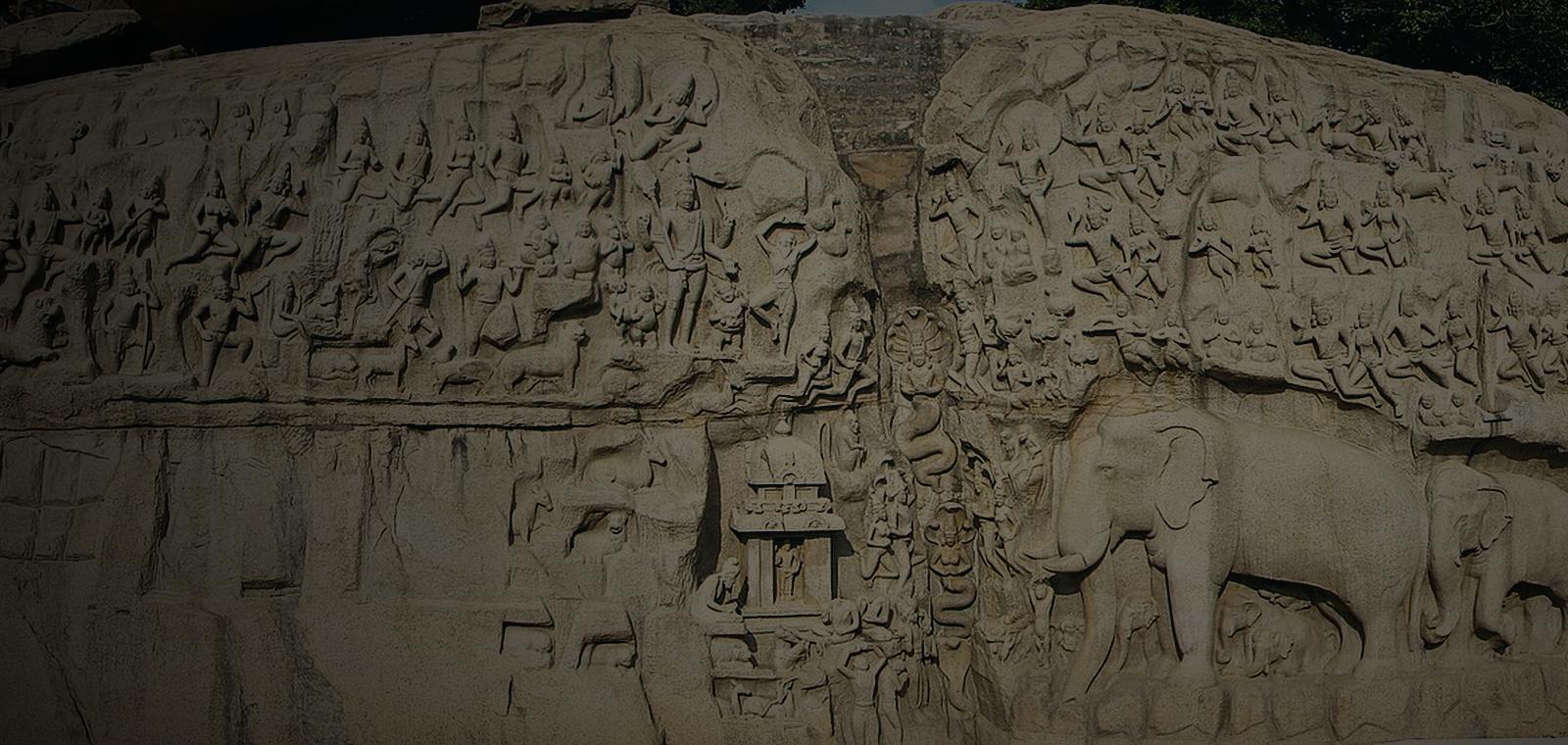
What is Arjuna known for?
Arjuna is one of the five Pandava brothers in the Mahabharata, a son of Queen Kunti fathered by the god Indra. Trained in archery by Drona, he is the epic's greatest bowman, able to shoot with either hand, and he acquires celestial weapons, including the Pashupata from Shiva.
Before the Kurukshetra war he hesitates to fight his own relatives. His charioteer Krishna answers his doubts in the dialogue known as the Bhagavad Gita, one of Hinduism's most important texts. After the war, when Ashvatthama fires the Brahmashira at the Pandavas, Arjuna fires his own in reply. When the sages Narada and Vyasa intervene, Arjuna is able to withdraw his weapon, while Ashvatthama cannot.
Arjuna is a figure of epic literature. The Mahabharata as we have it was composed over centuries, roughly between 400 BCE and 200 CE according to Britannica.
Titles and honors
- Death toll and kills
- In the text Killed seven akshauhinis of the Kaurava army on day 14 (Mahabharata)
The same story, told elsewhere
Shared story · Floods and lost lands
Lost Lands Under the Sea: Atlantis, Dvaraka and Ys
A rich city, a proud people and one terrible day when the sea comes in and never leaves. Greece, India, Egypt, Wales, Cornwall and Brittany all tell of a land that now lies under the waves.
Mahabharata, Mausala Parva (the end of Dvaraka) is one telling. The same story is told 8 more times, in 4 parts of the world. Follow it:
- Ancient EgyptianEgypt · c. 1900-1800 BCE · Ancient text
- Hindu (Sanskrit epic)Dvaraka · c. 400 BCE · Ancient textTied to this page
- Greek, retold in a Roman-era geographyHelike, on the Gulf of Corinth, Greece · 373 BCE · Ancient text
- GreekAthens · c. 360 BCE · Ancient text
- Tamil (South India)Tamil Nadu, southern tip of India · c. 5th-6th century CE · Ancient text
- WelshCardigan Bay, Wales · c. 1250 CE · Medieval text
- BretonBay of Douarnenez, Brittany, France · 15th century · Retold in English
- CornishBetween Land's End and the Isles of Scilly, Cornwall, England · c. 1478 · Medieval text
- Modern science (19th-century Europe)Germany and Britain · 1864 · Modern book
The open question: Do these stories keep real memories of lost coastlines, or is a drowned city simply a story people tell to warn against pride? Join the debate
Mentioned on these pages
- FileBrahmashira
- PassageArjuna's trip to Indra's heaven (Mahabharata, Vana Parva)
- PassageThe Brahmashira burns the unborn (Mahabharata, Sauptika Parva)
- PersonAshvatthama
- PersonKrishna
- PersonPandavas
- PersonParikshit
- PersonVyasa
- PlaceKurukshetra
Linked people and places
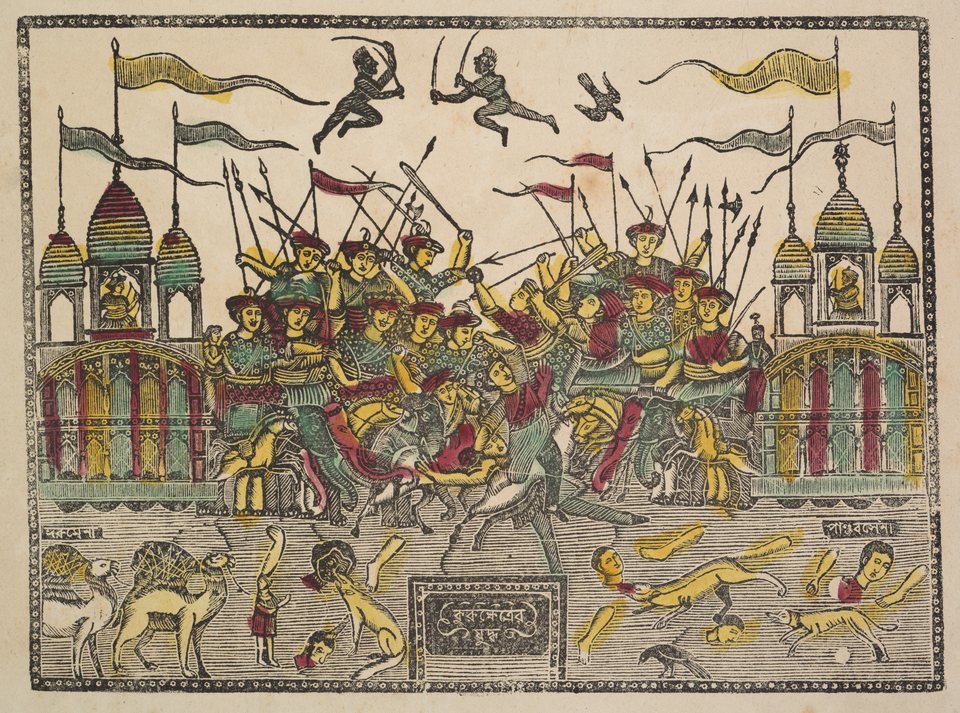
Where this comes from
Comes from The Mahabharata, trans. Kisari Mohan Ganguli, sacred-texts.com. One of the two great Sanskrit epics of India, about a war between two branches of a royal family. With about 100,000 verses it is one of the longest poems ever made.
What this means
A story or tradition. It is documented as a story; nothing independent shows it happened.
Arjuna is known from stories, scripture or tradition. The texts are real and we quote them (for example The Mahabharata, trans. Kisari Mohan Ganguli, sacred-texts.com), but nothing outside those texts shows that Arjuna was real as described.
The page covers something known from myths, scripture or tradition. The texts are real and we quote them, but no independent record shows the events or beings were real.
Sources
- The MahabharataOne of the two great Sanskrit epics of India, about a war between two branches of a royal family. With about 100,000 verses it is one of the longest poems ever made. It was mostly put together between about 300 BC and AD 300. Kisari Mohan Ganguli made the first full English version, 1883 to 1896.The Mahabharata, trans. Kisari Mohan Ganguli, sacred-texts.com Online copyPrimary text Archived copy, 2026-10-03
- Encyclopaedia BritannicaAn encyclopedia first published in Scotland in 1768 and now online. Its articles are written and checked by named experts and editors, which makes it a reliable source for basic facts.Encyclopaedia Britannica, 'Arjuna'Reference Archived copy, 2026-08-07
- WikipediaA free online encyclopedia written and edited by volunteers. It is a good starting point and usually lists its own sources, but anyone can change it, so we treat it as a guide to better sources, not the final word.Wikipedia, 'Arjuna'Reference
No public-domain picture of this person yet. We do not show drawn or generated likenesses.