How the rabbit hole works. Start with anything that grabs you, say UFOs. Every person, place and document a page mentions links to its own page, so a UFO file leads to a witness, the witness leads to the people who investigated the case, and it keeps going.
The path you take shows in the bar under the top menu on every page, so you can step back any time or climb out and start again.
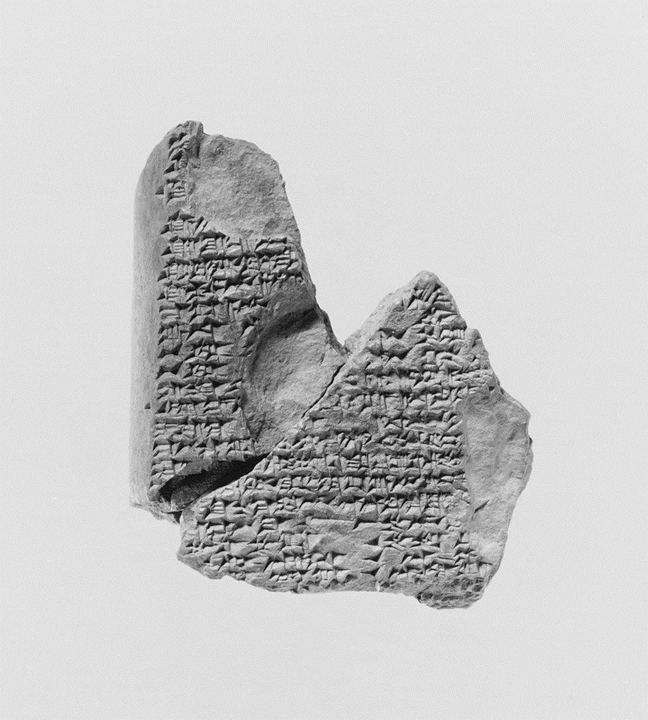
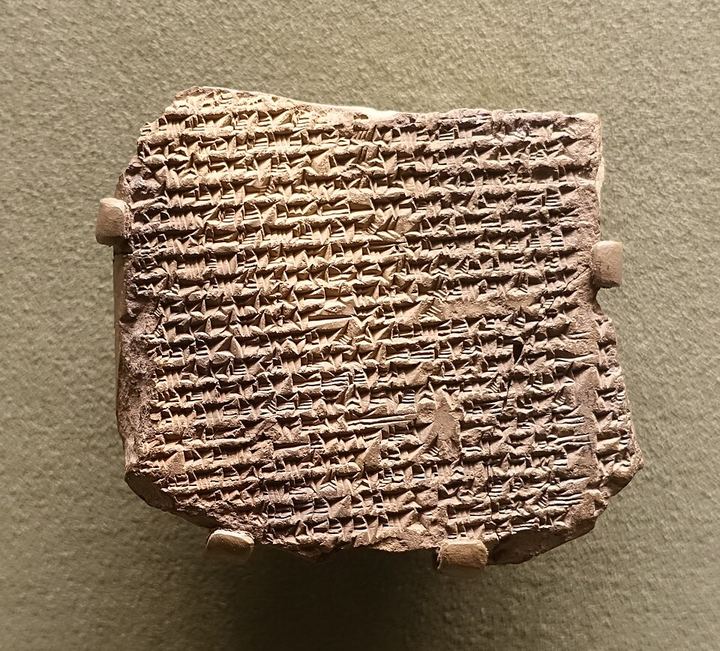
This is a summary from the Atrahasis Epic, a Babylonian poem whose best copy was written about 1640 BCE. In the story, humans grow so noisy that the god Enlil cannot sleep, so he sends plague, drought, famine and finally a flood. The god Enki warns Atrahasis by speaking to the reed wall of his house, so he breaks no oath.
ReferenceAtrahasis, tablets II–III
Writtenc. 1700–1640 BCE
SetThe Flood
Humans multiply and their noise keeps Enlil awake. He sends plague, then drought, then famine, and finally the Flood. Enki warns Atrahasis by speaking to the reed wall of his house, so Enki technically breaks no oath.
Documented · Retold in English, c. 1700–1640 BCE Summary by the editors. Translation: Summary in my own words
AdvertisementAd space
Read it literally
A council vote to wipe out humanity, and one member who leaks the plan through a loophole. That is a spy thriller.
What scholars say
Older than Genesis; Genesis 6–9 shares its structure.
A god warns one good man, a boat is built, the world drowns and birds are sent out to find land. The same story turns up from Iraq to India to Greece, with cousins in China, Scandinavia and Guatemala.
Epic of Gilgamesh, Tablet XI (Utnapishtim's story) is one telling. The same story is told 9 more times, in 6 parts of the world. Follow it:
The open question: One real flood remembered by many peoples, or many different floods that each people told in its own way? Join the debate
Questions people ask about Atrahasis, tablets II–III
How was the Atrahasis epic rediscovered?
George Smith first pieced together Assyrian fragments of the story in the 1870s, from tablets found in the library of King Ashurbanipal at Nineveh. In 1965 Wilfred Lambert and Alan Millard published many more pieces, including an Old Babylonian copy from about 1650 BCE, the most complete version known. Their English translation appeared in 1969.
How long does the Flood last in Atrahasis?
Enki tells the hero to watch the time for seven days, and the storm rages for seven days and seven nights. The gods themselves are shaken, and the birth goddess mourns the people she helped create. Afterward the hungry gods, who had gone without offerings during the disaster, crowd around the hero's sacrifice.
What happens after the Flood in Atrahasis?
Instead of wiping people out again, the gods set lasting limits on human numbers. Enki and the birth goddess arrange for some women to be unable to bear children, for a demon to snatch infants, and for orders of priestesses who are forbidden to have children. In this way the story explains infant death and childlessness as part of the gods' settlement.
Used on these files
Atrahasis: The Epic Where Gods Made Humans, Then Sent the FloodDocumentedAccording to the Babylonian epic Atrahasis, the first humans were made partly from the flesh and blood of a god who was killed because he had intelligence. Overworked junior gods had gone on strike, and humans were the fix; then people grew too noisy, and the Flood followed. What went wrong with the plan?
Enki: Who Was the Sumerian God Who Saved Humanity?Myth or legendEnki saves humanity from the Flood without technically breaking his oath: bound to secrecy, he tells the plan to a wall while the hero listens on the other side. The Sumerian god of fresh water also designs the first humans, and in another story gives away civilization while drunk. Who walked off with it?
Enlil: Why Did the King of the Gods Send the Flood?Myth or legendThe king of the gods grew so annoyed by the noise of multiplying humans that he sent plague, then drought, then the Flood. Yet in one Sumerian myth the other gods arrest Enlil himself and expel him from his own city for ritual impurity. Why did the most powerful god in Sumer end up exiled?
Where this comes from
EvidenceDocumented
Comes fromThe Atrahasis Epic, Atrahasis, tablets II–III. A Babylonian poem in which the gods make humans to do their work, then try to wipe them out with a great flood; the wise Atrahasis survives in a boat. The best copy was written about 1640 BC. W. G. Lambert and A. R. Millard published the standard English edition in 1969.
What this means
The text exists and is quoted from a published translation. What it describes is a separate question.
Primary records exist: an original document, a published text, an official file or a dated report. We link to them. This level says the record exists and what it says, not that every claim in it is true.
The Atrahasis EpicA Babylonian poem in which the gods make humans to do their work, then try to wipe them out with a great flood; the wise Atrahasis survives in a boat. The best copy was written about 1640 BC. W. G. Lambert and A. R. Millard published the standard English edition in 1969.Atra-hasis, ed. and trans. W. G. Lambert and A. R. Millard, Atra-hasis: The Babylonian Story of the Flood (Oxford, 1969)Primary text
Enki and the World OrderA Sumerian poem in which Enki, god of fresh water and wisdom, puts the world in order, giving lands and gods their jobs. It survives on clay tablets copied in about 1900 to 1600 BC. Oxford University's ETCSL project gives it in English.Enki and the World Order, ETCSL t.1.1.3, University of OxfordPrimary textArchived copy, 2026-08-03
Enlil and NinlilA Sumerian myth about Enlil, the chief god of the city of Nippur, who is banished for wronging the young goddess Ninlil, and about the gods born to them. It survives on clay tablets copied in about 1900 to 1600 BC. Oxford University's ETCSL project gives it in English.Enlil and Ninlil, ETCSL t.1.2.1, University of OxfordPrimary textArchived copy, 2026-03-26
Scholarly dates are rounded. The wording follows the named public-domain translation.
More from Sumer and Babylon
Two more stories, and what each shares with Atrahasis: the Flood to stop the noise.