Credible Theories Sign in

The record

From the text
For there appeared unto them an horse with a terrible rider upon him… Moreover two other young men appeared before him, notable in strength, excellent in beauty, and comely in apparel.
Documented · Ancient text, c. 124 BCE
2 Maccabees 3:25–26 · Apocrypha
Translation: King James Version (1611; standard 1769 text), with Apocrypha · Public domain

Heliodorus was a real official, chief minister of the Seleucid king Seleucus IV, who ruled Syria and Judea in the early second century BCE. According to 2 Maccabees 3, the king sent him to confiscate money deposited in the Jerusalem Temple, after a disgruntled Temple officer named Simon reported that the treasury held vast sums. The high priest Onias and the city begged him not to, and the people prayed.

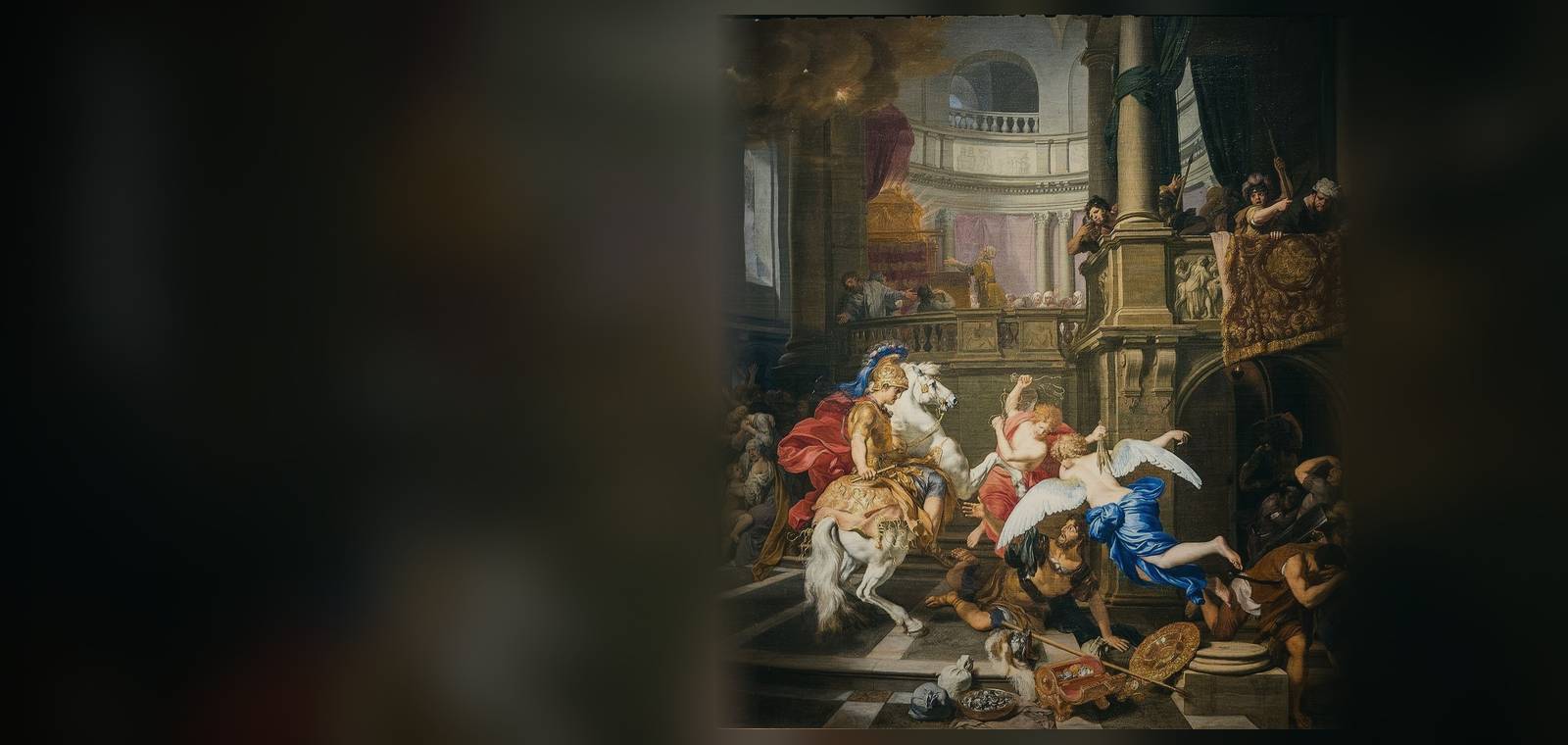
When Heliodorus reached the treasury, there appeared unto them an horse with a terrible rider upon him, and adorned with a very fair covering, and he ran fiercely, and smote at Heliodorus with his forefeet. The rider seemed to wear golden armor. Moreover two other young men appeared before him, notable in strength, excellent in beauty, and comely in apparel; who stood by him on either side, and scourged him continually. Heliodorus collapsed and had to be carried out.

Onias offered a sacrifice for him, and the young men reappeared to tell Heliodorus he owed his life to the high priest. He went home and told the king that anyone he wanted destroyed should be sent to Jerusalem. In 2007 scholars published an inscribed stone known as the Heliodorus stele, a royal letter from Seleucus IV to Heliodorus from around 178 BCE, about appointing an official over the temples of the region. It confirms the man and the policy, though not the miracle. The scene was painted in the Vatican by the Renaissance artist Raffaello Sanzio.
Questions people ask about Heliodorus

Is 2 Maccabees in the Bible?

It depends on the Bible. Catholic and Eastern Orthodox churches include 2 Maccabees in their Old Testament as a deuterocanonical book. Jewish tradition and most Protestant churches leave it out, and Protestant Bibles that print it put it in a separate Apocrypha section. The book was written in Greek, probably in the late 2nd century BCE.

What happened to Heliodorus at the Temple?

The book says he was attacked by a heavenly rider and two young men until he fell senseless, and that he lived only because the high priest prayed for him. He then turned against his mission and praised the God of the Jews. The scene inspired Raphael's fresco The Expulsion of Heliodorus from the Temple, painted around 1511 to 1512.

What happened to Heliodorus afterward?

History remembers him for a darker act. In 175 BCE Heliodorus assassinated his own king, Seleucus IV, apparently hoping to rule. Seleucus's brother, Antiochus IV, soon took the throne instead, and it was his later attack on Jewish religious practice that led to the Maccabean revolt. Nothing reliable is known of Heliodorus after the murder.

The open question

Still strange: Heliodorus is said to have told the king that anyone he wanted destroyed should simply be sent to Jerusalem.

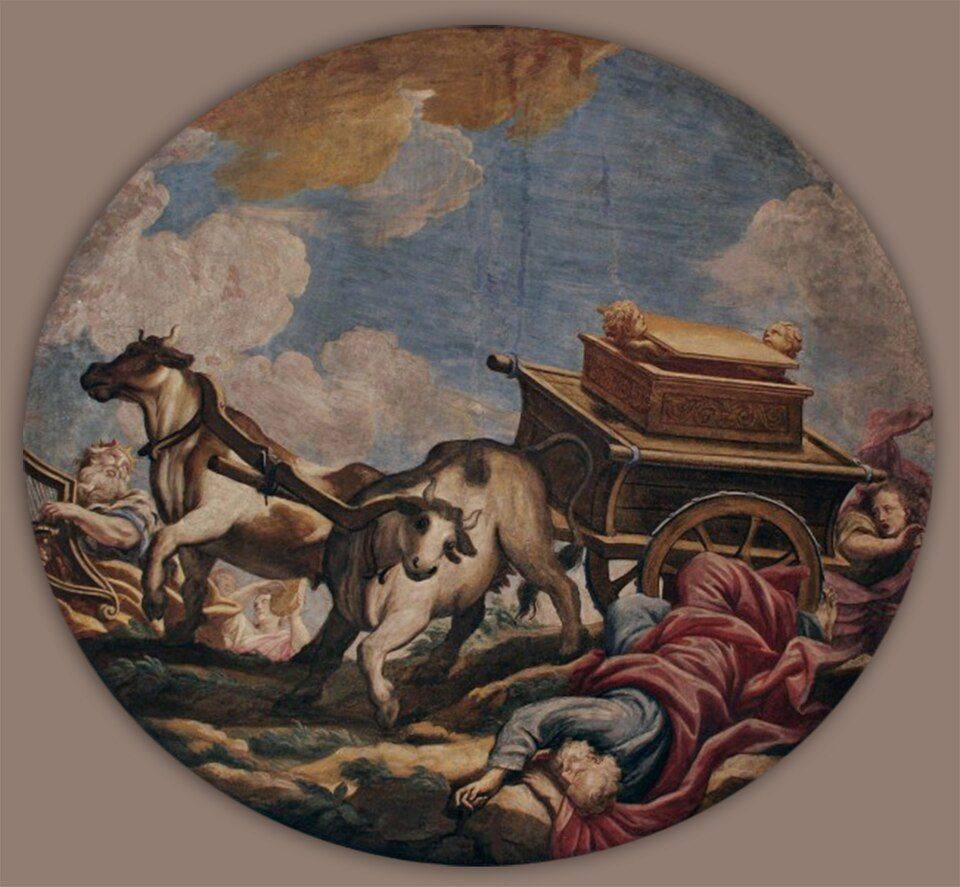
Uzzah: Why Did Touching the Ark of the Covenant Kill Him? →
  1. Step 1 of 4 · This fileHeliodorus
  2. Step 2 of 4 · The passageHeliodorus is beaten, 2 Maccabees 3:25–26
  3. Step 3 of 4 · The longer textThe King James Apocrypha (1611)
  4. Step 4 of 4 · Next fileUzzah: Why Did Touching the Ark of the Covenant Kill Him?
About these videos

Found by a YouTube search for this topic, not checked by us. The player loads from YouTube only when you press play.

Where it turns up

Where this comes from

EvidenceMyth or legend

Comes from 2 Maccabees 3:22–30, King James Version (1611) Apocrypha. The Second Book of Maccabees: A Jewish history written in Greek, probably in the late 100s BC, about the Jewish revolt against the Greek kings of Syria. It tells how Heliodorus was stopped from robbing the Temple by a heavenly rider.

What this means

A story or tradition. It is documented as a story; nothing independent shows it happened.

Heliodorus is known from stories, scripture or tradition. The texts are real and we quote them (for example 2 Maccabees 3:22–30, King James Version (1611) Apocrypha), but nothing outside those texts shows that Heliodorus was real as described.

The page covers something known from myths, scripture or tradition. The texts are real and we quote them, but no independent record shows the events or beings were real.

See all five labels

Sources

  1. The Second Book of MaccabeesA Jewish history written in Greek, probably in the late 100s BC, about the Jewish revolt against the Greek kings of Syria. It tells how Heliodorus was stopped from robbing the Temple by a heavenly rider. It is in Catholic and Orthodox Bibles, not Jewish or most Protestant ones.2 Maccabees 3:22–30, King James Version (1611) Apocrypha Online copyPrimary text Archived copy, 2026-10-03
  2. The Jewish Encyclopedia (1901 to 1906)A 12-volume encyclopedia of Jewish history, religion and writings by leading scholars, published in New York from 1901 to 1906. It is still respected, but it is over 100 years old, so it misses later finds such as the Dead Sea Scrolls.Jewish Encyclopedia (1906), "Heliodorus"Reference Archived copy, 2026-10-03
  3. WikipediaA free online encyclopedia written and edited by volunteers. It is a good starting point and usually lists its own sources, but anyone can change it, so we treat it as a guide to better sources, not the final word.Wikipedia, "Heliodorus (minister)"Reference Archived copy, 2026-06-14
  4. WikipediaWikipedia, "Heliodorus stele"Reference Archived copy, 2026-04-24

Quotations come from public-domain translations. A book in our Library links to its Library page; other links open the free online copy or the reference page.

Updated

Credible or not?

Tap one to see how other readers voted.

Discussion