How the rabbit hole works. Start with anything that grabs you, say UFOs. Every person, place and document a page mentions links to its own page, so a UFO file leads to a witness, the witness leads to the people who investigated the case, and it keeps going.
The path you take shows in the bar under the top menu on every page, so you can step back any time or climb out and start again.
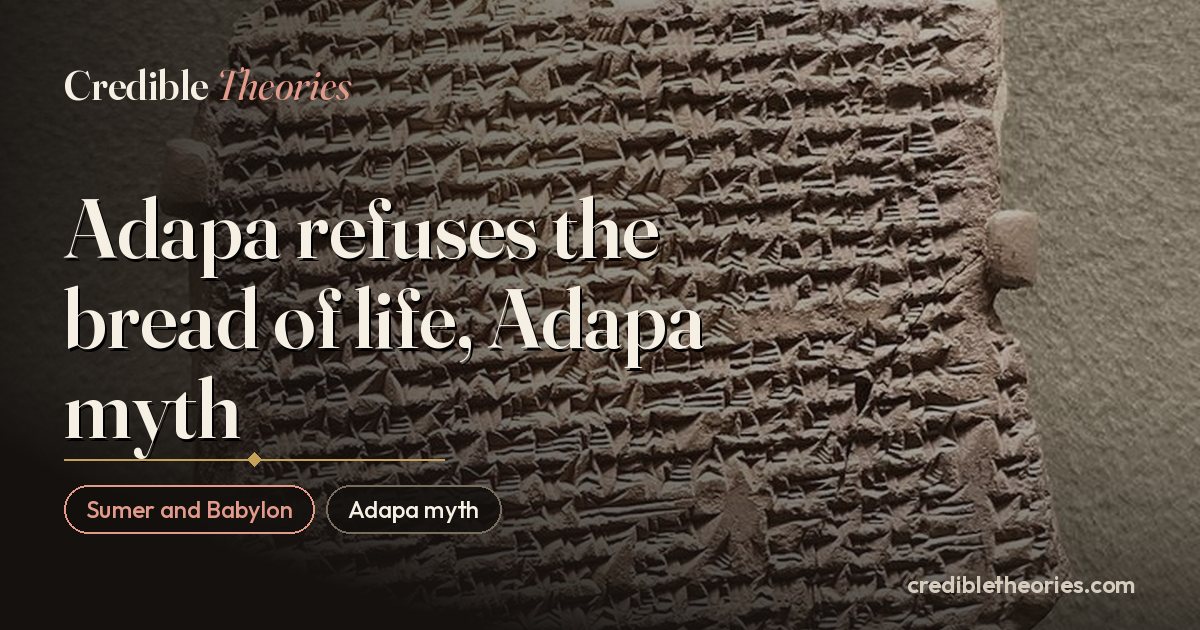
This is a summary of the Story of Adapa, a Babylonian myth known from a copy made around 1400 BCE. Adapa, a wise man of the city of Eridu, is called up to the heaven of the god Anu. The god Enki warns him to refuse the food offered, but it would have made him live forever.
ReferenceAdapa myth
Writtenc. 1400 BCE (Amarna copy)
SetEridu, before the Flood
Adapa breaks the wing of the South Wind and is summoned to Anu's heaven. Enki warns him to refuse the food and drink he is offered, because it is the bread and water of death. It was really the bread and water of life, and Adapa loses immortality.
Documented · Retold in English, c. 1400 BCE Summary by the editors. Translation: Summary in my own words
AdvertisementAd space
Read it literally
Two visitor factions give a human opposite advice about longevity. Enki kept humans mortal on purpose.
What scholars say
Adapa is counted among the seven sages.
Themes Taken up alive Council of gods Strange time
Again and again, people almost lived forever. A man refuses the food of life, a snake steals the plant of youth, a slow chameleon arrives too late, and a woman throws a stone that sinks. Each time, the chance was lost.
The Myth of Adapa is one telling. The same story is told 8 more times, in 6 parts of the world. Follow it:
The open question: Do these stories share one ancient source, or does every people eventually ask why we die and arrive at the same kind of answer? Join the debate
Questions people ask about Adapa myth
Where was the Adapa myth found?
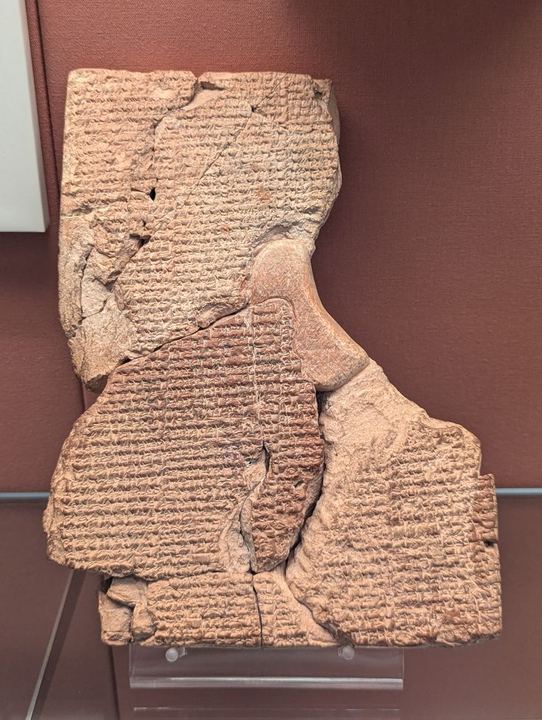
The story is known from several finds. The best copy came from the Amarna letters in Egypt, written in Akkadian. Five more fragments, from about the 7th century BCE, come from King Ashurbanipal's library at Nineveh. Even older tablets in Sumerian, from about the 19th to 16th centuries BCE, were dug up at Tell Haddad, ancient Me-Turan, in Iraq.
Is Adapa the same as Adam?
Some early scholars, such as Albert Clay, thought so, pointing to the similar names, the test over deadly food, and both men being called before a god. Others, including Alexander Heidel, said the two stories are completely different in meaning. Most scholars today see an interesting parallel but not a borrowed story.
Was Adapa one of the seven sages?
Yes. In Mesopotamian tradition the apkallu were wise beings who served the earliest kings, and Adapa is linked to the first of them, Uanna, whom Greek writers called Oannes. Scholars still argue whether Adapa and Uanna were one figure or two. The word adapa may itself have been a title meaning wise.
Used on these files
Adapa: The Wise Man Who Turned Down ImmortalityMyth or legendA wise man was offered the bread and water of eternal life in heaven and refused, on his own god's advice. The best copy of his story was dug up in Egypt, in the royal archive of Akhenaten; scholars still debate whether Ea's advice was an honest mistake or a deliberate trick. What really happened in that hall?
Enki: Who Was the Sumerian God Who Saved Humanity?Myth or legendEnki saves humanity from the Flood without technically breaking his oath: bound to secrecy, he tells the plan to a wall while the hero listens on the other side. The Sumerian god of fresh water also designs the first humans, and in another story gives away civilization while drunk. Who walked off with it?
Where this comes from
EvidenceDocumented
Comes fromThe Story of Adapa, Adapa myth. A Babylonian myth in which Adapa, a wise man of the city of Eridu, is called up to heaven and refuses food and drink that would have made him live forever. Parts were found among the Amarna letters in Egypt, discovered in 1887, and in the library of King Ashurbanipal at Nineveh.
What this means
The text exists and is quoted from a published translation. What it describes is a separate question.
Primary records exist: an original document, a published text, an official file or a dated report. We link to them. This level says the record exists and what it says, not that every claim in it is true.
Enki and the World OrderA Sumerian poem in which Enki, god of fresh water and wisdom, puts the world in order, giving lands and gods their jobs. It survives on clay tablets copied in about 1900 to 1600 BC. Oxford University's ETCSL project gives it in English.Enki and the World Order, ETCSL t.1.1.3, University of OxfordPrimary textArchived copy, 2026-08-03
Scholarly dates are rounded. The wording follows the named public-domain translation.
More from Sumer and Babylon
Two more stories, and what each shares with Adapa refuses the bread of life.