How the rabbit hole works. Start with anything that grabs you, say UFOs. Every person, place and document a page mentions links to its own page, so a UFO file leads to a witness, the witness leads to the people who investigated the case, and it keeps going.
The path you take shows in the bar under the top menu on every page, so you can step back any time or climb out and start again.
This is a short passage from the Quran, the holy book of Islam, which Muslims believe God revealed to the Prophet Muhammad from 610 to 632 CE. It says God sent swarms of flying creatures against an army, pelting them with stones of baked clay until they were like eaten crops. Scholars say it refers to an Abyssinian army's attack on Mecca around 570 CE, and historians suggest disease.
ReferenceSurah 105
Written610–632 CE
SetThe Year of the Elephant, c. 570 CE
Did He not bring their stratagem to naught, And send against them swarms of flying creatures, Which pelted them with stones of baked clay, And made them like green crops devoured (by cattle)?
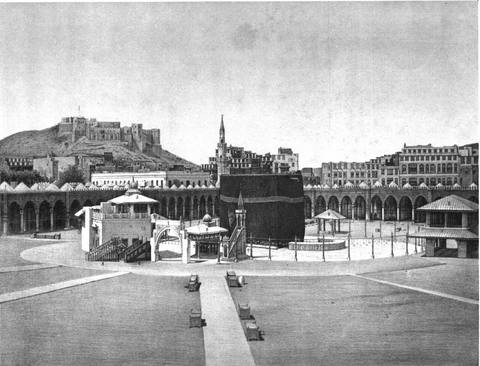
Surah 105 is called al-Fil, meaning The Elephant. It has five short verses and is generally counted among the early chapters revealed in Mecca. Muslims understand it as a reminder of how God protected the Kaaba from an invading army. Because it is short, it is often recited during daily prayers.
Who led the army of the elephant?
Islamic tradition says the army was led by Abraha, the Christian ruler of Yemen under the kingdom of Aksum. He had built a grand church in Sanaa and wanted it to replace Mecca as a place of pilgrimage. According to early Muslim historians, Muhammad's grandfather, Abd al-Muttalib, told him that the Kaaba had its own Lord to defend it.
Is the Year of the Elephant a historical event?
Abraha was a real ruler, known from stone inscriptions in Yemen. One of them, from around 552 CE, records a military campaign into central Arabia, and some historians connect it with the elephant story. That would place the event earlier than the traditional date of 570. Muslims accept the event as described in the Quran.
Where this comes from
EvidenceDocumented
Comes fromThe Quran, Surah 105, read here in the Marmaduke Pickthall. The holy book of Islam, which Muslims believe God revealed to the Prophet Muhammad from about AD 610 to 632. Its chapters are called surahs.
What this means
The text exists and is quoted from a published translation. What it describes is a separate question.
Primary records exist: an original document, a published text, an official file or a dated report. We link to them. This level says the record exists and what it says, not that every claim in it is true.