How the rabbit hole works. Start with anything that grabs you, say UFOs. Every person, place and document a page mentions links to its own page, so a UFO file leads to a witness, the witness leads to the people who investigated the case, and it keeps going.
The path you take shows in the bar under the top menu on every page, so you can step back any time or climb out and start again.
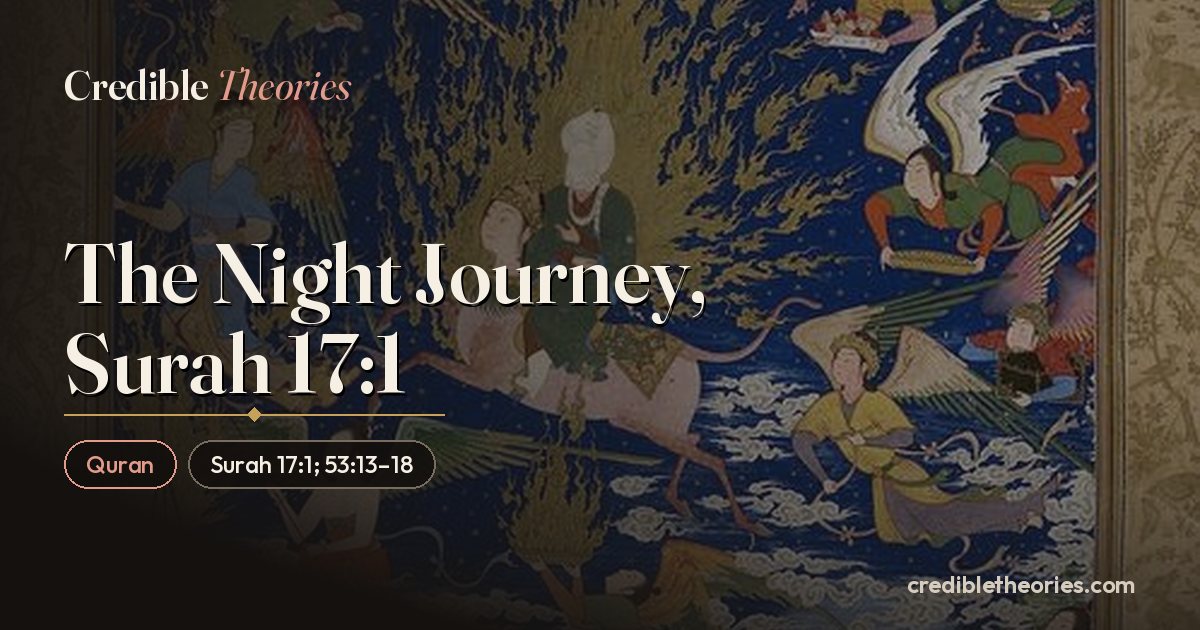
This is a short passage from the Quran, the holy book of Islam, which Muslims believe God revealed to the Prophet Muhammad from 610 to 632 CE. It says God carried his servant by night from the holy place of worship to a far distant place of worship. Later sayings called hadith add a winged animal named Buraq and a climb up through seven heavens.
ReferenceSurah 17:1; 53:13–18
Written610–632 CE
Setc. 621 CE
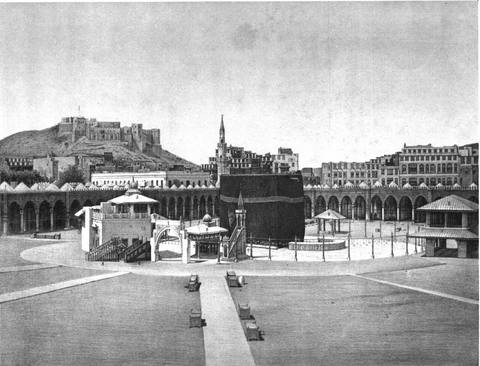
Glorified be He Who carried His servant by night from the Inviolable Place of Worship to the Far Distant Place of Worship.
Isra is the name for the night journey from Mecca to Jerusalem, and Mi'raj for the ascent into the heavens that follows. Many Muslims mark the event on the 27th night of the month of Rajab, known as Lailat al-Mi'raj, with prayers and readings. Surah 17, where the journey is mentioned, is often called Al-Isra after it.
Where is the 'Far Distant Place of Worship'?
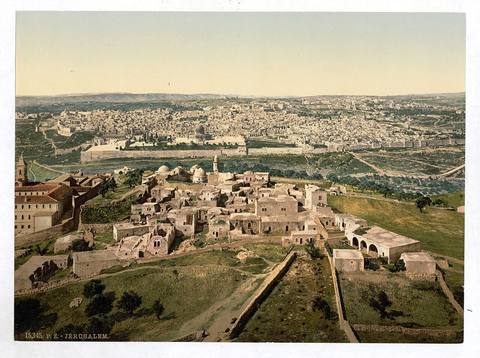
The Arabic is al-Masjid al-Aqsa. Muslims identify it with the Temple Mount in Jerusalem, the site of the Jewish temples. The Dome of the Rock was finished there around 691 CE, over a rock that many believe marks the point of the ascent, and the Al-Aqsa Mosque was built nearby in the early 700s.
What happened during the ascent, according to hadith?
Reports in collections such as Sahih al-Bukhari say Muhammad met earlier prophets in the heavens, among them Adam, Jesus, John, Joseph, Moses and Abraham. God first commanded fifty daily prayers. On Moses' advice Muhammad went back several times to ask for less, until the number reached the five daily prayers Muslims keep today.
Where this comes from
EvidenceDocumented
Comes fromThe Quran, Surah 17:1; 53:13–18, read here in the Marmaduke Pickthall. The holy book of Islam, which Muslims believe God revealed to the Prophet Muhammad from about AD 610 to 632. Its chapters are called surahs.
What this means
The text exists and is quoted from a published translation. What it describes is a separate question.
Primary records exist: an original document, a published text, an official file or a dated report. We link to them. This level says the record exists and what it says, not that every claim in it is true.