












What is Muhammad known for?
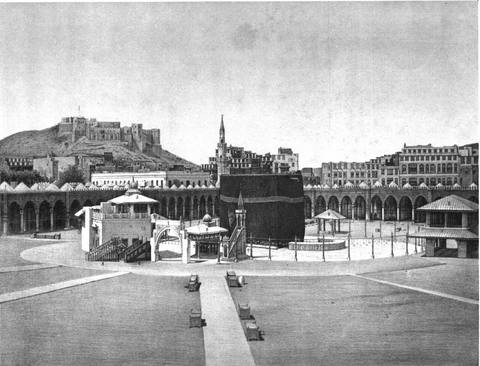
Muhammad was born in Mecca around 570 and died in Medina in 632. Muslims hold that from about 610 he received revelations from God through the angel Gabriel, collected as the Quran. Facing opposition in Mecca, he and his followers migrated to Medina in 622, the Hijrah, which begins the Islamic calendar. By his death much of Arabia had accepted Islam.
Muslims revere him as the final prophet. Historians date the Quran to his lifetime; early manuscript leaves have been radiocarbon-dated to the seventh century. Details of his life come mainly from biographies and hadith collected in the following two centuries.
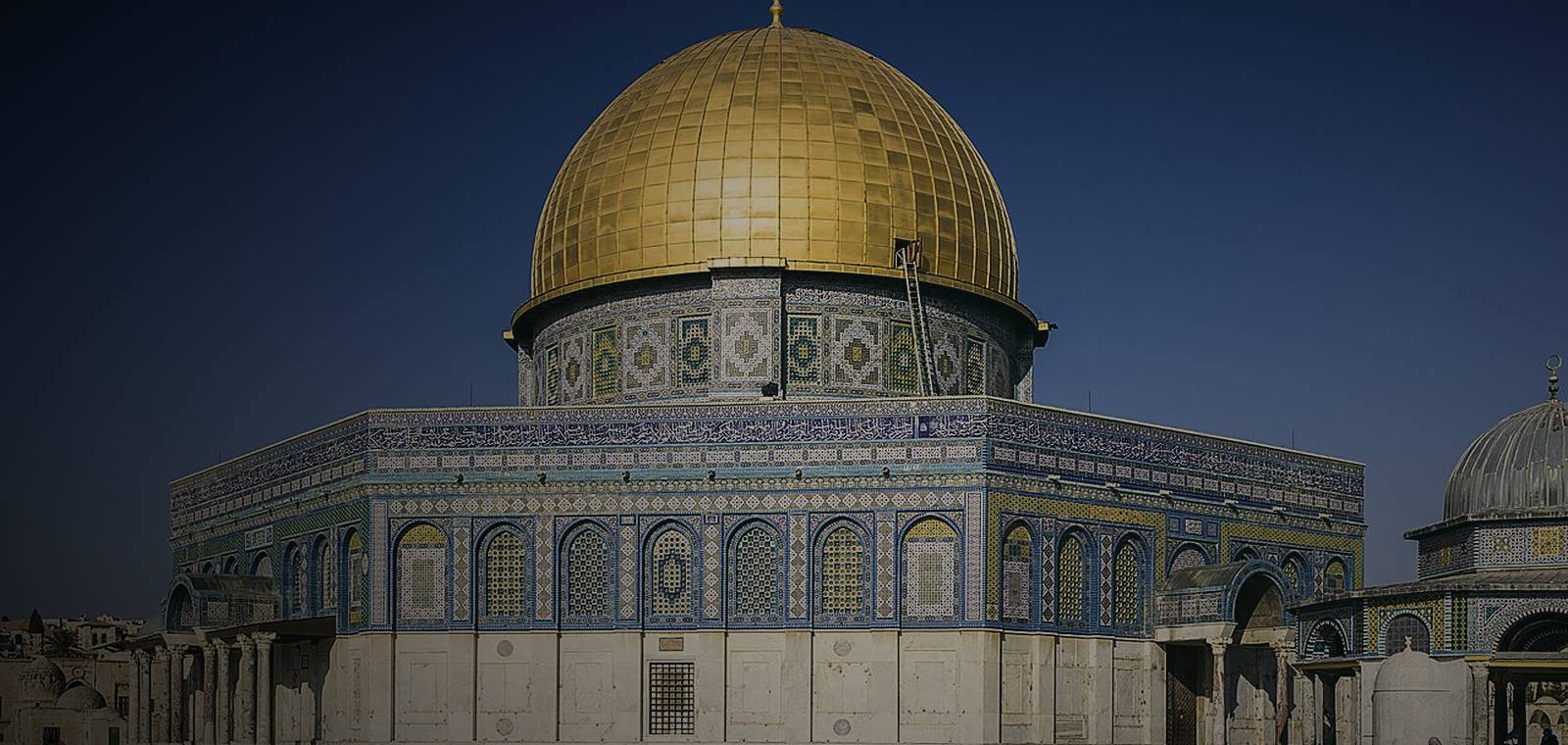
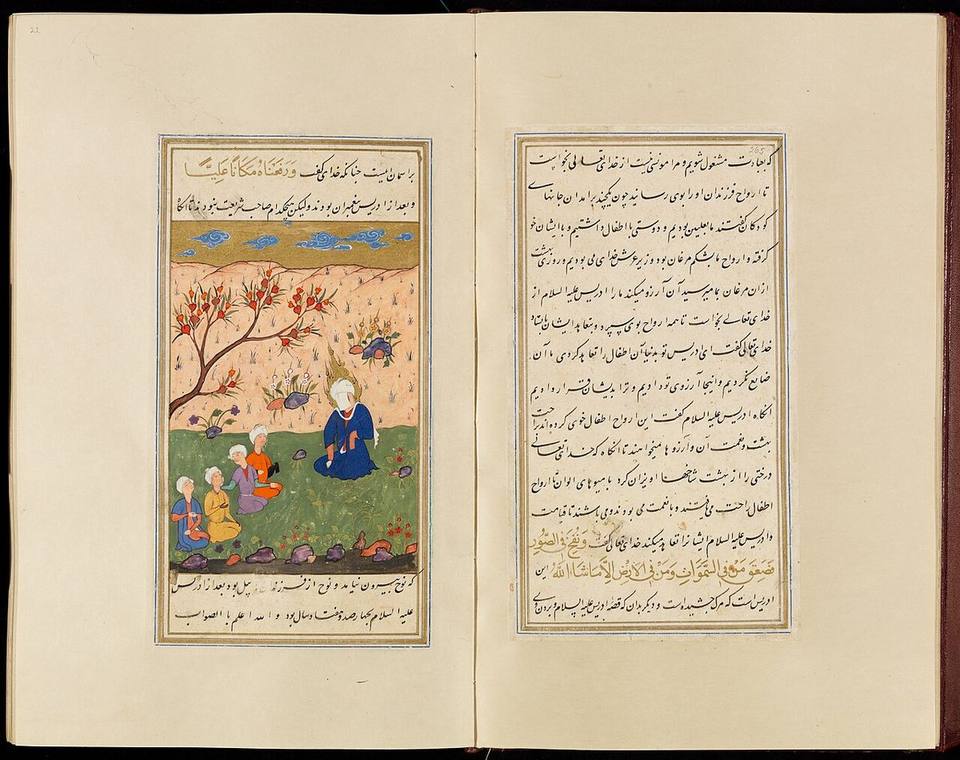
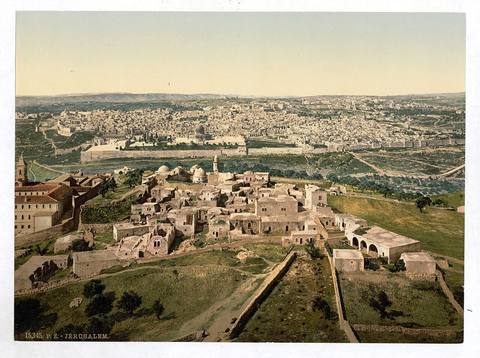
Surah 17:1 refers to a night journey from the sacred mosque to the 'farthest mosque.' Hadith expand this into the Isra and Mi'raj: Muhammad rides the winged mount Buraq to Jerusalem and ascends through the seven heavens, meeting earlier prophets, including Idris, often identified with Enoch, in the fourth heaven. Muslims differ on whether it was bodily or a vision; most hold it was bodily.
Titles and honors
- Titles
- Prophet of Islam, Seal of the Prophets
The same story, told elsewhere
Shared story · Floods and lost lands
Flood Stories Around the World
A god warns one good man, a boat is built, the world drowns and birds are sent out to find land. The same story turns up from Iraq to India to Greece, with cousins in China, Scandinavia and Guatemala.
Quran, Surah Hud (Noah) is one telling. The same story is told 9 more times, in 6 parts of the world. Follow it:
- Vedic IndiaNorthern India · c. 800-600 BCE · Ancient text
- Babylonian (Akkadian)Mesopotamia · 7th century BCE · Ancient text
- Hebrew BibleJudah / Babylon · c. 600-400 BCE · Ancient text
- ChineseYellow River valley, China · 1st millennium BCE · Ancient text
- Zoroastrian (Persian)Iran / Central Asia · 1st millennium BCE · Ancient text
- Babylonian, retold in GreekBabylon · c. 280 BCE · Ancient text
- GreekGreece · 1st or 2nd century CE · Ancient text
- IslamArabia · 7th century CE · Medieval textTied to this page
- NorseIceland · c. 1220 CE · Medieval text
- K'iche' MayaHighland Guatemala · c. 1554-1558 · Retold in English
The open question: One real flood remembered by many peoples, or many different floods that each people told in its own way? Join the debate
Shared story · Heroes and trials
A Child Offered Up: Abraham, Jephthah, Agamemnon and Harishchandra
A father is told, or promises, that he must give up his own child. Sometimes an animal is found in time and sometimes no one stops the knife, and the story is told in the Bible, the Quran, Greece, India and Viking-age Sweden.
Quran, Surah 37, As-Saffat (Abraham's son) is one telling. The same story is told 8 more times, in 4 parts of the world. Follow it:
- Hebrew Bible (about Moab)Kir-hareseth, Moab · c. 850 BCE · Ancient text
- Vedic IndiaNorthern India · c. 800-600 BCE · Ancient text
- Hebrew BibleGilead, east of the Jordan · c. 7th-6th century BCE · Ancient text
- Hebrew BibleJudah / Israel · 1st millennium BCE · Ancient text
- GreekAthens, Greece · 458 BCE · Ancient text
- Phoenician (in Greek)Byblos, Lebanon · c. 100 CE · Ancient text
- IslamArabia · 7th century CE · Medieval textTied to this page
- Norse (Swedish legend)Uppsala, Sweden · c. 1225 CE · Medieval text
- French (Greek legend)France · 1699 · Recorded folklore
The open question: Do these stories remember a time when people really gave up their children, or were they told to teach that it must never happen? Join the debate
Shared story · Beginnings
People Made From Clay: Adam, Nuwa, Prometheus and the Potter Gods
A god kneels in the mud, shapes a body with his hands and breathes it into life. That scene is told in Iraq, Israel, Egypt, Greece, China, Arabia, Guatemala, Sudan and New Zealand.
Quran, Surah al-Hijr is one telling. The same story is told 8 more times, in 6 parts of the world. Follow it:
- Babylonian (Akkadian)Mesopotamia · c. 1700 BCE · Ancient text
- Ancient EgyptianEgypt · c. 1215 BCE · Ancient text
- Hebrew BibleJudah · c. 900-450 BCE · Ancient text
- GreekGreece · 1st or 2nd century CE · Ancient text
- ChineseChina · c. 195 CE · Retold in English
- IslamArabia · 7th century CE · Medieval textTied to this page
- K'iche' MayaHighland Guatemala · c. 1554-1558 · Retold in English
- Maori (New Zealand)Aotearoa · 19th century · Retold in English
- Shilluk (South Sudan)White Nile, South Sudan · 1911 · Retold in English
The open question: Did one old story about a potter god travel from people to people, or does anyone who works with clay end up imagining that we were made from it? Join the debate
Shared story · Death and return
Sleepers Who Wake Years Later: Epimenides, Honi, the Seven Sleepers and Rip Van Winkle
A man lies down for a nap and wakes to find his brother old, his village gone and his coins worth nothing. The same story is told in Crete, Judea, Ephesus, Arabia, India, Japan, Ireland and New York.
Quran, Surah al-Kahf (the People of the Cave) is one telling. The same story is told 8 more times, in 6 parts of the world. Follow it:
- GreekCrete · c. 200-250 CE · Ancient text
- Hindu (Puranic)India · c. 300-500 CE · Ancient text
- Jewish (Babylonian Talmud)Judea · c. 500-600 CE · Medieval text
- Christian (Seven Sleepers of Ephesus)Ephesus · c. 500 CE · Medieval text
- IslamArabia · 7th century CE · Medieval textTied to this page
- IslamArabia · 7th century CE · Medieval text
- JapaneseJapan · c. 759 CE · Medieval text
- IrishIreland · c. 1750 · Early modern text
- AmericanCatskill Mountains, New York · 1819 · Recorded folklore
The open question: Is the long sleep a story people passed along from Crete to Ephesus to New York, or does every culture invent it because everyone fears coming home to a world that has moved on? Join the debate
Mentioned on these pages
- FileIdris
- ChapterOne History 10: The watch
- PassageBirds with stones of baked clay (Surah 105)
- PassageJinn made of smokeless fire (Surah 55:14–15)
- PersonBernardino Drovetti
- PersonIbn Abbas
- PersonMarmaduke Pickthall
- Personal-Tabari
- PlaceJerusalem
- PlaceMecca
Linked people and places
Where this comes from
Comes from Quran 17:1, Quran.com. The Quran: The holy book of Islam, which Muslims believe God revealed to the Prophet Muhammad from about AD 610 to 632. Its chapters are called surahs.
What this means
A real person with records. Sources are listed below.
For Muhammad, the original record exists and is linked: Quran 17:1, Quran.com. That tells you the record is real and what it says. It does not mean every claim in it is true.
Primary records exist: an original document, a published text, an official file or a dated report. We link to them. This level says the record exists and what it says, not that every claim in it is true.
Sources
- Encyclopaedia BritannicaAn encyclopedia first published in Scotland in 1768 and now online. Its articles are written and checked by named experts and editors, which makes it a reliable source for basic facts.Encyclopaedia Britannica, 'Muhammad'Reference Archived copy, 2026-09-21
- The QuranThe holy book of Islam, which Muslims believe God revealed to the Prophet Muhammad from about AD 610 to 632. Its chapters are called surahs. Marmaduke Pickthall's 1930 English version is quoted here; Muslims hold that only the Arabic original is the Quran itself.Quran 17:1, Quran.com Online copyPrimary text Archived copy, 2026-10-03
- WikipediaA free online encyclopedia written and edited by volunteers. It is a good starting point and usually lists its own sources, but anyone can change it, so we treat it as a guide to better sources, not the final word.Wikipedia, 'Muhammad'Reference
No public-domain picture of this person yet. We do not show drawn or generated likenesses.