How the rabbit hole works. Start with anything that grabs you, say UFOs. Every person, place and document a page mentions links to its own page, so a UFO file leads to a witness, the witness leads to the people who investigated the case, and it keeps going.
The path you take shows in the bar under the top menu on every page, so you can step back any time or climb out and start again.
This is a short passage from the Natural History, a huge Roman encyclopedia by Pliny the Elder, published around 77 CE. It reports that in 100 BCE a burning shield, throwing off sparks, was seen racing across the sky at sunset, from west to east. Pliny dates it by naming that year's two consuls. He collected reports like this without much checking.
ReferencePliny the Elder, Natural History 2.34
Writtenc. 77 CE
Set100 BCE
In the consulship of Lucius Valerius and Caius Marius, a burning shield, scattering sparks, was seen to run across the heavens, at sunset, from west to east.
Questions people ask about Pliny the Elder, Natural History 2.34
Who was Pliny the Elder?
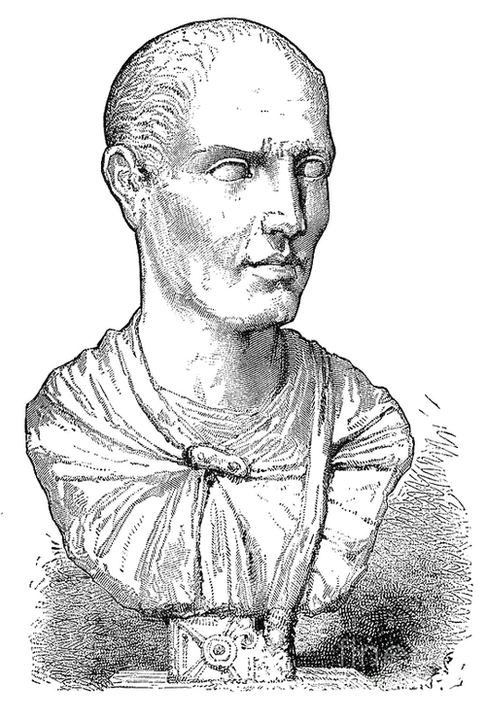
Gaius Plinius Secundus was a Roman officer, writer and commander of the fleet at Misenum. He died in 79 CE during the eruption of Mount Vesuvius after sailing across the bay to help people and get a closer look. His nephew, Pliny the Younger, described his death in two letters to the historian Tacitus.
How big is Pliny's Natural History?
It has 37 books and covers astronomy, geography, people, animals, plants, medicine, metals and art. Pliny dedicated it to Titus, the future emperor. In his preface he claims to have gathered 20,000 facts from about 2,000 volumes by 100 chief authors. It is one of the largest works to survive from ancient Rome.
Who was Gaius Marius, named in the date of the sighting?
Gaius Marius was a Roman general who served as consul seven times, more than anyone before him. The year of the burning shield was his sixth consulship, shared with Lucius Valerius Flaccus. Romans dated years by naming the two consuls, which is why Pliny's report can be tied to a single year.
Used on these files
Pliny's Burning Shield: The Sparking Object Over Rome in 100 BCEDocumentedPliny the Elder recorded a burning shield, scattering sparks, running across the sky at sunset from west to east. The year is pinned down by the consuls named, which gives 100 BCE. Astronomers see a fireball. UFO writers see a flying object. What exactly did the Roman encyclopedia say, and how careful was he?
Where this comes from
EvidenceDocumented
Comes fromNatural History, by Pliny the Elder, Pliny the Elder, Natural History 2.34, read here in the John Bostock and H. T. Riley. A 37-book Roman encyclopedia of everything from stars to animals to art, by Pliny the Elder, published around AD 77. Pliny died in AD 79 near Mount Vesuvius as it erupted.
What this means
The text exists and is quoted from a published translation. What it describes is a separate question.
Primary records exist: an original document, a published text, an official file or a dated report. We link to them. This level says the record exists and what it says, not that every claim in it is true.
Natural History, by Pliny the ElderA 37-book Roman encyclopedia of everything from stars to animals to art, by Pliny the Elder, published around AD 77. Pliny died in AD 79 near Mount Vesuvius as it erupted. It mixes careful observation with tall tales. Bostock and Riley's English version came out in 1855.John Bostock and H. T. Riley, The Natural History of Pliny (1855)Primary textArchived copy, 2026-09-01