Credible Theories Sign in

The record

The Shroud of Turin is a long strip of linen kept in Turin Cathedral in northern Italy. On it is a faint, straw-colored image of the front and back of a naked man who seems to have been laid out for burial, with marks that many people read as wounds. Some Christians believe it is the cloth that wrapped the body of Jesus.

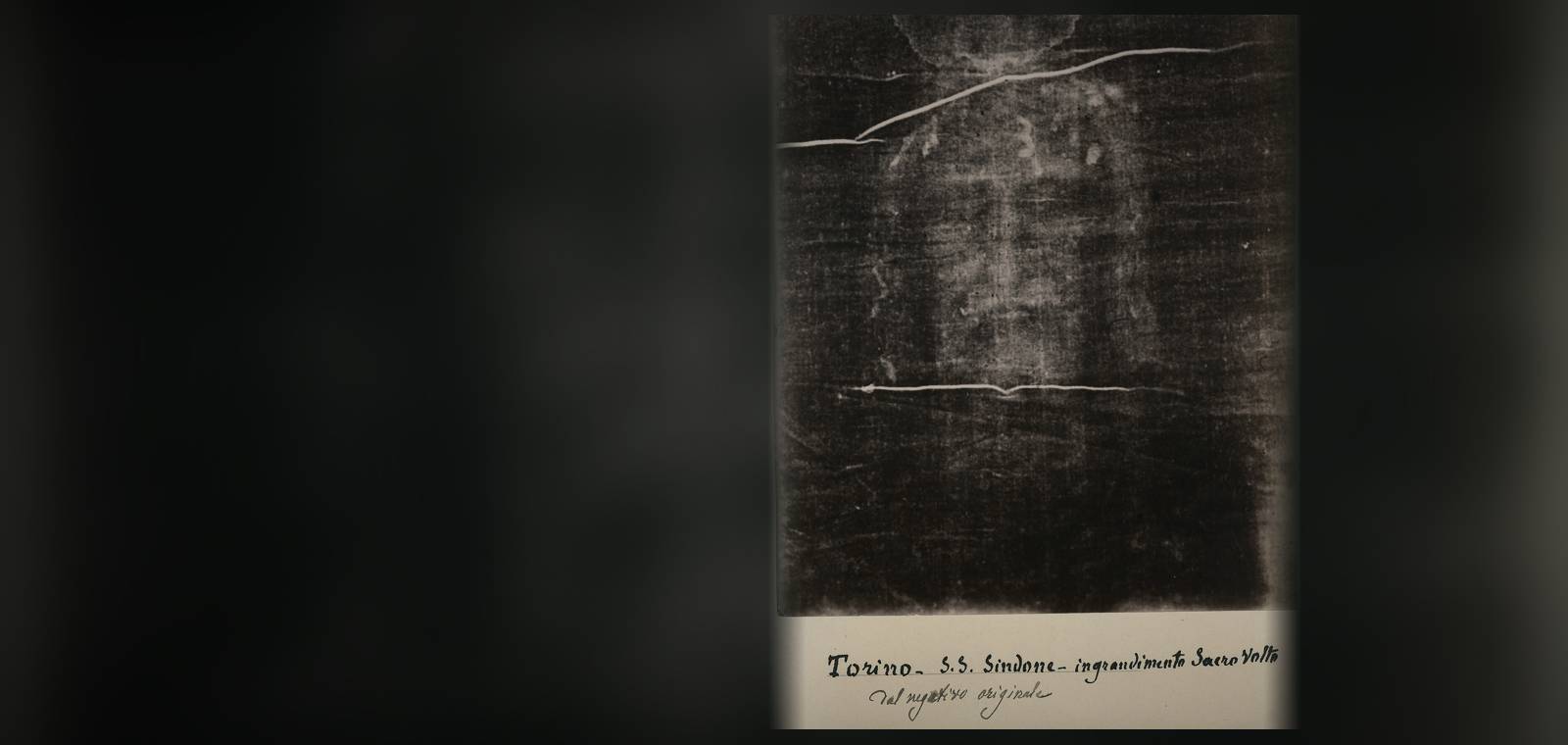
The cloth's paper trail starts in France. The Catholic Encyclopedia of 1912 says the cloth can be traced to Lirey, in the diocese of Troyes, where we first hear of it about the year 1360. In 1389 the Bishop of Troyes wrote to Pope Clement VII, saying an artist had confessed to painting it. The cloth reached Chambery in Savoy by 1453, was scorched in a fire there in 1532, and has been kept in Turin since 1578. In 1898 a photographer found that his glass negative showed a far clearer face than the cloth itself, as if the image on the linen were a negative.

On 21 April 1988 small strips were cut from one corner in the sacristy of Turin Cathedral and sent to laboratories at Arizona, Oxford and Zurich. Their joint report in Nature in February 1989 gave a calibrated calendar age range with at least 95% confidence for the linen of the Shroud of Turin of AD 1260 - 1390. That date fits the first written record. The date speaks only to the linen, and only to the corner that was sampled. How the image was put on the cloth has never been settled.
Questions people ask about The Shroud of Turin

Where is the Shroud of Turin kept?

It is kept in Turin Cathedral in northern Italy. The 1988 samples were cut there, in the cathedral sacristy, on the morning of 21 April 1988, before being shared among the three laboratories.

Which laboratories dated the Shroud?

Laboratories at Arizona, Oxford and Zurich each dated pieces of the same sample. They also dated three control samples whose ages were already known, to check their methods.

Has the Shroud been damaged?

Yes. A fire at Chambery in 1532 charred the folded cloth and left a regular series of burn marks on either side of the image.

The open question

Still strange: The cloth whose face only a camera could see.

Even so, the image behaves like a photographic negative, and no one has shown how it was put on the cloth.

Ark of the Covenant: Where Did It Go, and Why Did It Kill? →
  1. Step 1 of 4 · This fileThe Shroud of Turin
  2. Step 2 of 4 · Next fileArk of the Covenant: Where Did It Go, and Why Did It Kill?
  3. Step 3 of 4 · Next fileSeal of Solomon: How Did King Solomon's Ring Control Demons?
  4. Step 4 of 4 · Next fileThe Voynich manuscript
About these videos

Found by a YouTube search for this topic, not checked by us. The player loads from YouTube only when you press play.

Where this comes from

EvidenceMyth or legend

Comes from P. E. Damon and 20 others, "Radiocarbon Dating of the Shroud of Turin", Nature 337…. A research article: An article written by a researcher and published in a scholarly journal or book. Most such journals have other experts check a paper before it is printed, so it carries more weight than a news story, though later studies can still change the picture.

What this means

A story or tradition. It is documented as a story; nothing independent shows it happened.

The Shroud of Turin is known from stories, scripture or tradition. The texts are real and we quote them (for example P. E. Damon and 20 others, "Radiocarbon Dating of the Shroud of Turin", Nature 337…), but nothing outside those texts shows that The Shroud of Turin was real as described.

The page covers something known from myths, scripture or tradition. The texts are real and we quote them, but no independent record shows the events or beings were real.

See all five labels

Sources

  1. A research articleAn article written by a researcher and published in a scholarly journal or book. Most such journals have other experts check a paper before it is printed, so it carries more weight than a news story, though later studies can still change the picture.P. E. Damon and 20 others, "Radiocarbon Dating of the Shroud of Turin", Nature 337, 611-615 (16 February 1989), text at shroud.comPrimary text
  2. New AdventA Catholic website that hosts free English translations of early Christian writers, such as the 1885 Ante-Nicene Fathers series, and the 1913 Catholic Encyclopedia.Herbert Thurston, "The Holy Shroud (of Turin)", The Catholic Encyclopedia, vol. 13 (1912), New Advent
  3. University of Arizona, research record for "Radiocarbon dating of the Shroud of Turin" (Nature, 1989)

Quotations come from public-domain translations. A book in our Library links to its Library page; other links open the free online copy or the reference page.

Updated

Credible or not?

Tap one to see how other readers voted.

Discussion