How the rabbit hole works. Start with anything that grabs you, say UFOs. Every person, place and document a page mentions links to its own page, so a UFO file leads to a witness, the witness leads to the people who investigated the case, and it keeps going.
The path you take shows in the bar under the top menu on every page, so you can step back any time or climb out and start again.
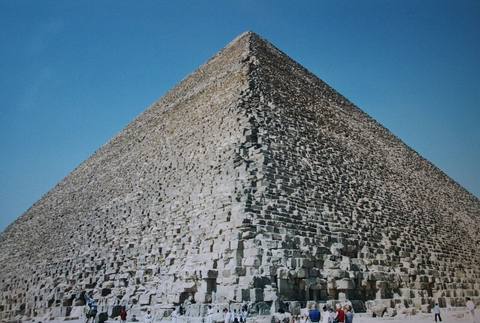
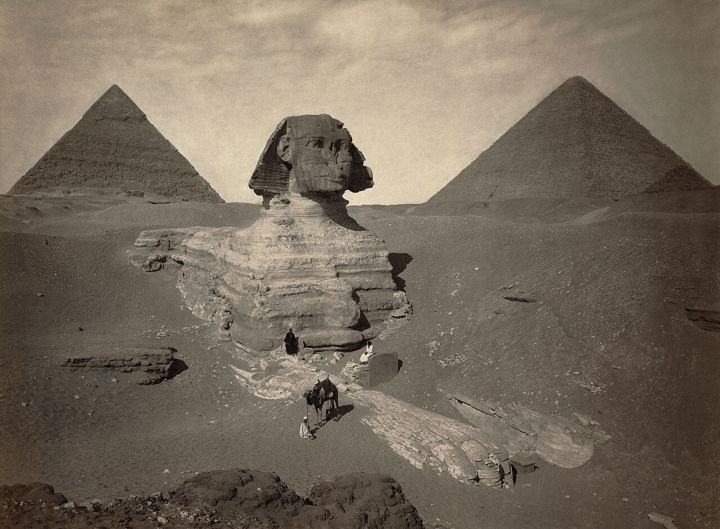
This is a summary of a book published in the 1930s by Maurice Doreal, who led a small religious group in Colorado. It claims Thoth, a priest-king of Atlantis, escaped its sinking, built the Great Pyramid, and wrote thirteen emerald tablets. Doreal said he translated ancient tablets, but no such tablets have ever been shown to exist.
ReferenceDoreal, 'The Emerald Tablets of Thoth-the-Atlantean'
Written1930s (published c. 1939)
SetClaimed: Atlantis, 36,000 years ago
Thoth, a priest-king of Atlantis, flees its sinking, builds the Great Pyramid, and writes thirteen emerald tablets. They describe the Halls of Amenti deep in the earth, the Children of Light, and 'Dwellers' from other spaces.
Documented · Retold in English, 1930 Summary by the editors. Translation: Summary (the text may still be under copyright)
AdvertisementAd space
What scholars say
Written by Maurice Doreal, founder of a Denver-area occult group. No ancient manuscript exists; the language copies the King James Bible and Theosophy.
Questions people ask about Doreal, 'The Emerald Tablets of Thoth-the-Atlantean'
When were the Emerald Tablets of Thoth written?
The book appeared in the 1930s, and its earliest editions are usually dated to around 1939. Its author, who called himself Maurice Doreal, said he translated the tablets after a trip to Egypt. No record of such a find exists outside his own account, and the book has been reprinted many times since by New Age publishers.
Who was Maurice Doreal?
Doreal was an American teacher of occult ideas and head of the Brotherhood of the White Temple. In the late 1940s and early 1950s he moved the group to land near Sedalia, Colorado. He died in 1963. Sources disagree on his birth name and birth year, so details of his early life remain uncertain.
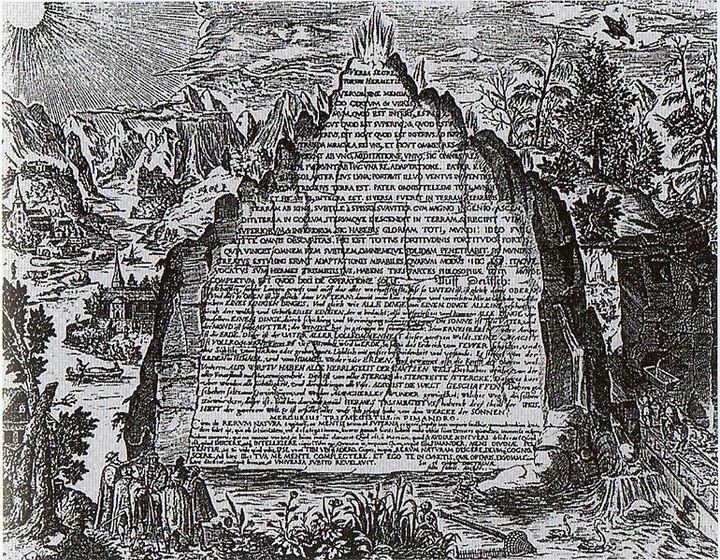
Are these the same as the Emerald Tablet of Hermes?
No. The Emerald Tablet of Hermes is a short alchemical text of about a dozen lines, known from Arabic sources over a thousand years old. Doreal's book is much longer and has no ancient manuscript behind it. It borrows the famous name, as well as Thoth, the ibis-headed scribe god whom the Greeks linked with Hermes.
Used on these files
Atlantis: Is Plato's Sunken Island Real or a Myth?Myth or legendPlato says a great island empire sank in a single day and night, and then his unfinished dialogue stops mid-sentence just as Zeus starts to speak. No Greek writer before him mentions Atlantis. So was it a warning parable, a memory of a real disaster, or something else? The sources point several ways.
Emerald Tablets of Thoth: Who Was Doreal, and Are They Real?SpeculationA teacher who founded the Brotherhood of the White Temple in Denver said he found emerald tablets at the Great Pyramid in 1925, written by Thoth, a priest-king fleeing Atlantis. Scholars call the book a 20th-century composition; he later moved followers to the Colorado mountains to wait out a nuclear war predicted for 1953. Who was he, really?
Thoth: Who Was the Egyptian God of Writing and Wisdom?Myth or legendMillions of mummified ibis birds were buried in catacombs as offerings to Thoth, the ibis-headed Egyptian god of writing and the moon. Stories give him hidden writings too, including a Book of Thoth locked in nested boxes at the bottom of the Nile; reading it brought disaster on the man who took it. What did it say?
Where this comes from
EvidenceDocumented
Comes fromThe Emerald Tablets of Thoth-the-Atlantean (Doreal), Doreal, 'The Emerald Tablets of Thoth-the-Atlantean'. A book published in the 1930s by Maurice Doreal, who led a small religious group in Colorado. He said he had translated ancient tablets from Egypt, but no such tablets have ever been shown to exist.
What this means
The text exists and is quoted from a published translation. What it describes is a separate question.
Primary records exist: an original document, a published text, an official file or a dated report. We link to them. This level says the record exists and what it says, not that every claim in it is true.
Plato's TimaeusA dialogue written by the Greek philosopher Plato in Athens around 360 BC. It opens with the story of Atlantis, said to come from Egyptian priests by way of the Athenian lawmaker Solon, then explains how the world was made. It is the oldest source for Atlantis; no earlier writer mentions it.Plato, Timaeus 20d–25d, trans. Benjamin Jowett (1871)Primary textArchived copy, 2026-08-17
The Emerald Tablets of Thoth-the-Atlantean (Doreal)A book published in the 1930s by Maurice Doreal, who led a small religious group in Colorado. He said he had translated ancient tablets from Egypt, but no such tablets have ever been shown to exist. Scholars treat it as a modern work.M. Doreal, The Emerald Tablets of Thoth-the-Atlantean (Brotherhood of the White Temple, 1930s)Primary text
Plato's PhaedrusA dialogue Plato wrote in Athens around 370 BC about love and good speaking. In it Socrates tells how the Egyptian god Thoth offered writing to a king, who warned that it would weaken people's memory.Plato, Phaedrus 274c–275b, trans. Benjamin JowettPrimary textArchived copy, 2026-09-27
Scholarly dates are rounded. The wording follows the named public-domain translation.
More from Egypt and Hermes
The story before and after this one, and what each shares with The Emerald Tablets of Thoth the Atlantean.